 Roland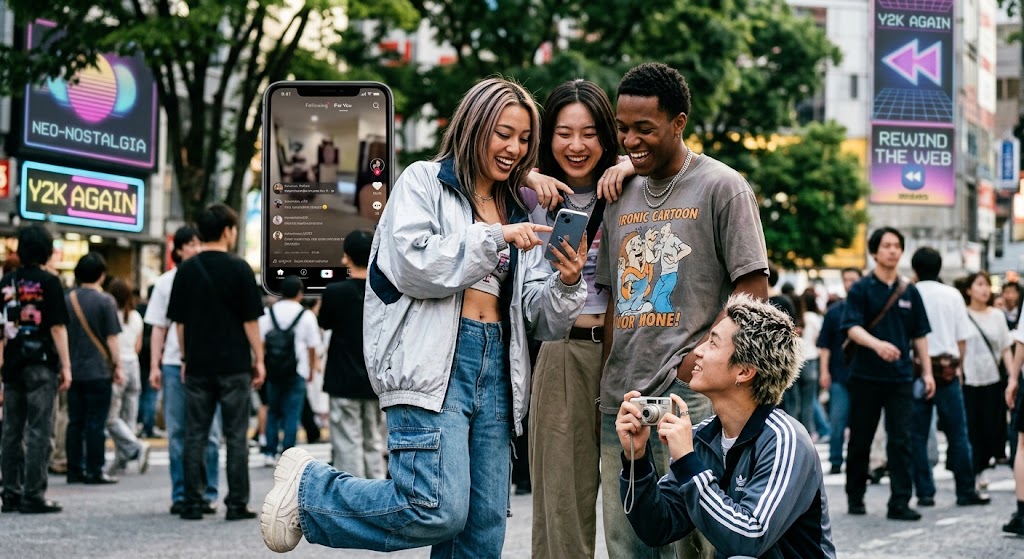
In the early months of 2020, fashion forecasters and digital culture analysts predicted that the sudden resurgence of late-1990s and early-2000s style—the metallic jackets, low-rise denim, translucent plastics, and futuristic pop aesthetics broadly labeled “Y2K”—would follow the standard trajectory of modern internet trends. It would explode across short-form video feeds, saturate retail shelves for a season or two, and swiftly collapse under the weight of its own overexposure.
Half a decade later, that forecast has been thoroughly upended.
Rather than fading into the digital graveyard of discarded internet aesthetics alongside “Cottagecore” or “Mob Wife,” the Y2K aesthetic has transformed from a passing micro-trend into a permanent structural feature of global online culture. On platforms like TikTok, Instagram, and Xiaohongshu, videos bearing Y2K hashtags continue to command billions of views. Resale platforms such as Depop and Grailed report sustained demand for vintage point-and-shoot digital cameras, rimless sunglasses, and chunky platform footwear. Meanwhile, market intelligence projects the global Cyber Y2K fashion market alone to expand from $4.2 billion in 2024 to nearly $14 billion by 2033.
The persistent survival of the Y2K look raises a fundamental question for cultural commentators and industry executives alike: Why has an aesthetic built on the quirky, transitional technology and polarizing style of a quarter-century ago refused to die online?
The answer lies at the intersection of economic anxiety, algorithmic distribution, a longing for pre-smartphone techno-optimism, and a fundamental shift in how younger generations consume the past.
The 20-Year Rule in the Algorithmic Age
Historically, cultural nostalgia has followed a predictable 20-year cycle. Every two decades, a generation reaching adulthood and entering creative industries looks back at the pop culture of its childhood with fond sentimentality. The 1970s romanticized the 1950s; the 1990s revived the 1970s; and the 2010s saw Millennials embrace the 1990s.
When Generation Z began coming of age in the late 2010s and early 2020s, their turn arrived to mine the turn of the millennium. However, the internet age fundamentally altered how the 20-year rule operates.
In previous eras, revivals were filtered through major media gatekeepers—fashion editors, film directors, and record label executives who curated retro references for mass consumption. Today, recommendation algorithms on short-form video platforms distribute retro imagery directly to millions of users simultaneously.
This digital infrastructure has created a phenomenon sociologists call “nowstalgia” or “anachronistic nostalgia”—a intense longing for a historical period that the person experiencing it was either too young to remember or not yet born to witness. For Gen Z, born roughly between 1997 and 2012, the Y2K era represents a tantalizing historical sweet spot: distant enough to feel exotic and mythic, yet recent enough to be fully documented in high-definition digital archives.
Archival accounts on social media continuously digitize and recirculate late-90s magazine editorials, early MTV music videos, and commercials featuring icons like Britney Spears, Paris Hilton, and Aaliyah. These images function as visual building blocks for digital natives who mix, match, and recontextualize elements of the past to craft personalized online identities.
Distinguishing “Cybercore” from “McBling”
Part of the Y2K aesthetic’s enduring power is its versatility.Unlike highly narrow trends that revolve around a single garment or color palette, Y2K encompasses a broad spectrum of distinct sub-aesthetics that appeal to varied demographics.
Cultural historians generally divide the era’s online revival into two primary branches:
1. Cybercore (The Retro-Futuristic Era, 1997–2002)
Originating in the late dot-com boom, Cybercore was defined by a fascination with the impending turn of the millennium and the dawn of the public internet.Visually, it features sleek, metallic fabrics, chrome finishes, clear or translucent plastic electronics (exemplified by the original Apple iMac G3), matrix-inspired leather trench coats, and futuristic eyewear.Cybercore reflected a fascination with space exploration, cybernetics, and digital progress.
2. McBling (The Pop-Culture Era, 2003–2008)
Often conflated with Y2K, McBling represents the mid-2000s transition toward maximalist celebrity style.This branch is characterized by bright pink velour Juicy Couture tracksuits, bedazzled denim, graphic T-shirts with bold slogans, trucker hats, and low-rise jeans. It represents a bolder, louder, and more explicitly consumer-focused aesthetic that dominated tabloid culture and reality television.
By offering both the sleek, sci-fi minimalism of Cybercore and the dramatic maximalism of McBling, the Y2K umbrella provides an expansive palette for creative experimentation. As one sub-style experiences a brief lull, another expands to take its place, preventing the overall trend from burning out completely.
The Psychological Pull of Pre-Smartphone Techno-Optimism
Beyond visual style, the persistence of the Y2K aesthetic is rooted in a deep psychological longing for the emotional climate of the late 1990s and early 2000s.
The original Y2K era occurred during a unique historical window. The Cold War had ended, national economies were expanding, and the rapid spread of the personal computer and the World Wide Web created widespread optimism about human connectivity.Technology in the late 1990s was viewed as a playful, empowering tool that promised to make life more colorful and interconnected.
For young people navigating today’s world, the contemporary relationship with technology is vastly more complicated.
Modern digital life is characterized by algorithmic tracking, continuous notifications, privacy concerns, and information saturation. Furthermore, Gen Z has grown up amidst global economic instability, intensifying climate concerns, and heightened political polarization.
In this environment, the Y2K era represents a period of “techno-optimism”—a moment when technology felt fun rather than oppressive.
The hardware of the era illustrates this contrast. The hardware of the late 1990s—flip phones, translucent Game Boy Colors, portable CD players, and standalone digital cameras—offered digital utility without the burden of constant surveillance or social media metrics. Carrying a vintage 2000s point-and-shoot camera to a party has become a popular statement among young adults precisely because it produces warm, imperfect, unedited photographs while allowing users to capture memories without being pulled into smartphone feeds.
The Y2K aesthetic allows younger generations to consume a vision of the digital future crafted before the internet became centralized and commercialized. It is an embrace of an era when the future felt bright, glossy, and limitless.
The Modern Pruning: Fixing the Past’s Flaws
Crucially, the Gen Z revival of Y2K is not a passive carbon copy of the original era; it is an active, selective revision.
During its original run, the fashion and pop culture of the late 1990s and early 2000s was notoriously exclusionary. Mainstream media from the era aggressively promoted razor-thin body standards—often labeled “heroin chic”—and was dominated by restrictive, Eurocentric beauty ideals. Tabloid journalism routinely targeted young female celebrities, while fashion marketing left little room for body diversity or gender fluidity.
Modern digital creators have systematically dismantled those legacy barriers.
On TikTok, Instagram, and resale platforms, diverse creators across racial, ethnic, gender, and body-type spectrums have reclaimed Y2K style. Low-rise denim, crop tops, and bold patterns are now styled inclusively, explicitly rejecting the body-shaming narratives that defined the era’s initial launch.
Furthermore, the revival has altered consumption habits. While fast-fashion retailers produce low-cost Y2K duplicates, a significant portion of the movement is anchored in second-hand thrifting, vintage curation, and upcycling. By sourcing original garments from resale apps or thrift stores, young consumers align their interest in retro aesthetics with demands for environmental sustainability.
This process of “modern pruning” allows the aesthetic to retain its visual playfulness while shedding the toxic social baggage of its past, making it palatable and sustainable for a socially conscious generation.
The Commercial Reality: From Micro-Trend to Macro-Market
While social dynamics drive the cultural appeal of Y2K, massive commercial investment ensures its continued visibility.
Major luxury fashion houses, mass-market retailers, and entertainment studios have fully integrated Y2K references into their core product strategies. High-profile global pop acts—particularly within the K-pop and J-pop industries, such as groups like NewJeans, Aespa, and XG—have built their visual identities around Y2K and futuristic “Y3K” concepts, driving global consumer demand among millions of fans.
E-commerce data reflects this commercial expansion. Consumer demand for platform sneakers, cargo pants, mesh tops, and silver metallic accessories maintains consistent volume across global retail markets. In secondary markets, authentic vintage designer pieces from 2000s-era collections command record prices at luxury auctions and online marketplaces.
Retail analysts note that Y2K has crossed a critical threshold: it is no longer competing with contemporary fashion; it has become a baseline foundational style. Just as 1990s minimalism became a permanent staple of wardrobe design in the 2010s, Y2K elements like wide-leg silhouettes, technical outerwear, and playful, vibrant accessories are now standard offerings across global fashion catalogs.
The Future of Digital Nostalgia
The extraordinary longevity of the Y2K aesthetic offers a preview of how culture will operate in an increasingly digitized world.
In the modern media environment, aesthetics no longer neatly appear, dominate, and die. Instead, digitized historical eras exist simultaneously in a vast, interactive library. Algorithms ensure that every niche subculture, vintage visual style, and historical movement remains instantly accessible, continuously discoverable, and perpetually monetizable.
The Y2K aesthetic refuses to die online because it fulfills a unique function for the modern digital mind. It provides a visual escape hatch to a time when the digital world felt full of promise, magic, and unscripted potential. As long as contemporary life feels chaotic and hyper-optimized, the shiny, chrome-tinted vision of the year 2000 will continue to offer an irresistible refuge.