 Roland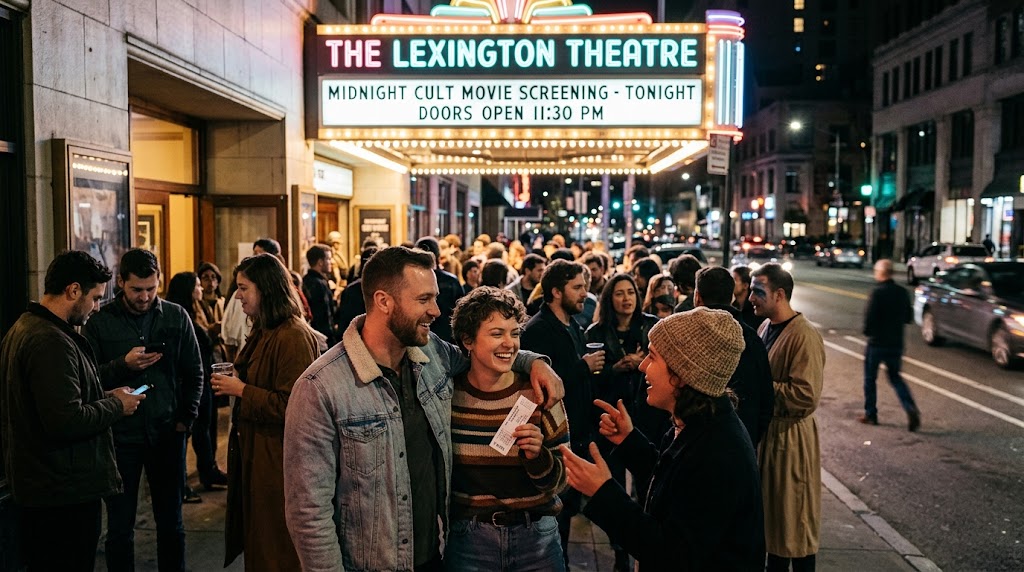
At 11:45 PM on a Saturday night, while most of the city is winding down, a crowd gathers under the buzzing neon marquee of an independent neighborhood cinema. The line snakes down the sidewalk—a mix of film obsessives in vintage leather jackets, college students in thrifted costumes, and night owls seeking something wilder than a standard multiplex feature. Inside the lobby, the air smells of warm butter, stale beer, and palpable anticipation.
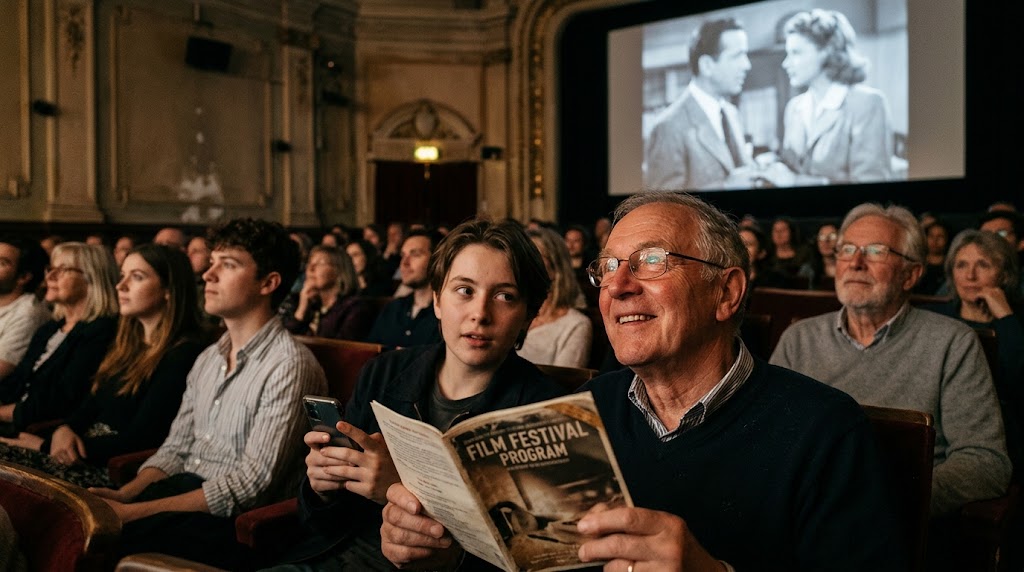
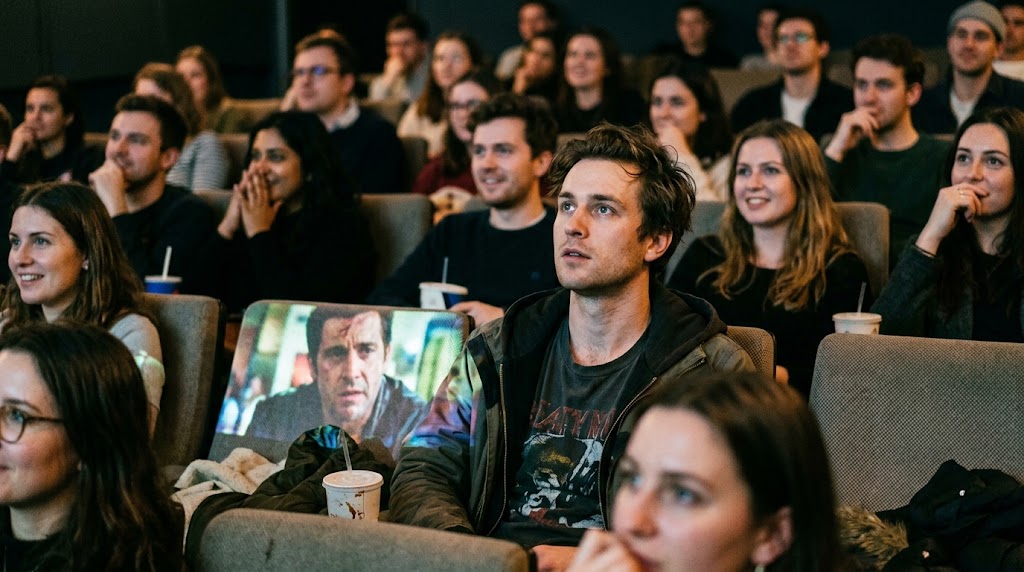
When the lights finally dim at midnight, the audience does not settle into quiet, passive reverence. They cheer, shout back at the screen, quote lines in unison, and throw props into the air.
In an era dominated by instant, friction-free digital streaming, where virtually every piece of recorded media can be summoned onto a living room television or smartphone screen in seconds, the persistence of the midnight movie screening seems like a historical anomaly. Why would anyone willingly sacrifice sleep, travel across town in the dead of night, and pay for a ticket to watch a decades-old cult film, a low-budget horror flick, or an unhinged narrative experiment?
The answer lies at the intersection of cultural sociology, media physics, and basic human biology. Midnight screenings are not merely a nostalgic lingering of pre-digital exhibition; they are a vital, defiant sanctuary for collective experience, artistic subversion, and shared vulnerability in an increasingly isolated world.
The Origins of the Witching Hour Screening
The history of late-night media programming dates back to the mid-20th century, but the true midnight movie phenomenon was forged in the countercultural crucible of the late 1960s and early 1970s.
Before late-night cinema became a theatrical movement, it existed on television. In the 1950s, local broadcast stations began licensing cheap, legacy horror films and B-movies to fill late-night time slots after the evening news. To frame these bizarre broadcasts, stations introduced theatrical, costume-clad hosts—most notably Maila Nurmi as “Vampira” in Los Angeles and John Zacherle as “Roland” in Philadelphia. These hosts gave viewers permission to laugh at, celebrate, and obsess over films that mainstream culture had discarded.
By 1970, that television sensibility migrated into brick-and-mortar art houses. The birthplace of the modern midnight movie is widely considered to be the Elgin Theatre in New York City’s Chelsea neighborhood. The Elgin’s manager, Ben Barenholtz, made a radical decision to screen Alejandro Jodorowsky’s surreal, avant-garde Mexican Western El Topo at midnight, seven nights a week. The film became an underground sensation, running for six months straight and drawing high-profile artistic icons like John Lennon and Yoko Ono into its late-night orbit.
What Barenholtz stumbled upon was a revolutionary business model for single-screen repertory houses and an entirely new way to experience cinema. Over the next five years, a core canon of canonical midnight movies emerged across American urban centers:
- Pink Flamingos (1972): John Waters’ shock-comedy masterpiece, starring the iconic drag queen Divine, pushed the boundaries of taste and censorship, thriving exclusively in late-night runs where adventurous audiences gathered to witness the unthinkable.
- The Harder They Come (1972): Starring Jimmy Cliff, this Jamaican crime film introduced reggae music and contemporary Caribbean culture to North American audiences, fueled almost entirely by continuous midnight screenings.
- Night of the Living Dead (1968): George A. Romero’s apocalyptic, racially charged horror classic found its true, passionate fanbase through late-night revivals long after its initial theatrical run ended.
- Eraserhead (1977): David Lynch’s disturbing, industrial nightmare was initially rejected by major festivals, only to build a multi-year midnight run at the Nuart Theatre in Los Angeles and the Waverly Theatre in New York, establishing Lynch as a cinematic visionary.
The absolute pinnacle of the movement arrived in 1976 at Greenwich Village’s Waverly Theatre with Jim Sharman’s musical comedy The Rocky Horror Picture Show. Initially a commercial flop for 20th Century Fox upon its daytime release in 1975, Rocky Horror transformed at midnight into a interactive performance art piece.
Audience members began dressing as the characters, shouting pre-scripted callback lines at the screen, and throwing rice, toast, and toilet paper at precise moments in the film. This gave birth to the “shadow cast”—local performers acting out the movie in front of the screen while the film played behind them—creating a self-sustaining theatrical ritual that has run continuously for over five decades, making Rocky Horror the longest-running theatrical release in film history.
The Architecture of Sanctuary: Subversion and Social Freedom
To understand the enduring magic of the midnight screening, one must examine the psychological shift that occurs when the clock strikes 12:00 AM.
Daytime filmgoing is governed by strict, unwritten social contracts. Audiences sit quietly in rows, face forward, consume their snacks discreetly, and process the narrative individually. The multiplex environment is designed for order, predictability, and commercial efficiency.
The midnight hour dismantles that architecture entirely. Sociologists often refer to the late-night cinema space as a “liminal zone”—a temporary, threshold state existing outside the boundaries of normal societal routines. When a movie begins at midnight, the traditional working day has expired, and tomorrow’s responsibilities have not yet begun. The temporal shift grants viewers permission to behave differently.
1. The Elevation of the Transgressive
Mainstream daytime cinema historically prioritized broad consensus, narrative realism, and moral clarity. Midnight cinema, by contrast, became a home for everything the mainstream rejected: high camp, graphic horror, surrealism, explicit eroticism, political radicalism, and unclassifiable artistic failures. In the dark of midnight, content that might be deemed cheap, offensive, or bizarre during the day is celebrated as transgressive genius.
2. The Inversion of the Audience Dynamic
In a standard movie screening, the director and actors hold absolute authority over the room; the audience is a passive receiver. In a midnight screening, the audience becomes an active, creative co-creator of the experience. The dynamic mirrors the concept of the “carnivalesque”—a term coined by literary theorist Mikhail Bakhtin to describe spaces where social hierarchies are temporarily inverted, authority is mocked, and chaotic humor reigns.
3. Safe Spaces for Subcultural Identity
Historically, midnight screenings served as vital safe havens for marginalized subcultures—particularly LGBTQ+ communities, punk rock movements, and artistic outcasts. Long before mainstream culture embraced queer cinema or unconventional gender expression, midnight screenings of films like Pink Flamingos or Rocky Horror provided physical spaces where attendees could express their identity, wear outrageous attire, and find community without fear of judgment or harassment.
From Underground Fringe to Industry Engine
As the film industry evolved through the late 20th century, the energy of the midnight screening was recognized and co-opted by mainstream film festivals and major studios.
In 1988, the Toronto International Film Festival (TIFF) launched its famous “Midnight Madness” sidebar—a dedicated program screening genre cinema, extreme horror, action, and wild cult contenders at midnight for hyper-energetic festival crowds. Sundance followed suit with its “Park City at Midnight” track.
Far from being a dumping ground for low-budget trash, these festival midnight slots became prestigious launching pads for visionary directors:
- Peter Jackson: Long before directing The Lord of the Rings, Jackson earned international acclaim through the wild, gore-filled midnight festival runs of early cult classics like Bad Taste (1987) and Braindead (1992).
- Takashi Miike: The Japanese auteur’s unsettling masterpiece Audition (1999) caused legendary midnight festival walkouts and cemented his reputation as a master of modern horror.
- Panos Cosmatos: The psychedelic, neon-soaked revenge thriller Mandy (2018), starring Nicolas Cage, leveraged high-profile festival midnight screenings to generate massive critical acclaim and a devoted cult following before its commercial release.
Simultaneously, the 21st century witnessed the rise of the “ironic midnight masterpiece.” The most prominent example is Tommy Wiseau’s 2003 film The Room.
Written, directed, produced by, and starring Wiseau, the film is objectively catastrophic by every traditional metric of filmmaking—featuring bizarre dialogue, continuity errors, unfinished subplots, and wooden acting. Yet, after its initial brief, disastrous theatrical run, a small group of film students in Los Angeles began organizing midnight screenings.
Within years, The Room became the Rocky Horror of the millennial generation. Audiences around the globe now pack midnight theaters to shout lines, toss plastic spoons at the screen whenever framed photos of spoons appear in the background, and toss footballs from three feet away in homage to the film’s inexplicable scenes.
The success of The Room, alongside other anti-classics like Troll 2 (1990) and Velocipastor (2018), proved that modern audiences still crave the collective joy of discovering and celebrating unconventional cinema together in the dark.
The Counter-Digital Resistance: Seeking Friction in an Instant World
Why does the midnight screening continue to thrive in an era when streaming platforms offer thousands of titles at the press of a button? The paradox of modern digital convenience provides the clearest explanation.
Streaming services have rendered the act of watching a movie essentially friction-free. While this convenience is technologically impressive, it has stripped away much of the event status of cinema. When media is abundant, ambient, and instantly accessible, it frequently loses its sense of occasion. A movie played on a laptop while scrolling through a smartphone screen is easily paused, frequently interrupted, and quickly forgotten.
The midnight screening is an exercise in deliberate, constructive friction.
THE CONSUMPTION MATRIX: STREAMING VS. MIDNIGHT CINEMA

Home Streaming Experience:
High Convenience + Low Physical Effort + Isolated Viewing + Distracted Attention
Result: Passive media consumption with low emotional retention.

Midnight Screening Experience:
High Friction (Late Hour, Travel) + High Communal Energy + Shared Sensory Focus + Unsanitized Atmosphere
Result: Memorable, event-based cultural participation.
To attend a midnight screening, a person must make a conscious decision to alter their physical schedule. They must travel to a venue, buy a ticket, and commit to sitting in the dark with strangers for two hours without the ability to pause or check notifications.
That physical sacrifice transforms the viewing experience from passive consumption into an event. The inconvenience is the value proposition.
Furthermore, independent revival theaters—such as the New Beverly Cinema and the Vista Theatre in Los Angeles, the Music Box Theatre in Chicago, the Coolidge Corner Theatre in Boston, and the Prince Charles Cinema in London—have leaned heavily into the tangible, analog qualities of cinema. Many of these venues insist on projecting midnight movies on 35mm or 70mm film prints whenever possible.
For young audiences who grew up entirely in the clean, compressed digital age, the tactile imperfections of actual film—the subtle flicker of the projector bulb, the faint grain of the image, the occasional pops and scratches on the audio track—offer an authentic, physical connection to the medium that digital files cannot replicate.
The Human Need for the Shared Dark
Ultimately, the midnight movie phenomenon endures because it satisfies a fundamental human need that technology has failed to replace: the desire for shared emotional catharsis.
Human beings are wired for communal ritual. Long before the invention of celluloid or digital projectors, people gathered around campfires in the dark to tell stories, confront shared fears, and laugh at the absurdities of existence. The midnight cinema is simply the modern iteration of that ancient circle.
Inside a midnight screening, reactions are contagious. A jump scare in a horror film hits harder when feeling the physical jolt of three hundred people gasping simultaneously. A bizarre joke in a cult comedy lands with far greater force when enveloped by waves of collective laughter. The shared atmosphere creates a sense of unity among strangers who, for two hours, are linked by a shared appreciation for the weird, the wild, and the wonderful.
As mainstream culture grows increasingly fragmented by algorithmic feeds that isolate individuals into hyper-personalized media bubbles, the midnight movie stands as a sanctuary for those seeking something genuine, uncurated, and collective. As long as there are stories that defy the ordinary, there will be people waiting outside under the neon lights, waiting for the clock to strike midnight, ready to sit together in the dark.