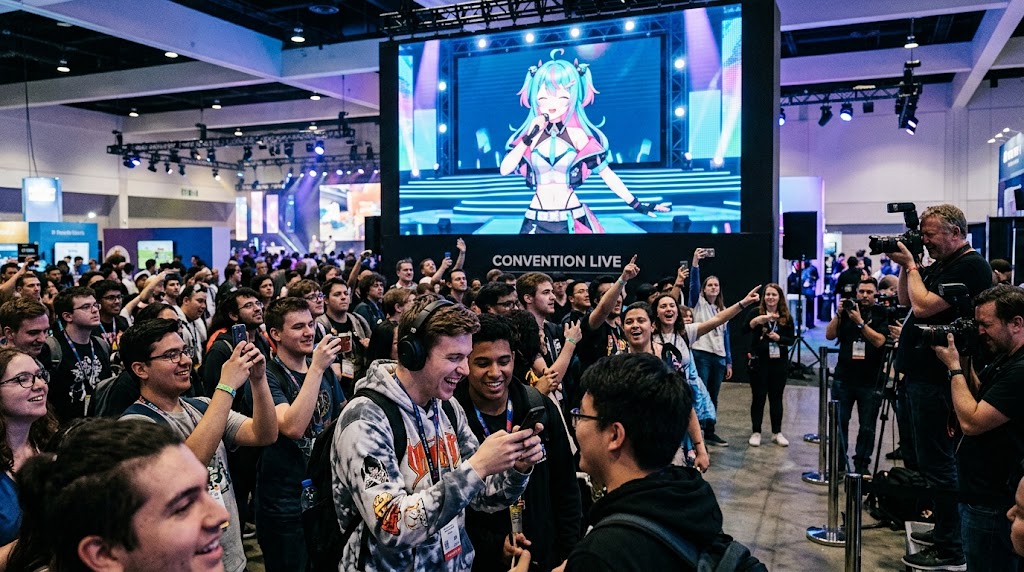
On any given evening, a livestream on YouTube or Twitch draws over 100,000 concurrent viewers. The host sings pop anthems, plays high-stakes competitive video games, reacts to fan commentary, and receives thousands of dollars in real-time micro-donations. Yet on screen, there is no physical human face. Instead, viewers interact with an anime-styled digital avatar whose facial expressions, eye blinks, and subtle head tilts mirror those of an unseen human performer operating behind a bank of sensors miles away.
Welcome to the world of Virtual YouTubers, or VTubers.
What began less than a decade ago as a quirky, localized experiment in Japanese digital subculture has exploded into a multi-billion-dollar global entertainment industry. Today, virtual streamers dominate global livestreaming leaderboards, fill physical sports arenas for hybrid concerts, partner with international consumer brands, and command market valuations that rival traditional media corporations.
The global VTuber market is projected to reach several billion dollars, driven by rapid audience expansion across Asia-Pacific, North America, and Europe. This phenomenon represents a fundamental realignment of the creator economy. At the intersection of real-time motion capture, deep parasocial psychology, anime aesthetics, and corporate talent management, VTubers are redefining what it means to be an internet celebrity in the digital age.
The Tech Behind the Virtual Mask
To understand how virtual streamers captured global attention, one must look at how technology lowered the barrier to entry for digital puppetry.
In the early years of the medium, creating a functional digital persona required tens of thousands of dollars in specialized optical motion-capture suits, studio space, and custom software pipelines. Today, an aspiring creator can launch a virtual avatar using a standard smartphone, a webcam, and consumer software applications like VTube Studio or Animaze.
The vast majority of modern VTubers utilize Live2D technology—a software framework that takes a two-dimensional illustration separated into dozens of digital layers and applies dynamic physics algorithms to simulate three-dimensional depth. When the performer smiles, winks, or turns their head in front of a webcam, computer vision algorithms map those movements onto the 2D illustration in real time, animating hair physics, eye tracking, and facial expressions with minimal latency.
At the enterprise tier, agency-backed performers utilize advanced 3D avatars built in engines like Unity or Unreal Engine 5. Paired with full-body tracking rigs, these setups allow performers to dance, perform live martial arts, and interact with physical props on virtual stages during high-production ticketed concerts.
This technological architecture separates the performer’s physical body from their digital presence, creating a modular identity where real-world physical constraints disappear.
Corporate Dynasties: The Business of Virtual Entertainment
While thousands of independent creators operate self-funded channels, the financial engine driving the VTuber boom is powered by specialized corporate talent agencies.
Japanese entertainment enterprises Cover Corp (which operates Hololive Production) and AnyColor Inc. (which operates Nijisanji) have transformed virtual talent management into publicly traded corporate empires.When Cover Corp listed on the Tokyo Stock Exchange, institutional investors validated a business model that integrates traditional idol agency management with high-margin digital media monetization.
These agencies function much like traditional talent incubators, but with a digital-first playbook:
Audition and Lore Creation: Agencies recruit professional vocalists, voice actors, and entertainers through competitive global auditions, pairing each performer with a bespoke character concept, backstory, and professional Live2D or 3D model.
Technical and Legal Infrastructure:The corporate entity provides high-end hardware, legal protection, intellectual property management, and technical support, allowing the performer to focus entirely on broadcasting and creative output.
Synergized Monetization: Revenue streams are extensively diversified beyond basic platform ad revenue. Agencies monetize through real-time stream donations (YouTube Super Chats), monthly channel tier memberships, physical merchandise drops, digital voice packs, brand sponsorships, and ticketed virtual/hybrid arena concerts.
Data from streaming analytics platforms consistently shows that VTubers capture a disproportionate share of global YouTube Super Chat earnings. Fans routinely donate hundreds of dollars during single streams to highlight their comments, receive direct verbal readouts from the avatar, or celebrate channel milestones, creating a lucrative recurring revenue engine.
Freedom Behind the Mask: Anonymity, Safety, and Escapism
Why are performers choosing to stream behind digital avatars rather than showing their real faces? For many creators, the digital mask offers unprecedented creative freedom and personal protection.
Camming and webcam streaming have historically exposed content creators—particularly female streamers—to severe real-world harms, including invasive body scrutiny, non-consensual harassment, doxxing, and physical stalking. Operating behind a virtual avatar provides an essential layer of personal safety and privacy. Performers can build massive global followings while preserving their real-world identities, allowing them to lead normal offline lives without fear of public recognition.
Beyond safety, the avatar provides creative liberation:
Age and Physical Neutrality: Performers are unburdened by conventional physical appearance standards, ageism, or racial bias. A performer’s success is judged entirely on their vocal talent, comedic timing, gaming skill, and ability to engage an audience.
Character Roleplay: Avatars allow streamers to embody fantasy archetypes—from mythical dragons and sea creatures to futuristic cyborgs—creating an immersive, fiction-forward atmosphere that blends streaming with interactive theater.
Emotional Distance: The digital layer allows creators to perform even on days when physical exhaustion or emotional distress would make appearing on a traditional webcam difficult.
For viewers, VTubing offers a unique brand of digital escapism. The combination of stylized anime visuals and genuine, unscripted human personality creates an accessible, comforting environment. Unlike traditional anime characters bound by scripted television episodes, a VTuber reacts instantly to chat messages, remembers returning fans, and shares daily life experiences in real time, constructing a deep sense of community connection.
From Niche Japanese Subculture to Global Pop Culture
The lineage of modern VTubing traces back to late 2016, when Japanese creator Kizuna AI popularized the term “Virtual YouTuber” and demonstrated the commercial potential of semi-autonomous digital presenters. However, the inflection point that transformed the medium into a global phenomenon arrived during the international lockdowns of 2020.
As millions of people sought online entertainment, agencies like Hololive and VShojo launched dedicated English-speaking talent branches.The debut of performers like Gawr Gura—an English-speaking VTuber whose channel accumulated millions of subscribers faster than almost any traditional streamer in platform history—signaled that virtual entertainment had transcended cultural and linguistic boundaries.
Today, the phenomenon has achieved mainstream commercial integration across global markets:
Mainstream Brand Endorsements: Global corporations, including major gaming publishers, technology manufacturers, and professional sports franchises like the Los Angeles Dodgers, actively partner with top VTubers for targeted promotional campaigns.
Music Industry Crossover:Virtual talent routinely release original music albums that top global iTunes and Billboard digital charts, collaborating with mainstream producers and performing live on major music festival stages via holographic projection screens.
Western Agency Expansion: Western talent management companies and indie collectives—such as VShojo, Phase Connect, and Idol Corp—have established strong operations outside Asia, demonstrating that the agency model translates effectively to Western media markets.
The Human Strain Inside the Digital Shell
Despite the lucrative opportunities and glossy aesthetic of the industry, the world of virtual streaming carries severe physical, psychological, and operational pressures.
Beneath the flawless, unaging digital avatar is a human being navigating an demanding entertainment career. Top-tier agency VTubers often maintain grueling schedules, streaming for five to ten hours a day while balancing voice lessons, dance rehearsals, merchandise approvals, and business meetings.
This intense workload introduces distinct industry challenges:
Vocal and Physical Burnout: Prolonged high-energy performance, coupled with maintaining artificial voice pitches or character accents for hours on end, leads to frequent vocal cord injuries and chronic physical exhaustion among talent.
“Soul Hunting” and Privacy Breaches: Dedicated internet sleuths and bad-faith actors frequently engage in “soul hunting”—the aggressive practice of uncovering and publishing a VTuber’s real-world identity, past online accounts, and private personal photos.
Contractual Volatility and “Graduation”: When a performer departs an agency—an event known in industry terminology as a “graduation” or termination—the agency retains ownership of the character model, lore, and channel assets. The performer must abandon the persona they built over years and start entirely from scratch under a new identity.
Parasocial Boundary Breaches: Because the medium relies heavily on deep emotional intimacy and fan monetization, creators occasionally face intense backlash, harassment campaigns, or toxic entitled behavior from fans when they establish personal boundaries or step outside fan-expected character traits.
The Future: Artificial Intelligence and Synthetic Personas
As generative artificial intelligence matures, the VTuber industry is entering its next phase of evolution: the rise of fully synthetic, AI-driven virtual personas.
Projects like Neuro-Sama—an AI-driven virtual streamer powered by large language models and computer vision—have demonstrated that autonomous digital entities can host interactive livestreams, play video games, and banter with chat rooms in real time without continuous human intervention.
This technological development is creating a clear divide within the ecosystem:
Human-Driven VTubers: Viewers value these creators for genuine human empathy, artistic performance, improvisational comedy, and authentic emotional shared experiences, treating the avatar as a creative costume worn by a skilled entertainer.
Autonomous AI Idols:Enterprise brands and tech developers utilize synthetic personas for 24/7 continuous broadcasting, automated customer engagement, language education, and scalable marketing campaigns where human availability is a limiting factor.
Industry analysts anticipate that while AI avatars will capture market share in transactional, educational, and promotional contexts, human-driven VTubers will retain their dominance in high-engagement entertainment, where authentic human connection remains irreplaceable.
A Permanent Realignment of Digital Entertainment
The explosive rise of VTubers is not a passing internet anomaly or a regional novelty. It represents the maturation of a new form of media consumption—one where visual presentation is entirely decoupled from physical identity, and where digital art forms serve as the primary stage for real-world human connection.
By fusing cutting-edge motion tracking, anime aesthetics, agency business models, and real-time community engagement, virtual streamers have rewritten the rules of the creator economy.As technology advances and spatial computing environments mature, the boundaries between the physical entertainer and the virtual persona will continue to blur, ensuring that VTubers remain at the forefront of global media for years to come.
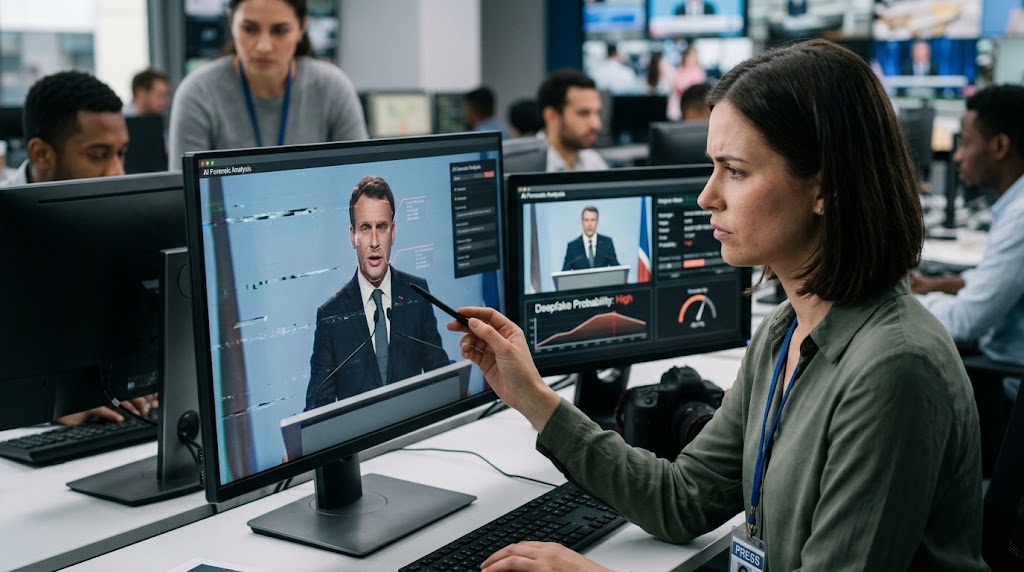
The Dark Side of Deepfakes: How AI Media Is Testing Digital Trust
For over a century, modern society operated on a basic sensory contract: seeing was believing, and hearing was recording. Photographs captured historical record, video footage provided courtroom evidence, and voice…
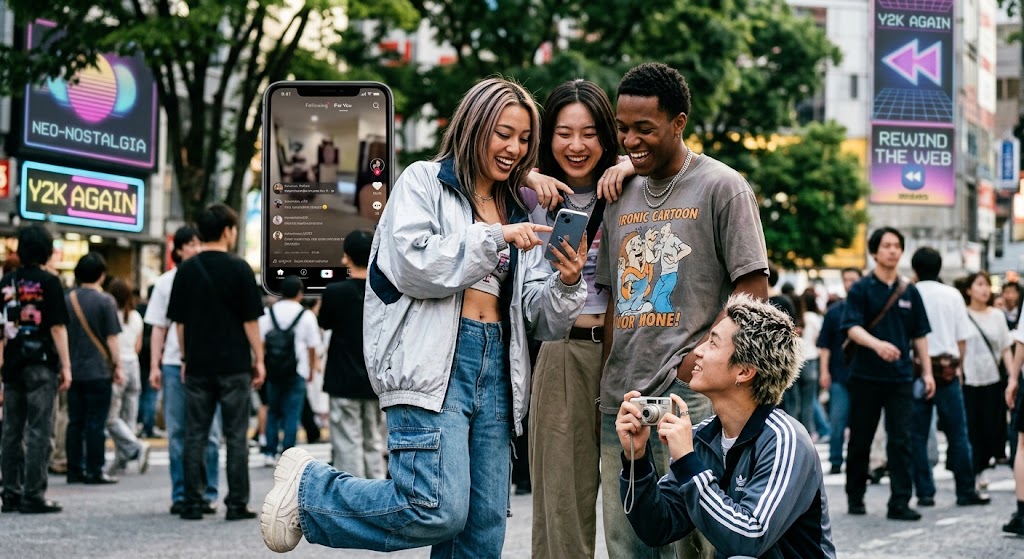
Nostalgia Bait: Why the Y2K Aesthetic Refuses to Die Online
In the early months of 2020, fashion forecasters and digital culture analysts predicted that the sudden resurgence of late-1990s and early-2000s style—the metallic jackets, low-rise denim, translucent plastics, and futuristic…

 Roland