 Roland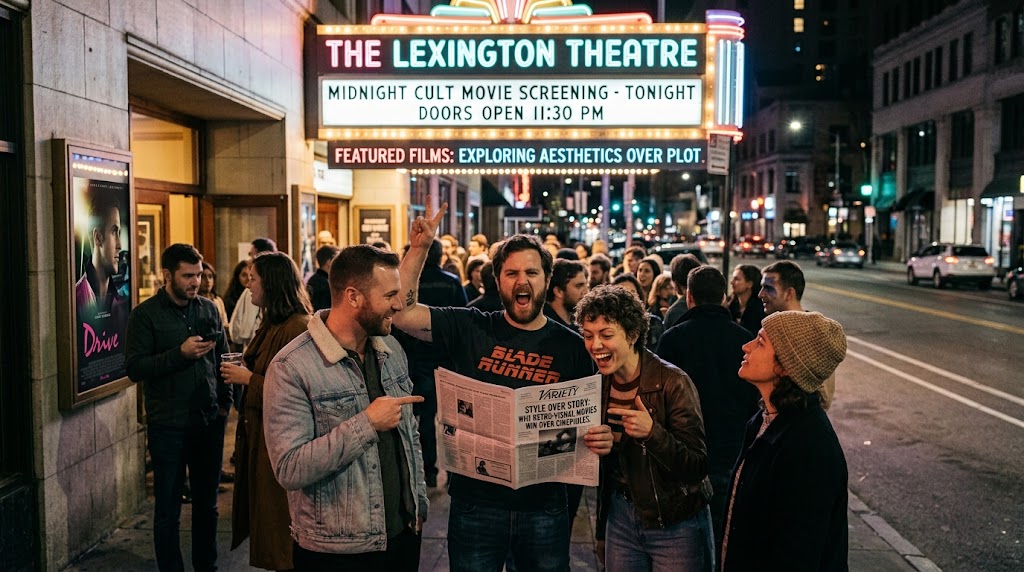
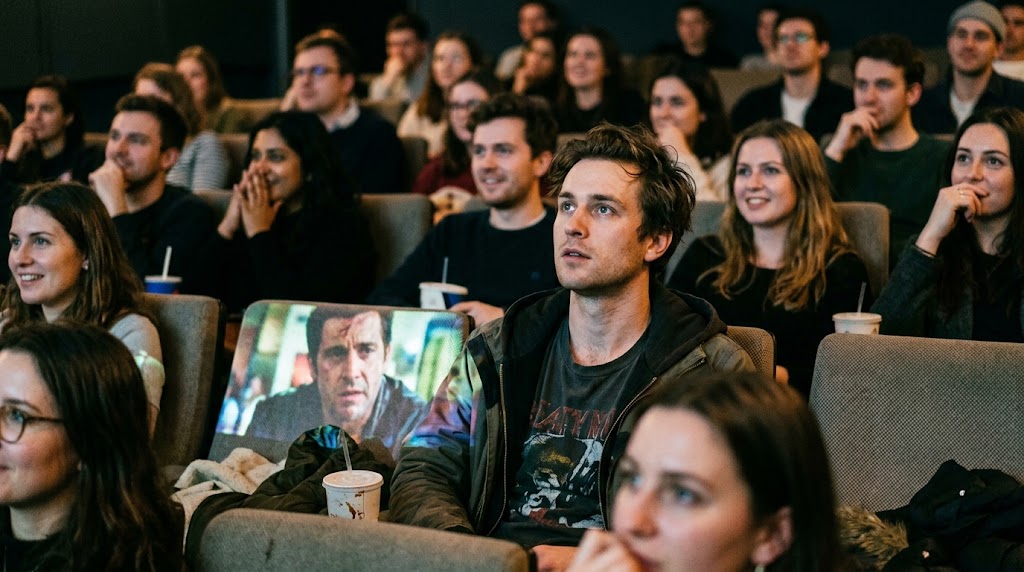
Inside a crowded arthouse cinema, the room is bathed in a saturated, blood-red neon glow. On screen, a camera glides slowly down a carpeted hallway, tracking a protagonist whose motives remain largely unexplained. The dialogue is sparse, the plot could be summarized in two sentences, and the pacing is deliberately hypnotic. Yet the audience sits spellbound, mesmerized by the heavy 35mm film grain, the soft anamorphic lens flares, and a synth-heavy score that vibrates through the floorboards.
This scene is playing out across independent theaters, film festivals, and streaming platforms worldwide. In an era dominated by hyper-polished, multi-hundred-million-dollar digital blockbusters, a quiet revolution has taken root among moviegoers. A growing movement of cinephiles is intentionally championing films that prioritize visual texture, period-accurate aesthetic homage, and sensory atmosphere over dense, script-heavy narratives.
This shift—frequently labeled “style over story”—is often weaponized by traditional film critics as a insult. For decades, classical dramatic theory held that screenwriting, character arcs, and logical plot progression formed the bedrock of cinema, while visual flair served merely as a decorative wrapper. Today, a new generation of filmmakers and audiences is reversing that hierarchy.
By treating color science, analog textures, lighting, and set design as the primary engines of emotional communication, retro-visual cinema is proving that in the motion picture medium, style is story.
The Rejection of Digital Homogeneity
To understand why retro aesthetics have captured the imagination of modern cinephiles, one must examine what contemporary cinema has largely lost: physical texture.
Over the past two decades, the film industry underwent a near-total transition from physical chemical film stock to high-resolution digital capture. While digital cameras offered unprecedented low-light sensitivity, financial efficiency, and computational flexibility, they also introduced a sterile visual uniformity.
Modern blockbusters, captured on ultra-clean 8K sensors and lit with flat, shadowless LED panels designed to facilitate post-production visual effects, often suffer from what cinematographers call “algorithmic smoothness.” Images are hyper-sharp, perfectly exposed, and entirely devoid of physical artifacting. Combined with aggressive digital color grading that defaults to standardized palettes, mainstream movies have increasingly come to look less like hand-crafted cinematic art and more like high-end consumer electronics commercials.
Retro-visual cinema operates as a direct, tactile rebellion against this digital homogeneity.
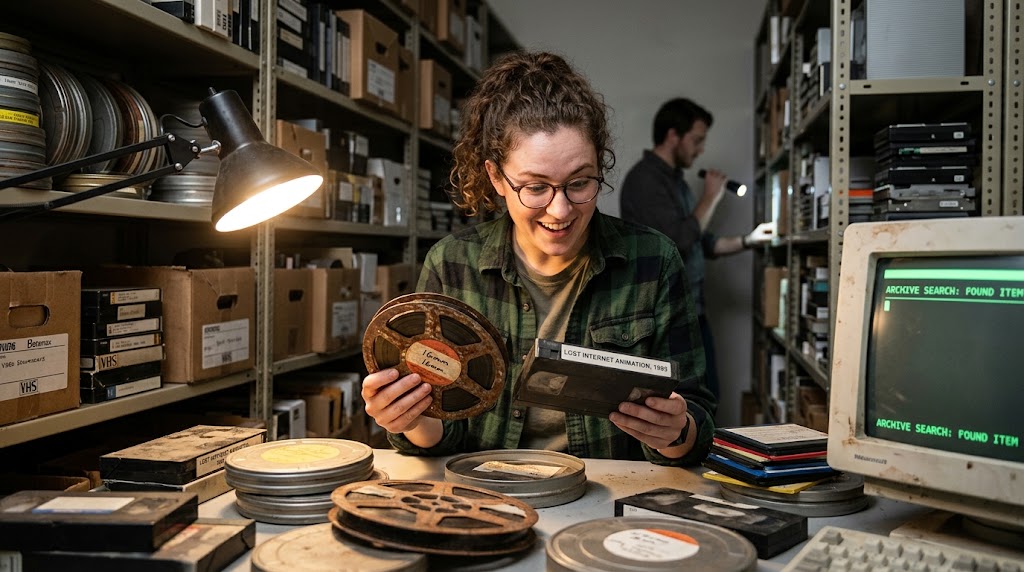
Filmmakers who embrace retro aesthetics deliberately reintroduce the physical imperfections that digital technology worked for years to eliminate. They shoot on 16mm or 35mm film stock, source vintage camera lenses from the 1960s and 1970s that introduce organic distortion and chromatic aberration, use gelatin gels over tungsten lights, and favor physical sets constructed with period materials over green-screen CGI.
The appeal of these choices is fundamentally sensory. Authentic film grain creates a living, breathing texture on screen—a microscopic dance of silver halide crystals that forces the viewer’s brain to actively engage with the image. The soft focus of vintage optics creates depth and mood that flat digital sensors struggle to replicate. For audiences fatigued by the frictionless, hyper-real sheen of modern visual effects, the tactile grit of retro cinema feels visceral, human, and authentic.
Atmosphere as the Primary Narrative Engine
The core philosophical argument driving retro-visual cinema is that film is, above all else, a visual and sonic medium. While literature communicates through written syntax and theater relies on spoken dialogue, cinema possesses a unique capacity to bypass rational intellectual parsing and communicate directly with the subconscious through image, color, rhythm, and sound.
In retro-visual cinema, atmosphere does not merely support the story; atmosphere becomes the story.
Consider the work of modern auteurs who have built their reputations on sensory world-building:
- Panos Cosmatos (Beyond the Black Rainbow, Mandy): Cosmatos constructs psychedelic, neon-drenched fever dreams that draw visually from late-1970s sci-fi book covers, Italian Giallo horror, and analog synth soundscapes. The narrative of Mandy is a straightforward revenge parable, yet the film’s hypnotic visual pacing and suffocating color palettes transform it into a profound exploration of grief and mythical madness.
- Ti West (X, Pearl, MaXXXine): West’s trilogy systematically channels distinct eras of cinema history—from the grainy, sun-bleached 16mm aesthetic of 1970s independent slasher films to the vibrant, Technicolor-inspired melodrama of Golden Age Hollywood, and the slick, video-store neon of 1980s Los Angeles. The storytelling relies heavily on audience familiarity with visual tropes, allowing the cinematography to communicate thematic depth faster than dialogue ever could.
- Anna Biller (The Love Witch): Shot meticulously on 35mm with period-accurate lighting setups, costume design, and set decoration mirroring 1960s Technicolor cinema, Biller’s film uses extreme visual stylization to explore gender roles, power, and female fantasy. The lush, vibrant aesthetic is not a superficial gimmick; it is the essential language through which the film’s satirical critique operates.
- Nicolas Winding Refn (Drive, The Neon Demon): Refn strips narrative down to minimalist archetypes, allowing glowing neon hues, long static takes, and synthwave scores to generate existential dread, romantic yearning, and visceral tension.
In these works, traditional screenwriting conventions—such as heavy exposition, complex subplots, and verbose character motivations—are deliberately minimized. The emotional truth of a scene is delivered through the slope of a shadow, the grain of a close-up, or the clash of crimson and cyan lighting. Cinephiles drawn to this style do not view the thinness of the plot as a flaw; they celebrate it as a clearing away of narrative clutter to allow pure cinema to breathe.
The Psychology of Anachronistic Nostalgia
The rise of retro-visual movies is also deeply tied to a cultural phenomenon known as “anachronistic nostalgia” or “nowstalgia”—a profound longing for a historical period that the person experiencing it never personally lived through.
A significant portion of the audience driving the popularity of retro-visual cinema belongs to Generation Z and younger Millennials. Born into an entirely digital world defined by smartphones, social media metrics, and predictive algorithms, these viewers have no living memory of the analog era—the 1970s grindhouse theater, the 1980s VHS rental store, or the 1990s indie film boom.
Yet, it is precisely this digital native demographic that is hunting down 35mm repertory screenings, buying physical Blu-ray editions, and championing retro-styled cinema online.
Sociologists and media theorists attribute this trend to a search for emotional grounding amidst modern digital anxiety. The turn of the 21st century brought constant connectivity, information saturation, and political volatility. By contrast, the aesthetic worlds of the 1970s, 80s, and 90s represent a time when technology felt tactile, physical, and bounded.
Carrying a vintage aesthetic allows modern viewers to inhabit an imagined past where life felt more tactile, unscripted, and mysterious.
Crucially, retro-visual movies do not simply copy old films; they recontextualize them. Modern directors take the visual language of exploitation flicks, pulp sci-fi, and low-budget horror, and apply modern subversion, diverse perspectives, and elevated craft. The viewer gets to experience the aesthetic magic of legacy cinema stripped of its historical social biases.
The Debate Over Aesthetic Fetishism
Despite its growing popularity among cinephiles, the “style over story” trend remains a point of intense debate within film criticism.
Detractors argue that an over-reliance on retro visuals can easily degenerate into empty pastiche—a superficial assembly of cool lighting, vintage fonts, and nostalgic references designed to disguise weak screenwriting, shallow character development, and a lack of original ideas. Critics point to instances where modern retro films resemble extended music videos or fashion editorials, prioritizing Instagrammable frames over emotional truth.
“When a film relies entirely on visual homage,” argues one traditional film theorist, “it stops being an act of storytelling and becomes an act of curation. The director is no longer exploring human condition; they are simply displaying their movie collection.”
However, defenders of retro-visual cinema contend that this critique rests on an outdated, literature-centric view of filmmaking.
For decades, film theory was dominated by the idea that a movie is primarily a filmed play or a visual novel. But cinema’s true antecedents include painting, architecture, photography, and music—art forms where mood, rhythm, structure, and abstraction are recognized as valid vehicles for profound human expression.
When a director uses a retro aesthetic effectively, they are not hiding behind style; they are using style as a psychological key. A heavy film grain can evoke mortality and time’s decay; a stark Technicolor palette can project internal delusion; a pulsing analog synthesizer can externalize unspoken terror. To demand that these visual accomplishments be subordinated to traditional three-act narrative structure is to misunderstand the inherent power of the medium.
Elevating the Disposable into Fine Art
Another major driver of the retro-visual movement is the cultural elevation of historical B-movies and genre cinema.
During the 1970s and 1980s, low-budget horror, Italian Giallo thrillers, martial arts flicks, and sci-fi B-movies were routinely dismissed by mainstream institutions as cheap, disposable entertainment. They were produced quickly for drive-ins and late-night grindhouse theaters, often working with tiny budgets and non-professional actors.
However, because these low-budget directors operated outside the rigid oversight of major Hollywood studios, they enjoyed immense creative freedom. Unburdened by the need to appeal to mass audiences, they experimented wildly with color gels, strange camera angles, surreal editing, and unconventional sound design.
Decades later, modern cinephiles and filmmakers have recognized that these historical “trash” genres were often far more visually inventive than the prestige studio dramas of their era.
Contemporary retro-visual movies act as a formal recognition of that forgotten artistic innovation. Directors like Quentin Tarantino, Edgar Wright, Robert Eggers, and Ti West take the raw visual language of legacy B-movies and execute it with top-tier cinematography, pristine sound engineering, and sophisticated thematic weight. They take what was once considered low culture and prove that its visual grammar can support genuine cinematic art.
The Future of the Cinematic Experience
The ascendancy of style-driven, retro-visual cinema carries significant implications for the future of the film industry.
As home television technology advances, with consumer screens offering extreme brightness and massive scale, movie theaters can no longer rely solely on offering a “big screen” to attract audiences. To convince people to leave their homes, cinema must offer an environment, an event, and an aesthetic experience that cannot be replicated on a living room television or a smartphone feed.
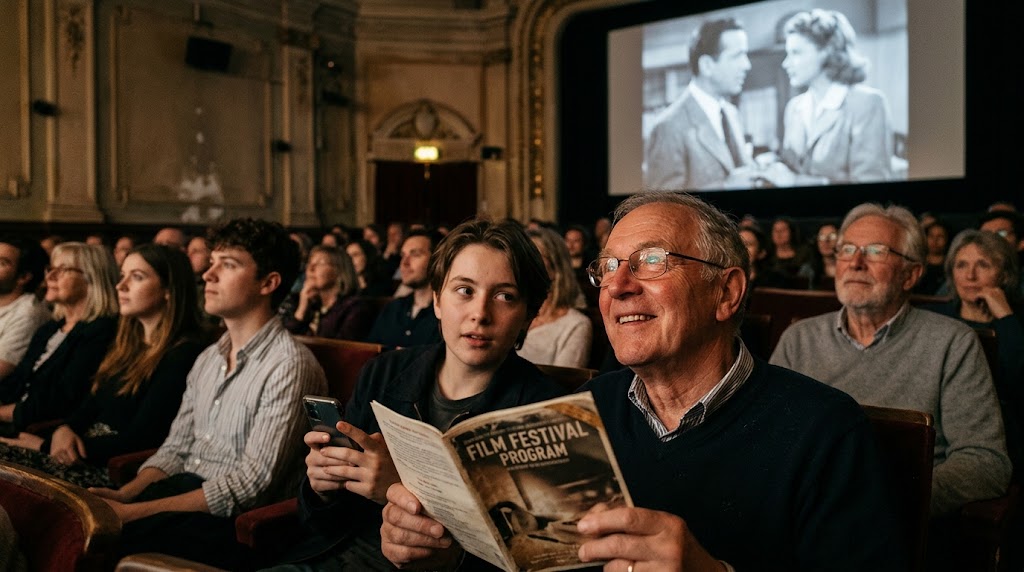
Retro-visual movies, particularly when projected on physical 35mm film prints or presented in specialized repertory houses with immersive sound setups, transform moviegoing back into a sensory ritual. They turn the theater into a sanctuary of mood, where viewers willingly surrender to a collective optical trance.
Moving forward, the line between analog techniques and digital tools will continue to blur. Advanced filmmakers are already combining vintage lenses, practical special effects, and real film stock with high-end digital color pipelines, creating hybrid visual worlds that honor the physical heritage of cinema while pushing technical boundaries forward.
Ultimately, the popularity of retro-visual movies among cinephiles is a testament to the enduring magic of the light beam in the dark. It is a declaration that audiences do not go to the cinema merely to be told a story that could be read in a book; they go to be moved by color, mesmerized by texture, and haunted by images that linger long after the screen goes black.