 Roland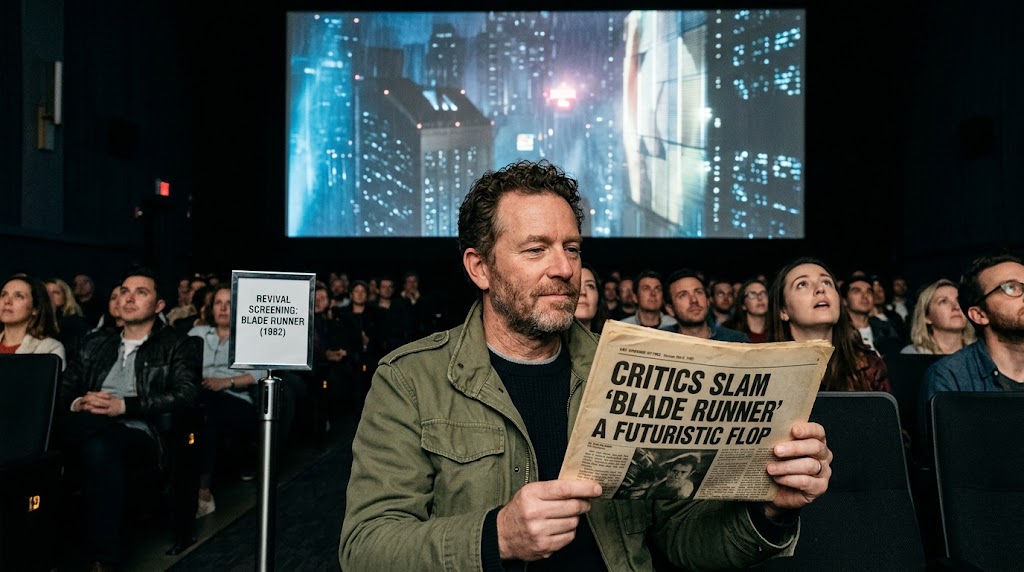
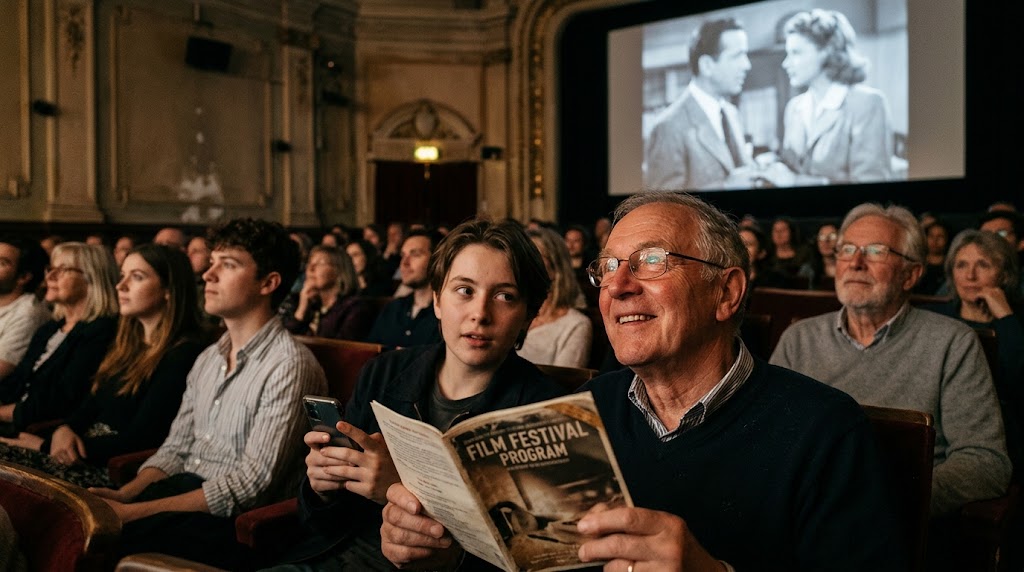
When the curtain fell on the premiere of Alfred Hitchcock’s Vertigo in 1958, the reaction from critics was decidedly lukewarm. Reviewers complained that the picture was far too slow, excessively long, and bogged down in psychological minutiae that lacked the crisp efficiency of the director’s earlier thrillers. The box office was equally unimpressed, barely allowing Paramount Pictures to break even.
Fifty-four years later, in 2012, the prestigious Sight & Sound international critics’ poll—held once a decade by the British Film Institute—made a historic announcement: Vertigo had displaced Orson Welles’ Citizen Kane as the greatest motion picture ever made.
The dramatic metamorphosis of Vertigo from a commercial disappointment to the pinnacle of cinematic art is not an isolated miracle. The history of cinema is littered with works that were initially met with critical hostility, audience indifference, or outright moral panic, only to be recognized decades later as visionary masterpieces.
This ongoing cycle of hostility and ultimate canonization reveals a fundamental truth about visual storytelling: true innovation frequently outpaces the critical vocabulary and cultural expectations of its era. When a filmmaker challenges established genre formulas, subverts societal comfort zones, or introduces radical visual techniques, the immediate response is often rejection. It takes the slow passage of time, generational turnover, and shifting cultural contexts for the true shape of a masterpiece to become visible.
The Critical Blindspot: When Vision Outpaces Contemporary Taste
The primary barrier facing revolutionary cinema is that contemporary critics and audiences evaluate new releases through the lens of prevailing trends. When a film refuses to conform to the established aesthetic language of its day, it is frequently misread as a failure of craft rather than an intentional evolution of the medium.
Few examples illustrate this critical blindspot more starkly than Stanley Kubrick’s 1980 adaptation of Stephen King’s The Shining.
Upon its initial release, The Shining was met with widespread critical skepticism and open hostility from traditional horror enthusiasts. Reviewers for major publications dismissed the film as an emotionally vacant exercise in stylistic excess, criticizing Kubrick for favoring vast, brightly lit hotel corridors over traditional gothic shadows. Stephen King publicly disowned the adaptation, criticizing its departure from his source novel and its treatment of the lead characters.
The film’s initial reception was so hostile that it earned two nominations at the inaugural Golden Raspberry Awards in 1981—one for Kubrick as Worst Director and another for Shelley Duvall as Worst Actress.
Decades later, that initial reception seems baffling. Today, The Shining is universally analyzed as a masterclass in psychological dread, spatial disorientation, and formal precision. Kubrick’s decision to flood the Overlook Hotel with harsh, sterile fluorescent lighting is now recognized as a brilliant subversion of horror tropes, creating a claustrophobic nightmare in plain sight. Duvall’s performance, long misinterpreted as hysterical overacting, has been re-evaluated as an authentic, harrowing depiction of isolation and domestic terror.
THE CRITICAL RE-EVALUATION LIFECYCLE

Initial Premiere:
Commercial Flop / Negative Reviews / Genre Misunderstanding

Phase 1 (5–10 Years):
Home Video Discovery / Niche Cult Following / Academic Defense

Phase 2 (15–25 Years):
Director’s Cut Restorations / Retrospective Screenings / Critical Re-Assessment

Phase 3 (30+ Years):
Canonical Status / Influence on New Filmmakers / Historic Preservation
A similar fate befell Charles Laughton’s 1955 noir masterpiece, The Night of the Hunter.
Laughton’s only directorial effort—a terrifying fable starring Robert Mitchum as a corrupt preacher hunting two children across Depression-era America—was savaged by critics for its surreal, expressionistic lighting and jarring tonal shifts between fairy-tale innocence and gothic horror. The film bombed so severely that Laughton was crushed by the failure and never directed another motion picture.
Today, The Night of the Hunter is preserved in the United States National Film Registry, celebrated as one of the most visually stunning and artistically daring American films of the 1950s.
The Brutal Summer of 1982: The Dismissal of Genre Classics
The commercial and critical alignment of a single era can sometimes create a perfect storm of misjudged releases. Never was this more evident than in the summer of 1982, when two future sci-fi and horror landmarks hit theaters within weeks of each other: Ridley Scott’s Blade Runner and John Carpenter’s The Thing.
Both films faced an insurmountable cultural obstacle: they opened in the immediate wake of Steven Spielberg’s E.T. the Extra-Terrestrial. In a world recovering from economic recession, audiences and critics craved optimistic, comforting visions of speculative fiction. Scott and Carpenter offered the exact opposite.
- Blade Runner: Adapted from Philip K. Dick’s fiction, Scott’s vision of a rain-slicked, corporate-dominated 2019 Los Angeles was heavily criticized for its deliberate pacing, melancholic tone, and voiceover narration imposed by nervous studio executives. Trade publications labeled it slow and self-indulgent. It lost millions at the box office.
- The Thing: John Carpenter’s claustrophobic masterpiece set in an Antarctic research station was met with near-universal vitriol. Major reviewers called it “instant junk” and “pure trash,” accusing Carpenter of prioritizing stomach-churning special effects over character development. Cinefantastique magazine famously questioned on its cover if The Thing was “the most hated movie of all time.”
The passage of time systematically dismantled those initial assessments.
As the digital age arrived, Blade Runner’s visual architecture became the foundational blueprint for modern cyberpunk, influencing everything from urban architecture to video game design. Subsequent re-releases—most notably Scott’s 1992 Director’s Cut and 2007 Final Cut—stripped away the studio-mandated voiceover, revealing a noir thriller of existential beauty.
Meanwhile, The Thing underwent one of the most dramatic rehabilitations in film history. As digital visual effects began to dominate modern cinema, Rob Bottin’s groundbreaking practical creature effects in The Thing were recognized as an extraordinary peak of physical craftsmanship. Beyond the special effects, film scholars realized that Carpenter’s relentless, paranoid masterpiece was a brilliant allegory for societal distrust, cold-war isolation, and bodily vulnerability.
Distribution Shift: How Secondary Markets Rescued Classics
In the traditional theatrical distribution model of the 20th century, a film that failed to make money in its opening weeks was effectively condemned to death. Theater owners quickly pulled underperforming titles, leaving them with little chance to find an audience through organic word-of-mouth.
The advent of home video, cable syndication, and dedicated television broadcasting transformed the secondary market into an engine of cinematic redemption.
The definitive case study in television-driven rehabilitation is Frank Capra’s 1946 holiday classic, It’s a Wonderful Life.
Starring James Stewart as the despondent George Bailey, the film was a major financial disappointment upon its initial release. Produced by Capra’s independent production company, Liberty Films, the picture failed to break even at the box office, driving the studio into financial ruin and subsequent sale. Critics found its dark depictions of financial ruin, suicidal ideation, and small-town corruption uncomfortable, contrasting sharply with Capra’s earlier, lighter comedies.
THE SECONDARY MARKET REDEMPTION ENGINE

Theatrical Failure (1946):
$3.1M Gross vs. $3.8M Cost → Studio Bankruptcy → Forgotten Asset

Legal Oversight (1974):
Copyright Expiration → Public Domain Release → Free Broadcast Rights

Syndication Surge (1970s–1980s):
Hundreds of TV Stations Broadcast Annually → Generations of Viewers

Cultural Canonization (Present):
Recognized as the Ultimate Holiday Masterpiece & Film Classic
The transformation occurred due to a clerical error. In 1974, a copyright oversight allowed the film’s copyright protection to lapse, placing It’s a Wonderful Life into the public domain.
Because television stations could broadcast public-domain content without paying royalty fees, local networks across America began running the film continuously during the November and December holiday seasons. Over two decades of constant television exposure, millions of viewers discovered the film’s extraordinary depth, emotional honesty, and technical brilliance. What was once a studio-destroying flop became an unassailable cultural tradition.
In the 1990s, the home video rental boom executed similar rescues for contemporary titles:
- The Shawshank Redemption (1994): Frank Darabont’s prison drama opened to anemic box office numbers, earning just $16 million against its $25 million budget due to a confusing title and fierce competition from Pulp Fiction and Forrest Gump. Warner Home Video took a massive gamble by shipping 320,000 rental VHS tapes to video stores across North America. Driven by word-of-mouth rentals and constant broadcasts on TNT, the film became the most-rented video of 1995 and currently holds the top rating on IMDb.
- Fight Club (1999): David Fincher’s dark satire of consumerism and toxic masculinity was mismanaged by 20th Century Fox’s marketing department, which advertised it as a literal fighting movie to sports networks. It flopped in theaters. However, Fincher’s meticulous DVD release—featuring interactive menus, audio commentaries, and detailed production archives—sold millions of copies, transforming the film into a defining cultural touchstone for a generation.
- Office Space (1999): Mike Judge’s satire of cubicle culture earned a paltry $12 million theatrically after studio executives struggled to market its understated comedy. Once released on home video, its sharp critique of corporate bureaucracy turned it into a staple of workplace culture, quoted in offices worldwide.
Subverted Genres and the Modern Critical Shift
A major catalyst for cinematic re-evaluation is the evolution of critical theory itself. As new generations of writers, academics, and film theorists enter the cultural conversation, they bring fresh analytical frameworks that can illuminate films previously dismissed by male-dominated or conservative media outlets.
A notable example of this dynamic is the re-appraisal of Karyn Kusama’s 2009 horror-comedy, Jennifer’s Body.
Written by Oscar-winner Diablo Cody and starring Megan Fox, Jennifer’s Body was aggressively mismarketed by studio executives who targeted the film toward adolescent males, emphasizing hyper-sexualized marketing imagery of its lead actress. Contemporary critics dismissed the picture as a trashy, shallow exploitation flick, failing to engage with its script or underlying themes.
A decade later, amidst the rise of the #MeToo movement and a broader re-examination of 2000s media culture, feminist film critics initiated a comprehensive re-evaluation of Jennifer’s Body.
New analysis revealed that the film was a sharp, subversive horror comedy exploring female friendship, trauma, and bodily autonomy. What was once dismissed as male-gaze trash is now recognized as a vital cult horror classic that was deliberately undermined by its own marketing campaign.
A similar critical evolution occurred with David Lynch’s 1992 film, Twin Peaks: Fire Walk with Me.
Serving as a prequel to his canceled, beloved television series Twin Peaks, the film was premiered at the Cannes Film Festival to loud boos, walkouts, and hostile reviews. Critics condemned Lynch for abandoning the quirky humor and eccentric soap-opera tone of the television series in favor of a devastating, uncompromised examination of incestuous trauma, sexual violence, and grief.
For twenty-five years, Fire Walk with Me was treated as a embarrassing misstep in Lynch’s filmography. However, following the release of Twin Peaks: The Return in 2017—which integrated the prequel’s mythology directly into its narrative—critics returned to the 1992 film. Today, it is widely considered one of Lynch’s most powerful artistic achievements, praised for its extraordinary lead performance by Sheryl Lee and its uncompromising emotional bravery.
The Mechanics of Re-Evaluation: Why Does a Movie Flip?
What transforms a hated movie into an iconic one? The mechanics of cinematic re-evaluation rely on several intersecting cultural factors:
| Dimension | Initial Premiere Phase | Re-Evaluation Phase |
|---|---|---|
| Cultural Context | Judged against immediate pop-culture trends and commercial expectations | Judged on intrinsic artistic merits, form, and long-term influence |
| Audience Demographics | Broad mass-market audiences seeking familiar narrative structures | Specialized cinephiles, academics, and younger generations |
| Distribution Format | High-pressure, short-window theatrical screenings | Home media, restored director’s cuts, repertory cinema revivals |
| Critical Lens | Often dominated by traditional, homogenous media gatekeepers | Encompasses diverse, multi-generational, and specialized critical perspectives |
| Media Context | Evaluated in isolation upon immediate release | Evaluated as part of an auteur’s complete body of work |
- Generational Turnover: New generations of viewers encounter films without the baggage of their original publicity campaigns, box office performances, or personal celebrity gossip surrounding the cast and crew. They evaluate the work purely as a standalone piece of art.
- Influence on Future Auteurs: When acclaimed new filmmakers cite a forgotten or hated title as a primary inspiration, it compels critics to revisit the original work. Quentin Tarantino, Guillermo del Toro, and Christopher Nolan have repeatedly forced the critical establishment to re-evaluate low-budget B-movies, dark sci-fi, and misjudged studio projects through their advocacy.
- The Director’s Cut Era: Studio interference has derailed numerous masterpieces upon their initial theatrical runs. The release of restored director’s cuts—such as Terry Gilliam’s Brazil (1985), James Cameron’s The Abyss (1989), or Sergio Leone’s Once Upon a Time in America (1984)—allows audiences to see the film as originally intended, exposing studio edits that ruined pacing or logic.
- Technological Context Shift: As cinema technology changes, legacy techniques take on new artistic value. Films that were criticized for looking weird or synthetic upon release often become visual artifacts celebrated for their unique aesthetic textures.
The Fragile Future of Cinematic Redemption
While the history of cinema proves that time is the ultimate judge of artistic value, the modern media landscape poses new, unprecedented challenges to the process of rediscovery.
In the eras of broadcast television, home video, and DVDs, films had a physical long tail. A movie could sit on a video store shelf for five years, waiting for a curious viewer to pick it up based on its cover art. Independent revival houses could book a 35mm print of an obscure 1970s failure, building a local cult audience through midnight screenings.
In the digital streaming era, that physical long tail has been replaced by algorithmic curation.
Today, streaming platforms control access to massive digital libraries. If a licensed title or original streaming movie fails to generate strong completion metrics within its first week on a platform, algorithms stop recommending it to users. Even more concerning, platforms routinely delist underperforming titles entirely to save on tax liabilities or licensing fees, rendering films inaccessible to the public.
Without physical media releases or long-term digital availability, the safety net that rescued The Shawshank Redemption, Blade Runner, and It’s a Wonderful Life is fraying. A misunderstood masterpiece released today risks being quietly erased from digital catalogs before a future generation ever gets the chance to discover it.
The Enduring Triumph of Artistic Vision
The history of films that moved from hated to iconic serves as a permanent reminder of the limits of immediate consensus. Box office figures measures commercial timing, marketing budgets, and societal mood; they do not measure artistic quality or emotional truth.
The critics who booed Twin Peaks: Fire Walk with Me at Cannes, the reviewers who called The Thing “instant junk,” and the audiences who walked out of Vertigo were evaluating art through the narrow window of their immediate present. The filmmakers who created those works were looking further ahead, building visual and narrative worlds that demanded more from the audience than contemporary culture was prepared to give.
The ultimate triumph of cult cinema lies in its resilience. Great art possesses an undeniable internal gravity; no matter how deeply it is buried by negative reviews, studio panics, or box office failures, it eventually pulls the world back toward it. The survival of these misjudged films reminds us that in the long story of cinema, the opening weekend is merely a footnote—and time gets the final word.