 Roland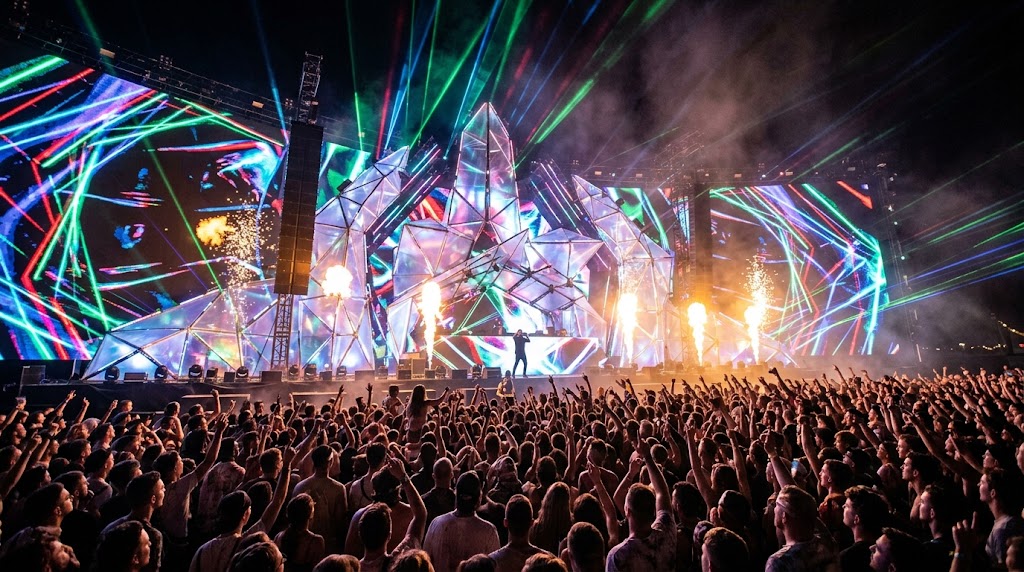
Long before an artist steps up to the microphone or strikes the opening chord of a stadium tour, the audience is already immersed in a story. The medium for that story is not sound, but space.
Inside crowded arenas, festival grounds, and theater halls across the world, the physical architecture of the stage has undergone a monumental shift. What was once a simple elevated wooden platform designed to give audiences a clear line of sight has transformed into a dynamic canvas of fine art, structural engineering, and spatial light design. Massive kinetic sculptures rise and morph overhead; intricate projection-mapped textures turn static steel frames into fluid digital landscapes; and precise arrays of automated lighting fixtures sculpt physical beams that feel solid enough to touch.
In contemporary live performance, stage design is no longer merely a backdrop to complement a musical act. It has become a primary creative voice—a visual protagonist that defines the emotional atmosphere, dictates the narrative pace, and frequently steals the show.
From Functional Platform to Living Architecture
The history of live performance design is a trajectory from utility to total sensory immersion. For decades, concert stages were functional necessities: scaffolding to elevate performers, basic rigs to hang amplification speakers, and static tungsten spotlights to illuminate the band.
The modern era of stage design dismantled this minimalist approach, replacing it with the concept of “living architecture.” Today’s stage environments are dynamic, motorized ecosystems that shift, flex, and evolve in tandem with the performance narrative.
This evolution has been spearheaded by a generation of visionary stage designers, scenographers, and creative studios—such as Es Devlin, Willie Williams, STUFISH Entertainment Architects, and Moment Factory—who approached the stage not as a venue for equipment, but as a site-specific museum for contemporary installation art.
Rather than building sets that remain static for two hours, modern scenography creates architectural environments that transform continuously:
- Kinetic Structural Mechanics: Motorized LED screens, articulated lighting trusses, and movable stage lifts physically reconfigure the performance space between songs, altering the scale of the venue from an intimate room to a vast cosmic void.
- Spatial Sculpting: Utilizing custom-built geometric sculptures, mirrors, and tensile fabrics to frame the performer within abstract shapes that evoke specific emotional states.
- Architectural Integration: Designing stage structures that interact seamlessly with the physical geometry of historic arenas, outdoor stadiums, or natural landscapes.
By treating the stage as an evolving piece of sculpture, performance designers ensure that the visual landscape retains a sense of momentum, matching the dramatic arc of a musical set list with a corresponding visual progression.
Lighting as Narrative: Sculpting Space and Emotion
If physical staging provides the skeleton of a show, lighting acts as its nervous system. Modern light design has expanded far beyond the simple directive of making performers visible; it is an active narrative engine capable of manipulating human perception, spatial awareness, and emotional energy.
The technological leap in lighting design over the past two decades has been radical. The industry’s transition from traditional incandescent bulbs to high-output, low-energy LED fixtures, automated moving heads, and high-precision laser systems has granted lighting directors surgical control over color, speed, and form.
Traditional Stage Lighting: Static spotlights, slow color gels, broad area wash.
Modern Spatial Light Design: Pixel-mapped LED arrays, high-speed automated fixtures, atmospheric volume sculpting.
Lighting designers deploy specific spatial techniques to transform a physical space:
- Volumetric Light Architecture: By combining ultra-fine atmospheric haze with tightly focused, high-intensity beams, lighting directors create physical-looking structures made purely of photons. Beams form virtual ceilings, luminescent walls, or cathedral-like pillars that enclose the performer in light.
- Pixel Mapping and Dynamic Color: Modern lighting grids allow every individual diode within a fixture to be programmed independently. Instead of shifting a whole stage from red to blue, designers run high-speed video signals across thousands of fixtures, creating organic waves of light that mimic liquid, fire, or digital noise.
- Negative Space and Silhouette: Designers increasingly utilize darkness as a physical element. By blacking out the surrounding stage and backlighting a performer with stark monochromatic light, the design reduces complex physical setups to striking, minimalist visual icons.
Through precise synchronization with audio signals via timecode automation, lighting moves at the exact microsecond of a beat drop or a vocal swell. The result is an environment where sound and vision merge into a single, unified sensory impact.
Art Installations and the Rise of Kinetic Engineering
The line separating fine art museums from concert arenas has blurred significantly. Today, major musical tours and festival grounds serve as temporary homes for some of the world’s most advanced and expensive contemporary art installations.
These installations often combine fine art aesthetics with high-grade industrial engineering. Massive kinetic elements—such as robotic arms programmed to maneuver giant video displays, inflatable sculptures spanning hundreds of feet, or custom-loomed fiber-optic chandeliers—are routinely transported across continents in fleets of specialized cargo trucks.
The impact of these installation-driven designs is evident in landmark moments of live performance history:
- Daft Punk’s Alive 2006 Pyramid: A watershed moment in electronic music design, where a LED-lined architectural pyramid transformed a dance performance into an iconic monument of digital art.
- U2’s 360° Tour (“The Claw”): A 150-foot-tall, four-legged steel giant that housed the entire sound, light, and video system, eliminating traditional backstage sightline barriers and turning a stadium into a circular, inclusive space.
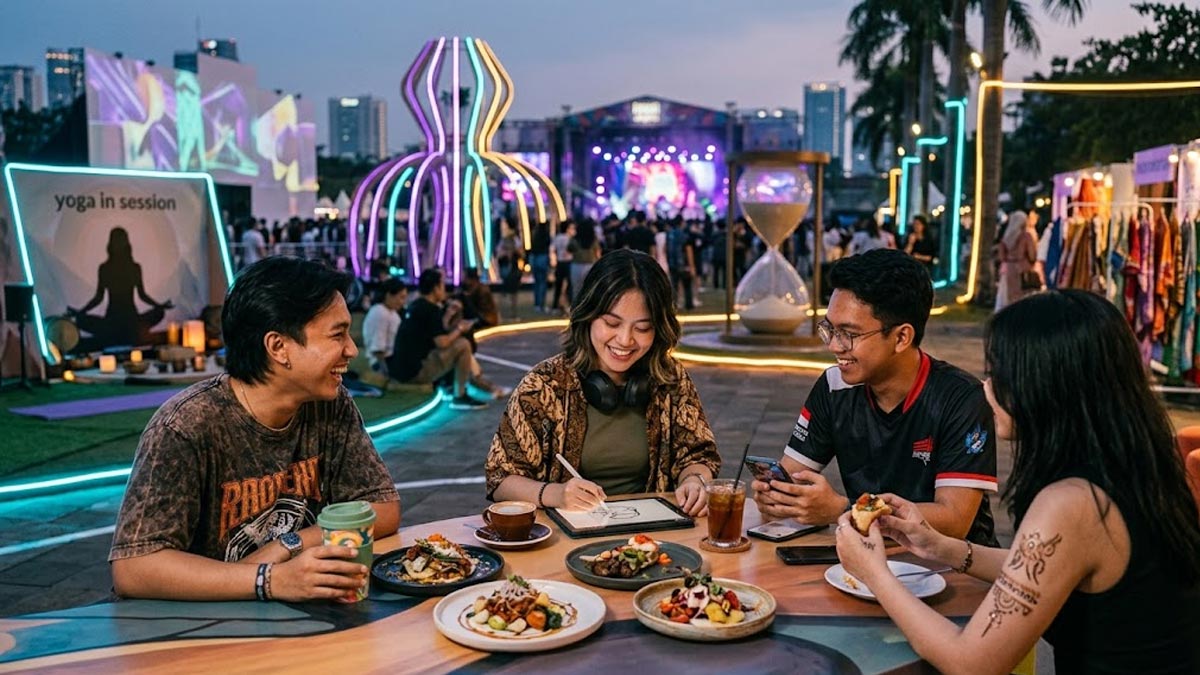
- Festival Art Monoliths: Outdoor events like Coachella, Glastonbury, and Primavera Sound commission large-scale, site-specific art installations that become central geographic anchors and visual identities for the festivals themselves.
These installations operate on a scale rarely possible in traditional art galleries. They offer artists and sculptors the opportunity to present their work to audiences of tens of thousands of people simultaneously, bringing industrial-scale contemporary art into popular culture.
Projection Mapping and Generative Digital Canvases
The integration of high-lumen laser projectors and real-time graphics engines has unlocked a new dimension in stage design: the ability to turn any physical surface into a dynamic digital screen.
Projection mapping allows visual designers to overlay complex digital animations onto three-dimensional physical structures with microscopic accuracy. A faceted wooden sculpture, an array of hanging geometric panels, or even the natural rock formations of an outdoor amphitheater can be mapped so that digital graphics bend, fold, and illuminate along their exact physical edges.
Concurrently, the rise of real-time generative software platforms—such as TouchDesigner and Notch—has fundamentally altered how stage visuals are rendered:
Legacy Pre-Rendered Video: Fixed video files played on loop; zero adaptability to live variations.
Real-Time Generative Art: Graphics rendered live in camera; responds instantly to audio pitch, movement, and crowd energy.
Instead of playing static, pre-recorded video loops on an overhead screen, generative systems process live inputs from the stage. Motion-capture cameras track a performer’s movements across the stage, while audio sensors analyze vocal pitch, drum frequencies, and tempo. The software uses this live data to generate unique, unrepeatable visual art on the fly—causing digital tendrils of light to chase a dancer’s hands or forcing a visual background to explode in synchronization with a live drum solo.
This real-time responsiveness restores an element of organic spontaneity to heavily technical productions, ensuring that no two nights of a global tour look precisely identical.
The Social Media Economy of the Visual Spectacle
The economic investment required to design, fabricate, and tour high-level stage productions has skyrocketed. Yet, global promoters and artists continue to allocate tens of millions of dollars to production design. The primary driver behind this financial commitment is the modern digital attention economy.
In an era where nearly every attendee carries a high-definition camera in their pocket, the visual design of a stage serves as a tour’s primary promotional engine. Social media platforms like TikTok, Instagram, and YouTube are dominated by short, visually striking video clips captured by fans in the crowd.
Stage designers now actively architect “hero moments”—specific, highly dramatic visual reveals within a show engineered specifically to capture human awe and translate powerfully onto smartphone screens:
- The Dramatic Reveal: A sudden, unexpected physical shift in the stage architecture—such as a floating catwalk descending from the ceiling or a massive art piece illuminating for the first time.
- High-Contrast Monochromatic Imagery: Bold, clean visual compositions that retain their clarity and visual impact even when recorded on low-cost mobile camera sensors.
- Immersive Lighting Drops: Moments where the stage lights sweep outward into the audience, turning the crowd itself into a lit visual ocean.
When a stage design generates a breathtaking, visually distinct moment, millions of user-generated videos flood social feeds within hours of a show closing. This viral visual reach creates intense public interest, driving primary ticket sales for subsequent tour dates and establishing an artist’s reputation as a world-class live act.
Sustainable Spectacle: The Next Design Frontier
As the scale of stage design has expanded, so too has scrutiny regarding its environmental cost. Transporting hundreds of tons of custom steel, motorized equipment, and high-density video screens across global air and road networks carries a massive carbon footprint.
Consequently, the next great revolution in stage design is focused on environmental engineering and circular design principles:
- Lightweight and Modular Fabrication: Utilizing high-strength, lightweight aluminum alloys and engineered carbon fiber to reduce freight weight, allowing production setups to be transported using fewer trucks and cargo planes.
- Energy-Efficient LED Transition: Replacing high-draw traditional tungsten and arc lamps with low-power LED source fixtures, enabling massive light shows to run on fractionally smaller battery microgrids or local grid connections.
- Circular Set Construction: Designing tour sets built entirely from recycled, recyclable, or upcycled materials, engineered to be fully dismantled and repurposed at the conclusion of a tour cycle rather than ending up in municipal landfills.
Leading design studios are proving that environmental restraint can stimulate rather than limit artistic creativity, inspiring minimal, high-impact concepts that rely on clever spatial design and efficient technology rather than brute material volume.
The Permanent triumph of the Physical Space
The surge of interest in advanced stage design offers a profound commentary on modern human culture. In an increasingly digital world where music, cinema, and social interaction are mediated through small, personal screens, the shared real-world spectacle has become more precious than ever.
Stage design at its highest level achieves something that digital recordings cannot: it constructs a physical space where tens of thousands of strangers come together to experience collective wonder. By merging architecture, lighting, fine art, and advanced engineering, modern scenographers have transformed the concert stage into the supreme gallery of the twenty-first century.
When the music fades and the house lights finally come up, the memory that remains burned into the listener’s mind is rarely just the sound of a voice or the line of a song. It is the image of a towering structure of light and steel—a fleeting, luminous city built for a single night, where art and human energy briefly became one.


 admin
admin