 Roland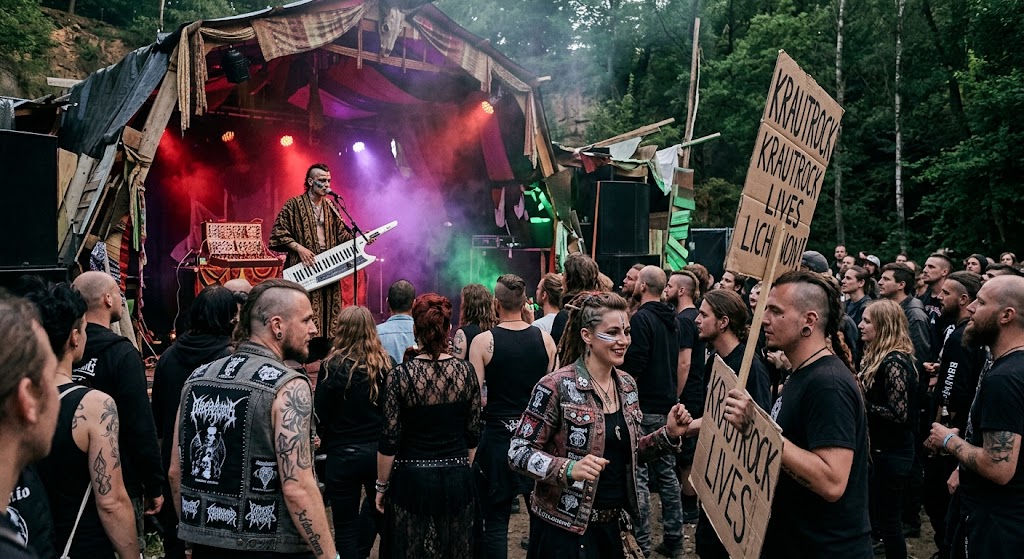
In a remote forest glade in Western Europe, three thousand people gather under a canopy of oak trees. There are no corporate brand activations, no VIP selfie lounges, and no sprawling corporate sponsor banners. The music emanating from the hand-built sound system is not top-40 pop or commercial EDM, but an intricate fusion of modular ambient synthesis and microtonal acoustic instrumentation. The crowd, dressed in unpretentious, functional gear, is not watching through raised smartphone screens. They are listening.
Simultaneously, in an industrial warehouse district in the Netherlands, thousands of heavy metal purists assemble for a four-day celebration dedicated strictly to doom, sludge, and experimental post-metal. In a desert valley in North America, electronic music enthusiasts assemble for a gathering capped at precisely fifteen hundred tickets, where the line-up is kept secret until artists step onto the stage.
While legacy mega-festivals struggle with escalating ticket prices, artist cancellations, and consumer fatigue, a quiet revolution is sweeping the global live music landscape. Niche music festivals—intimate, highly specialized events curated around specific subcultures, micro-genres, and artistic philosophies—are experiencing unprecedented growth.
Where multi-genre mega-events aim for broad commercial appeal, niche festivals do the exact opposite. By deliberately narrowing their focus to hyper-specific musical communities, these gatherings have transformed into the financial and cultural sanctuaries of modern subculture. In an era dominated by algorithmic streaming and commodified live entertainment, niche festivals are proving that for millions of music fans, small-scale authenticity beats mass-market spectacle every time.
The Backlash Against the Corporate Mega-Festival
To understand why niche music festivals are thriving, one must first look at the structural crisis facing traditional mega-festivals.
For two decades, the global live music industry was defined by a race to total scale. Corporate entertainment conglomerates acquired independent events, expanding capacities from twenty thousand to over one hundred thousand attendees per day. Line-ups grew increasingly homogenous, relying on a narrow rotation of stadium-pop headliners, mainstream rap acts, and commercial festival DJs designed to attract the broadest possible demographic.
However, this commercial expansion came at a steep cultural and financial cost. Ticket prices for major multi-genre events surged into hundreds of dollars, while mandatory service fees, inflated concession costs, and tiered VIP passes turned the festival ground into a stratified consumer space.
More critically, mega-festivals began to suffer from a dilution of identity. When an event attempts to cater simultaneously to pop fans, rap listeners, indie rock enthusiasts, and casual tourists, the shared sense of community vanishes. Attendees find themselves sharing space with crowds who have fundamentally different social codes, aesthetic priorities, and musical expectations.
The resulting environment often feels less like an artistic celebration and more like a high-friction commercial park. As corporate sponsors saturated venues with interactive marketing booths and Instagram-focused art installations, dedicated music lovers began seeking alternatives. The search for meaningful live experiences has driven fans away from massive commercial fields and directly into the arms of specialized, community-led gatherings.
Digital Discovery Meets Physical Sanctuary
The rise of niche festivals is directly linked to how human beings discover music in the digital age.
Historically, subcultures were bound by geography. A local punk scene in London, a techno movement in Detroit, or a black metal circle in Oslo relied on physical record shops, local zines, and regional club nights to survive. Streaming platforms, global digital forums, and social algorithms permanently dismantled those geographic barriers.
Today, a teenager in a small Midwestern town can spend years building a deep appreciation for Japanese ambient music, 1970s Anatolian rock, Norwegian darkwave, or obscure underground dubstep. The internet democratized access to niche genres, creating vast, globally distributed micro-audiences.
However, digital connectivity creates its own form of isolation. While streaming services make it effortless to discover obscure artists, listening through headphones cannot fulfill the fundamental human desire for shared physical experience.
Niche music festivals serve as the physical sanctuaries for these global digital subcultures. They function as annual pilgrimages where isolated fans travel across oceans to step out from behind their screens and enter a physical space where their specific subcultural identity is the absolute norm.
- Subcultural Validation: Attendees enter an environment where their obscure musical taste requires no explanation or defense.
- Shared Values and Etiquette: Intimate genre-specific festivals inherit the established social contracts of their respective scenes—whether that means pit safety at a hardcore punk fest, quiet reverence at an ambient gathering, or consent-focused community norms at an underground techno retreat.
- Concentrated Discovery: Line-ups are curated by deep scene experts, guaranteeing that even lower-tier acts on secondary stages offer exceptional quality within the genre.
The Unique Economics of the Intimate Scale
From a business perspective, niche music festivals operate on a financial model that is fundamentally more resilient than that of their mainstream counterparts.
Mega-festivals operate on fragile financial margins. To break even on multi-million-dollar production costs, they must sell out tens of thousands of high-priced tickets and secure massive corporate sponsorship deals. If a major pop headlining act cancels or weather disrupts a single day, the financial fallout can push an event promoter into liquidation.
Niche festivals operate on an entirely different economic scale:
Mega-Festival Model: High Capacity (50k-100k+) → Massive Overhead → Headliner Reliance → High Financial Risk
Niche Festival Model: Capped Capacity (1k-10k) → Lean Overhead → Community Reliance → High Financial Resilience
By capping attendance between one thousand and ten thousand participants, niche organizers keep operational costs manageable. They do not compete in expensive bidding wars for global pop stars; instead, they book respected genre pioneers, underground innovators, and regional talent who command reasonable performance fees.
Furthermore, niche festival audiences display extraordinary brand loyalty. Because these events are seen as vital cultural institutions rather than simple weekend entertainment, tickets frequently sell out within minutes of release—often before a single artist has been publicly announced.
This pre-sale stability guarantees operational capital, reducing marketing expenditures to near zero. Attendees are also far more likely to buy artist merchandise, physical media like vinyl records, and locally sourced food and drink, providing robust secondary revenue streams that directly support independent artists and regional suppliers.
Curation Over Aggregation: The Role of the Scene Trust
The artistic success of a niche festival depends heavily on the philosophy of its curation.
In major corporate festivals, line-ups are constructed through data-driven aggregation. Talent buyers analyze streaming numbers, social media follower counts, and radio metrics to compile a roster designed to maximize ticket sales across broad demographics.
Niche festivals rely on intentional curation. Promoters are typically active members, musicians, or archivists within the subculture they serve. Their goal is not to mirror current commercial popularity, but to tell a coherent musical story across a weekend.
| Curation Attribute | Corporate Mega-Festivals | Niche Subcultural Festivals |
| Talent Selection | Data-driven algorithm; streaming metric emphasis | Deep archival knowledge; scene integrity emphasis |
| Artist Diversity | Multi-genre patchwork aimed at broad demographics | Deep exploration of specific genres and adjacent sub-genres |
| Performance Lengths | Short 45–60 minute festival sets to fit maximum acts | Extended 2–4 hour sets allowing artists narrative space |
| Artist-Fan Dynamic | Heavy VIP separation, security barriers, backstage isolation | Shared grounds, collaborative panels, informal fan interactions |
This curatorial integrity creates unique artistic moments that rarely happen on commercial stages. Niche festivals frequently host exclusive album performances, one-off collaborative sets between legendary pioneers and young innovators, and deep-catalog retrospectives.
When artists perform at a niche festival, they know they are playing in front of an expert audience that understands the nuances of their discography. This dynamic encourages performers to take creative risks, showcase unreleased material, and deliver performances of unusual intensity.
Preserving Subcultural Rituals in a Homogenized World
Beyond the music itself, niche festivals serve an essential anthropological function: they preserve subcultural rituals, aesthetics, and values in an increasingly standardized global culture.
Every subculture possesses its own visual language, fashion history, and ethical norms. Metal festivals preserve traditions of handmade battle jackets, tape-trading stalls, and collective physical release. Folk and traditional music gatherings center on acoustic jam sessions, oral history workshops, and intergenerational skills sharing. Underground electronic festivals prioritize non-commercial visual art, high-fidelity sound system engineering, and strict photo-free policies designed to protect personal freedom on the dancefloor.
When subcultures are absorbed into mainstream corporate venues, these delicate rituals are often sanitized or exploited for marketing purposes. Niche festivals act as protective boundaries where subcultural norms can survive and evolve organically without pressure to conform to mass-market tastes.
Moreover, these festivals provide vital economic infrastructure for independent music ecosystems. They offer touring revenue for experimental, non-commercial artists who are ignored by mainstream media. They support independent record labels, zine publishers, custom instrument makers, and local food vendors who form the web of global counterculture.
Operational Challenges in the Niche Sector
Despite their cultural vitality and economic resilience, niche festivals are not immune to broader industry pressures.
The primary challenge facing small-scale organizers is the severe inflation of operational costs.Over recent production cycles, the costs of staging, audio equipment rentals, international travel logistics, security compliance, and event insurance have risen sharply. For a five-thousand-capacity festival operating on tight margins, a 30 percent spike in equipment shipping or flight costs can eliminate profitability entirely.
Organizers face delicate balancing acts:
- Price Sensitivity vs. Solvency: Raising ticket prices to cover inflated operational costs risks priced-out dedicated community members who form the core of the subculture.
- The Growth Paradox: If a niche festival becomes too popular, expanding capacity risks destroying the intimate atmosphere and community trust that made it successful in the first place.
- Generational Renewal: Older niche festivals built around legacy subcultures must continuously attract younger audiences without alienating the veteran fan base that built the event.
Successful niche promoters navigate these hurdles by rejecting the ideology of perpetual expansion. Instead of growing larger, many choose to stay small, focusing on refining the quality of the on-site experience, deepening local partnerships, and establishing non-profit or cooperative ownership structures that insulate the event from predatory corporate buyouts.
The Home of Tomorrow’s Live Music Culture
The dominance of the generic, multi-genre mega-festival is yielding to a more diverse, decentralized live media landscape. As mass-market events continue to struggle under the weight of their own financial scale and cultural dilution, the steady rise of niche festivals offers a sustainable path forward for live entertainment.
Niche music festivals prove that true value in live media is not measured by sheer attendance numbers, massive sponsor footprints, or viral social media moments. It is measured by the depth of human connection forged within a shared space.
In an era of hyper-commercialization, these small, highly focused gatherings provide something increasingly rare: a place where music is not background noise for a lifestyle brand, but the very foundation of community. For the global subcultures that gather in remote forests, industrial warehouses, and desert fields, niche festivals are far more than weekend getaways. They are the physical spaces where their subcultural identities are validated, celebrated, and preserved for generations to come.

 admin
admin