 Roland
For more than two decades, entering a public voice chat lobby in a competitive online video game felt less like joining a sporting match and more like stepping into an unmoderated arena of psychological warfare.
Throughout the late 2000s and 2010s, titles like Call of Duty, Halo, Counter-Strike, and League of Legends were notorious for voice channels filled with vitriolic insults, explicit racial slurs, misogynistic harassment, and threats of doxxing or “swatting”. For years, this hostile environment was dismissed by gaming culture as a normal rite of passage—an inevitable byproduct of competitive adrenaline that players were simply expected to endure with “thick skin.”
Today, that toxic legacy is rapidly crumbling.
Driven by Generation Z—the cohort born between 1997 and 2012 that now forms the core demographic of active digital media consumers—online gaming is undergoing its most profound cultural and structural transformation in history. Refusing to accept inherited hostility as the price of admission, Gen Z players are leveraging social accountability, private community migration, and technological enforcement to dismantle toxic lobby culture from the inside out.
In doing so, a new generation is redefining what it means to compete online, turning virtual lobbies from digital battlegrounds into inclusive social spaces built on psychological safety, mutual respect, and genuine connection.
The Nostalgia of the “2009 Lobby” and Its Toxic Legacy
To understand the magnitude of today’s cultural shift, one must examine the environment that preceded it. During the golden age of early console and PC multiplayer gaming, developers prioritized low-latency connectivity and basic matchmaking algorithms over community health and moderation systems.
In those early voice lobbies, anonymity functioned as a shield for extreme anti-social behavior. Players hid behind gamer tags and unmonitored microphones, unleashing verbal abuse that targeted gender, sexual orientation, race, and personal vulnerabilities. “Lobby culture” became an incubator for extreme internet subcultures, where shouting over opponents and deploying shock-value bigotry were frequently celebrated as tactical intimidation or raw “gamer humor.”
For a long time, the video game industry enabled this environment through inaction. In-game report buttons were notoriously ineffective, functioning as digital placebo boxes that rarely resulted in meaningful penalties or account suspensions. When marginalized groups—particularly women, minority players, and LGBTQ+ gamers—voiced concerns about pervasive harassment, they were routinely told to mute their microphones, hide their identities, or quit playing altogether.
This dynamic created an institutional consensus: public voice queues belonged to the loudest, most aggressive voices, while everyone else was forced to adapt or retreat.
A Generational Pivot: Gaming as a Social Safe Space
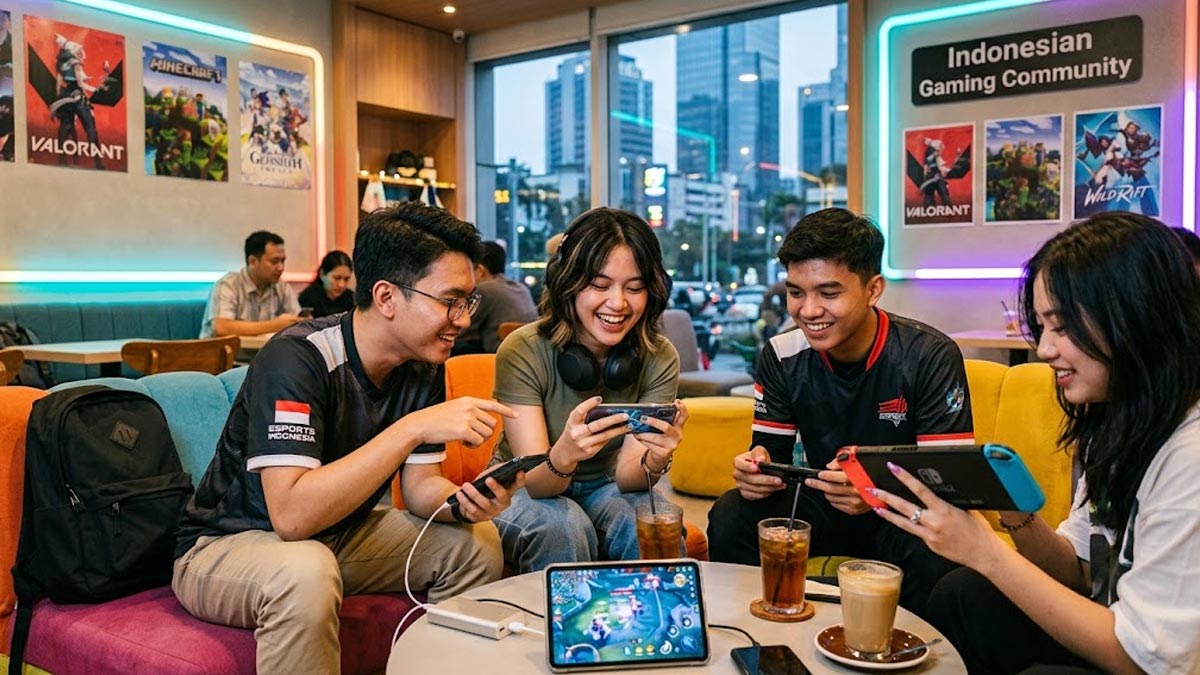
As Gen Z aged into the primary user base for global gaming platforms, they brought a fundamentally different relationship to digital spaces. Unlike older generations who often viewed video games as an isolated escape from reality, Gen Z treats online multiplayer games as their primary “third place”—a communal hub equivalent to the neighborhood parks, shopping malls, or youth centers of prior eras.
Having grown up in a fully networked world shaped by heightened awareness of mental health, civil rights, and social accountability, young gamers view persistent online toxicity not as a harmless quirk, but as a direct threat to their social well-being and emotional safety.
Research into modern gaming habits underscores this ideological shift. Where older esports culture often prioritized winning at any emotional cost, Gen Z players rank social connection, mental regulation, and positive group dynamics as primary motivations for playing. When toxic behavior disrupts a lobby, young players increasingly view the offending party not as a fierce competitor, but as an embarrassing relic of an outdated, anti-social subculture.
This cultural rejection has rendered the traditional “edgy” gamer persona obsolete. Memes romanticizing the chaotic hostility of 2009-era Call of Duty lobbies are now widely mocked on platforms like TikTok and Twitch, framed as cautionary examples of poor emotional control rather than badges of honor.
The Migration to Curated Digital Communities
Gen Z’s most immediate strategy for fixing toxic lobby culture has been spatial disengagement: abandoning public voice queues in favor of curated, highly moderated private ecosystems.
Rather than subjecting themselves to random public matchmaking queues where harassment remains a gamble, young gamers routinely construct secure squad channels using third-party communication platforms like Discord. In these private servers, access is protected by invite links, community rules, and designated peer moderators who can instantly mute or ban disruptive members.
This exodus from public voice chat has reshaped how multiplayer games are experienced:
- The Decline of Open Proximity Voice: While proximity voice chat remains a novel feature in tactical titles, a vast majority of young players keep public channels muted by default, choosing to communicate exclusively within closed friend groups or pre-screened Discord parties.
- Curated LFG (Looking for Group) Hubs: Specialized gaming communities now vet players based on code-of-conduct agreements before matching them into teams, ensuring shared expectations around communication style and competitive etiquette.
- Focus on Cooperative Play: Gen Z has driven massive commercial success for cooperative, non-adversarial, or squad-based titles—such as Helldivers, Sea of Thieves, and Lethal Company—where gameplay mechanics incentivize mutual aid over interpersonal hostility.
By starving public toxic lobbies of passive audiences and active participants, Gen Z sent an unmistakable financial signal to game publishers: players will walk away from unmoderated public spaces.
Machine Learning Meets Player Demand: The AI Moderation Era
Faced with declining player retention and direct pressure from a younger, safety-conscious demographic, major game developers realized that passive, reactive reporting systems were no longer economically viable. To retain Gen Z players, publishers began investing heavily in proactive, artificial intelligence-driven moderation infrastructure.
A prime example of this technological evolution is the implementation of machine-learning voice moderation tools, such as Modulate’s ToxMod platform, which was adopted by Activision Blizzard across its Call of Duty franchise.
Unlike legacy systems that relied entirely on manual post-match player reports, real-time AI moderation monitors voice channels continuously. The software evaluates pitch, volume, speech patterns, and specific vocabulary to distinguish between intense, healthy competitive banter and severe, harmful harassment—such as hate speech, targeted intimidation, or persistent verbal abuse.
| Moderation Metric | Legacy Reporting Systems | Next-Gen AI Moderation |
| Detection Speed | Days or weeks following post-match review | Real-time or near-instantaneous automated triage |
| Actionable Evidence Rate | Less than 25% of manual reports contained usable data | Proactive identification based on direct, recorded telemetry |
| Primary Penalty Mechanism | Account bans issued long after the offense occurred | Instant muting, temporary voice restrictions, and escalation to human moderators |
| Impact on Toxicity Exposure | Minimal long-term deterrence | Up to 50% reduction in player exposure to severe voice toxicity |
The results of these automated interventions have been decisive. In pilot programs and subsequent global rollouts across major titles, proactive voice moderation resulted in a 50 percent drop in overall player exposure to severe voice chat toxicity, alongside a measurable decline in repeat offenses.
Crucially, Gen Z players have largely embraced automated voice moderation not as a infringement on speech, but as a necessary boundary that makes open public communication usable again.
Championing Inclusivity and Diverse Competitive Spaces
Gen Z’s impact on online gaming extends beyond technical moderation; it is actively reshaping the demographic and cultural priorities of competitive esports.
Historically, women and non-binary gamers were forced to adopt gender-neutral handles, disable microphones, or endure relentless harassment whenever their identities were revealed in public lobbies. Gen Z has challenged this status quo by founding, funding, and celebrating inclusive competitive leagues and grassroots organizations.
Initiatives such as Riot Games’ VALORANT Game Changers circuit have created structured, professional pipelines for female and gender-marginalized esports athletes. These leagues provide safe, highly competitive environments while demonstrating to mainstream audiences that high-level gaming performance is entirely decoupled from traditional toxic masculine posturing.
Simultaneously, top-tier content creators and esports stars from Gen Z are modeling healthier communication styles. Popular streamers who openly condemn toxic stream-snipers, call out bigoted comments in their live chats, and prioritize positive team reinforcement are accumulating massive followings. By elevating creators who normalize constructive communication, young audiences are rewriting the rules of social status within gaming culture.
The Future of Online Play: Beyond “Thick Skin”
The idea that online gaming inherently requires enduring verbal abuse is dying out. What was once defended as an unchangeable element of digital culture is now recognized for what it always was: poor design, lax enforcement, and unchecked anti-social behavior.
Generation Z has demonstrated that competitive intensity does not depend on hostility. By demanding accountability from developers, migrating to curated digital spaces, embracing advanced AI moderation, and fostering inclusive community norms, young gamers are rebuilding online gaming from the ground up.
This transformation benefits the entire gaming ecosystem. Lowering toxicity exposure protects the mental well-being of young players, keeps marginalized groups engaged, and allows game developers to build sustainable, long-term communities.
The message from the new generation of online players is unequivocal: the era of the toxic lobby is over, and the future of online play belongs to communities that respect their players.


 admin
admin