 Roland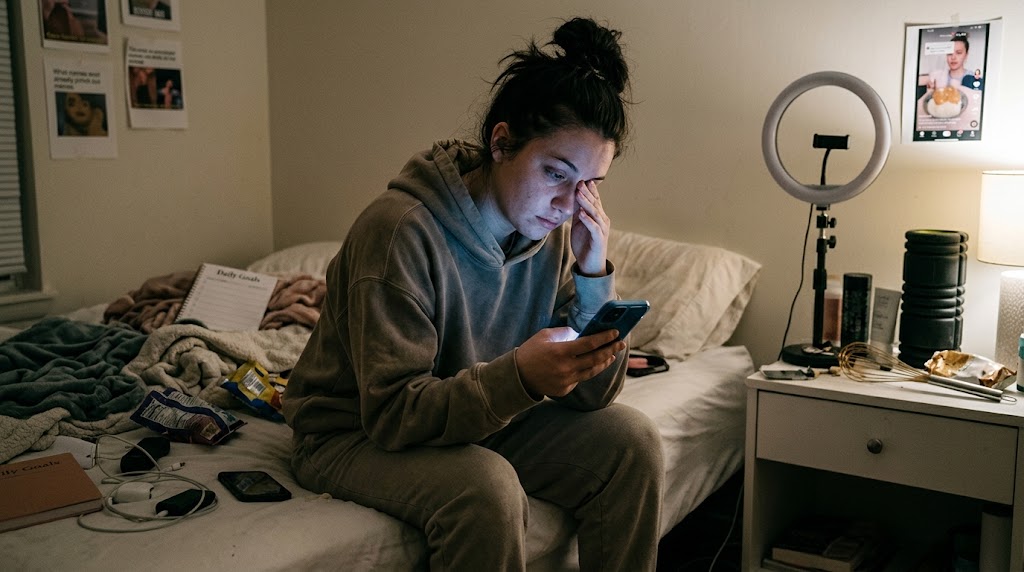
In the summer of 2024, a lime-green aesthetic labeled “Brat Summer”—spawned by a British pop album—dominated global social feeds, political campaigns, and corporate marketing strategies. By early autumn, digital culture commentators had declared the movement dead, replaced in rapid succession by “Demure and Mindful,” “Mob Wife,” “Eclectic Grandpa,” and dozens of micro-aesthetics that flickered across smartphone screens for a matter of days before vanishing into irrelevance.
What was once an annual or seasonal shift in fashion, music, and vernacular has collapsed into an unrelenting, hyper-accelerated cycle. On TikTok and adjacent algorithmic platforms, the average lifespan of a viral trend, sound bite, or aesthetic has condensed from months to mere days.
For users, creators, and brands alike, the result is an unprecedented phenomenon: culture fatigue.
As internet trends spawn, peak, and decay at speeds that outpace human memory, digital culture is experiencing a structural crisis. What happens to a society’s collective memory when cultural moments expire faster than they can be digested?
The Collapse of the Trend Lifecycle
To understand the velocity of modern internet culture, one must look at how cultural cycles functioned in prior decades.
Throughout the late 20th and early 21st centuries, subcultures and trends took years to gestate. Grunge, hip-hop, emo, and indie sleaze evolved in physical communities before being amplified by television, print media, and radio. Even in the early days of the social internet, viral memes possessed remarkable durability. A viral YouTube video or image macro in 2010 could maintain its cultural currency for six months to a year, accumulating shared meaning across a unified online public.
Today, industry performance data paints a vastly different picture. Recent analyses of platform engagement show that the median shelf life of a TikTok trend has fallen to just five days.Studies analyzing millions of posts reveal that up to 96 percent of a video’s total reach and interaction occurs within its first ten days online. Beyond that narrow window, platform algorithms systematically strip visibility from older formats to make way for the next wave of fresh content.
TRADITIONAL VS. ALGORITHMIC TREND LIFECYCLE

Traditional Trend Cycle (Pre-2015):
Inception → Local Adoption → Mainstream Peak → Gradual Saturation → Nostalgic Legacy
(Duration: 2 to 5 Years)

Modern Micro-Trend Cycle (2026):
Algorithmic Push → Instant Global Saturation → Over-Exposure → Rapid Backlash → Discard
(Duration: 3 to 10 Days)
This structural compression has converted what used to be macro-trends into ephemeral “micro-trends”. Where a fashion decade was once defined by overarching silhouettes or cultural movements, it is now fragmented into dozens of weekly sub-aesthetics that demand immediate adoption and encourage immediate disposal.
The Algorithmic Engine of Over-Saturation
The engine driving this acceleration is the architecture of recommendation engines—specifically TikTok’s “For You” page and its counterparts on Instagram Reels and YouTube Shorts.
In traditional social media models, content was distributed through explicit social graphs: users saw posts from people or pages they deliberately chose to follow. Modern recommendation systems, however, bypass the social graph entirely. Powered by deep neural networks, they evaluate real-time behavioral signals—such as watch-completion percentage, direct message shares, and loop rates—to distribute content to millions of users simultaneously based on interest prediction.
When an algorithm detects that a specific audio clip, editing style, or joke format generates high engagement metrics, it deploys that content to millions of feeds at scale.
- Instant Saturation: Because the algorithm serves content globally and indiscriminately, a brand-new trend can reach critical mass within 48 hours, exposing users to dozens of variations of the exact same audio template in a single scrolling session.
- Visibility Labor:Creators and influencers, dependent on algorithmic distribution for their livelihoods, engage in immediate “visibility labor”.They rush to replicate the trend instantly to capture a slice of the algorithmic momentum before the window closes.
- Premature Fatigue: By exposing millions of users to hundreds of iterations of a joke or format within a matter of days, the platform induces immediate psychological burnout. The moment a trend reaches peak visibility, it turns annoying, ushering in swift audience rejection.
This dynamic creates a self-defeating loop. The very mechanism that makes a trend go viral at record speed ensures its premature cultural death.
Micro-Trends, Overconsumption, and Economic Instability
The rapid decay of digital trends is not merely an aesthetic issue; it carries profound economic and environmental consequences, particularly in the consumer goods and fashion sectors.
Historically, fashion and lifestyle brands operated on six-month seasonal schedules. Today, social commerce integrations—such as TikTok Shop—connect viral video feeds directly to ultra-fast-fashion supply chains. When a specific product or visual style goes viral, manufacturers analyze real-time search data and produce thousands of low-cost duplicates within two weeks.
This hyper-reactive supply chain has transformed beauty and apparel into disposable fast-fashion categories:
- The “Must-Have” Rush:Products like specialized tumblers, viral blush shades, or hyper-specific footwear experience extreme demand surges driven by micro-trend endorsement.
- Inventory Whiplash: Because the underlying trends lose public relevance within weeks, retail demand collapses just as manufacturers achieve peak production volume.
- Waste and Disposal: The rapid turnover leaves retailers with massive surpluses of unsellable inventory, adding tons of synthetic textiles and plastic packaging to global waste streams.
For small and independent businesses, this volatility presents severe risks. Companies that pivot production to capture an online micro-trend often find that by the time their inventory arrives in warehouses, the internet has moved on to a completely different aesthetic, leaving them with stranded capital and unmarketable goods.
The Human Toll: Psychological Burnout and “Brainrot”
For everyday users, living in an environment of constant cultural turnover is creating documented cognitive strain.
Sociologists and digital psychologists point out that human language and culture require continuity to build deep social trust and shared identity. When digital slang, visual tropes, and social references mutate every few days, participating in online conversation begins to feel less like natural community building and more like exhausting upkeep.
This environment has given rise to the term “brainrot”—a colloquial label adopted by internet users to describe the cognitive disorientation caused by consuming high volumes of hyper-compressed, rapidly changing, and context-free digital content.
As users realize that investing emotional energy into an online movement, creator, or aesthetic will yield no lasting cultural impact, a cynical detachment sets in. Audiences increasingly report feeling overwhelmed by the implicit expectation to stay updated on every passing meme, leading to widespread app fatigue and intentional disengagement from viral discourse.
The Cultural Counter-Mouvement: The Search for Durability
In response to the relentless churn of the algorithm, a distinct shift is beginning to emerge among creators, users, and brands.
Recognizing that chasing micro-trends offers diminishing returns, prominent digital creators are abandoning short-lived audio templates in favor of long-form storytelling, episodic series, and original narrative structures. Data from social analytics platforms indicates that narrative-driven short stories and educational micro-content now generate significantly higher completion rates and direct message shares than generic trend-chasing videos.
Similarly, audiences are seeking refuge in “slow digital culture.” This movement prioritizes niche online communities, authentic personal expression, and evergreen interests over hyper-viral trends. Rather than conforming to weekly aesthetic labels, younger demographics are increasingly embracing vintage clothing, analog technology, and physical third spaces where the pace of life is dictated by real-world interaction rather than server-side optimization algorithms.
Industry analysts suggest that the era of relying purely on opportunistic viral trends to build brand equity or personal influence is drawing to a close. In a digital environment where everything goes viral for five minutes, true cultural power belongs not to the fastest imitators, but to those who can build ideas durable enough to survive past the next algorithm update.