 Roland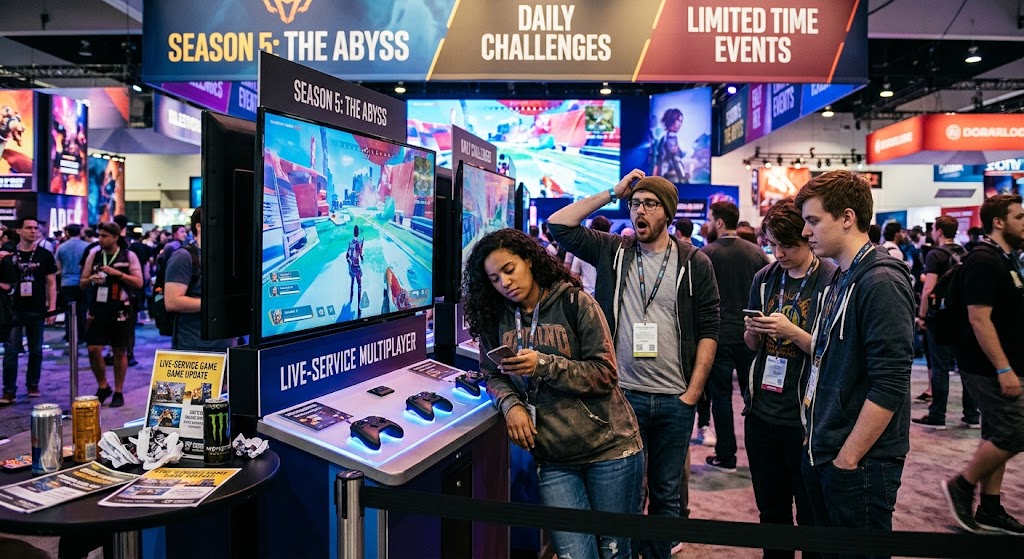
When a major video game publisher greenlights a multi-hundred-million-dollar live-service title, the boardroom pitch rarely focuses on a single opening weekend. Instead, executives envision an infinite financial engine—a “forever game” capable of capturing millions of daily active users, selling seasonal battle passes, and generating predictable recurring revenue for a decade.
Yet, over recent operational cycles, that corporate blueprint has run into a harsh market reality. High-profile, long-gestating live-service titles have suffered catastrophic post-launch collapses, shutting down servers within weeks of release or writing off hundreds of millions of dollars in development capital. Concurrently, even established genre titans face severe player churn, mounting community fatigue, and diminishing returns on new seasonal updates.
The live-service model—commonly referred to as Games as a Service (GaaS)—is facing a structural crisis. What was once viewed by executives as the ultimate monetization strategy in interactive entertainment has morphed into an operational high-wire act.
Keeping players continuously engaged has become significantly harder. The breakdown is not merely a matter of poor software optimization or miscalculated marketing campaigns; it represents a fundamental conflict between the mathematics of human attention and the unsustainable demands of modern game operations.
The Zero-Sum Attention Economy: Fighting “Forever Games”
The primary barrier facing any new live-service release is simple physics: time is finite.
In the traditional software era, video games competed primarily for a consumer’s disposable income. If a player enjoyed a 20-hour single-player adventure, they completed the story, placed the disc on a shelf, and bought another game the following month.
Live-service games altered that consumer loop entirely. By design, a live-service title demands a player’s exclusive, long-term habituation. Between daily log-in quests, weekly reward resets, seasonal battle passes, and limited-time events, a single live-service title can comfortably absorb 15 to 20 hours of recreation time every week.
Traditional Game Economics:
Player Purchases Title → Completes Experience → Exits Loop → Buys Next Title

Live-Service Economics:
Player Entters Ecosystem → Monopolizes Weekly Leisure Time → Resists Leaving → Zero-Sum Attention Competition
Because an individual can only meaningfully maintain one or two primary live-service games at a time, the market operates as a zero-sum attention economy. A new live-service release is not just competing against other new releases; it is competing against entrenched social hubs like Fortnite, Roblox, Counter-Strike 2, League of Legends, and GTA Online.
These established titles possess powerful defensive moats. Over years of continuous play, users have accumulated massive digital inventories, unlocked exclusive cosmetics, and built deep social networks with friends who log in daily. Asking a player to abandon an established ecosystem where they have invested thousands of hours and dollars to start from scratch in a new, unproven title requires a massive shift in consumer motivation.
The Content Treadmill: The Unsustainable Pace of LiveOps
For studios that manage to secure an initial audience, a second, equally daunting hurdle emerges: the relentless burden of Live Operations (LiveOps).
In a live-service ecosystem, launching the game is not the finish line; it is merely day one of an endless marathon. Modern digital audiences consume content at a rate that vastly outpaces human production capacity. A narrative campaign, a new map, or a complex character class that takes an engineering team six months to design, test, and polish is regularly played through by dedicated users within 48 hours of release.
Production Realities vs. Consumer Consumption:
[6 Months of Studio Engineering] ──► Ships New Update ──► [48 Hours of Player Consumption] ──► Content Void & Churn
This structural imbalance creates the “content treadmill” problem:
- Mandatory Quarterly Cycles: To maintain daily active user (DAU) metrics, developers must deliver major content updates every eight to twelve weeks, accompanied by bi-weekly patch adjustments and balance fixes.
- Quality Control Degradation: The relentless pressure to hit rigid update windows frequently forces studios to push patches without adequate testing, introducing technical bugs, server instability, and mechanical exploits that alienate the core player base.
- Developer Burnout: Maintaining continuous live-service development causes severe crunch cycles, staff turnover, and technical debt, making long-term engine maintenance increasingly brittle over time.
If a studio delays a seasonal update to fix underlying technical bugs or allow staff to rest, player engagement drops off a cliff. In an ecosystem where dozens of competing titles are actively broadcasting limited-time events, a three-month content drought can permanently cripple a game’s active user population.
Psychological Exhaustion: FOMO and the “Second Job” Effect
Beyond operational bottlenecks, the live-service model is suffering from acute consumer pushback against manipulative design practices.
During the initial growth phase of the live-service boom, developers relied heavily on behavioral economics mechanics designed to maximize retention. Fear of Missing Out (FOMO) became a primary design pillar: seasonal battle passes that expired after 60 days, daily log-in streaks that penalized inactivity, exclusive storefront items that vanished on rotating timers, and aggressive level-grinding requirements.
While these tactics produced short-term engagement spikes, their long-term cumulative effect has been widespread player burnout.
| Live-Service Design Pattern | Initial Psychological Effect | Long-Term Consumer Reaction |
| Expiring Battle Passes | Urgency to complete challenges before reset | Guilt and resentment over uncompleted paid content |
| Daily Log-In Streaks | Habitual daily software launch | Play feels like a mandatory domestic chore |
| Rapid Meta Adjustments | Keeps competitive loops feeling fresh | Returning players feel disoriented and hopelessly behind |
| Aggressive Microtransactions | Frictionless incremental spending options | Hostility toward paywalled cosmetics and progression |
Gamers increasingly report feeling as though their favorite leisure activity has morphed into unpaid administrative labor. When playing a video game feels less like an immersive escape and more like managing a list of daily chores, the emotional connection breaks.
This friction is compounded by the “disorientation barrier”. When a player steps away from a live-service game for several months, returning can be an overwhelming experience. Re-entering a game to find altered character abilities, overhauled user interfaces, dozens of missed story beats, and a cluttered storefront frequently leads to immediate session abandonment. Instead of re-engaging, the player walks away permanently.
The Financial High-Wire: Massive Investments vs. Sudden Collapse
The commercial risk profile of live-service development has diverged sharply from traditional single-player or discrete multiplayer games.
When a publisher invests $200 million into a traditional, finite game, success is measured on a gradient. If the title is well-received, it achieves a high percentage of its sales in the opening months, recoups its production budget, and continues to generate a steady tail of revenue through digital storefront sales and expansions over subsequent years.
In a live-service model, the financial outcome is binary:
- Massive Ecosystem Success: The title hits critical mass, establishing a self-sustaining player economy where recurring cosmetic sales cover ongoing LiveOps costs and generate massive multi-year profits.
- Immediate Commercial Liquidation: If the game fails to attract a critical mass of active players during its launch window, the server infrastructure, ongoing content pipelines, and customer support networks instantly turn into massive financial liabilities. Without an active player base buying battle passes, the publisher cannot justify the high ongoing operational costs required to fix the game, forcing a rapid, humiliating shutdown.
Live-Service Financial Calculus:
High Capital Investment + High Fixed Server Costs ──► [Launch Window Friction]
                                                              │
                    ┌─────────────────────────────────────────┴─────────────────────────────────────────┐
                    ▼                                                                                   ▼
   [Critical Mass Attained]                                                            [Sub-Critical Active Player Base]
    ├── High Player Liquidity                                                           ├── Empty Matchmaking Queues
    ├── Self-Sustaining LiveOps                                                         ├── Unviable Server Overhead
    └── Multi-Year Profitability                                                        └── Rapid Server Closure / Asset Liquidation
This binary financial risk has made publishers increasingly cautious. The market has proven that simply slapping live-service mechanics onto an established single-player franchise or building a generic hero shooter is a recipe for commercial disaster.
The Pivot: Respecting Player Time and the Rise of Hybrid Engagement
Faced with mounting consumer resistance and high-profile commercial failures, the interactive entertainment industry is beginning to recalibrate its approach to live-service design.
Forward-thinking studios are recognizing that the next generation of successful online games must move away from predatory, friction-heavy design patterns and prioritize transparency, respect for player time, and core mechanical fun.
Key design shifts reshaping the live-service landscape include:
1. Non-Expiring Progression
Pioneered by titles like Helldivers 2 and Halo Infinite, developers are increasingly abandoning expiring seasonal battle passes. Allowing players to purchase and complete progression passes at their own pace completely eliminates time-based FOMO, transforming the purchase from a stressful deadline into a permanent account asset.
2. Player-First Monetization and Cosmetic Fair Play
Successful modern live services are aggressively purging pay-to-win mechanics and intrusive progression paywalls. By restricting monetization strictly to high-quality, optional cosmetic items and transparency-first expansion packs, developers build long-term community trust that survives natural lulls in content releases.
3. “Smarter, Smaller” Live Operations
Rather than promising endless, bloated open worlds that demand dozens of hours a week, studios are leaning into tighter, highly repeatable gameplay loops. By focusing on deep systemic physics, procedural generation, and player-driven emergent moments, games can offer infinite replayability without requiring the development team to crunch out massive hand-crafted narrative expansions every few months.
4. Acceptance of Natural Churn
Mature live-service developers no longer panic when player counts dip between major updates. Recognizing that players naturally cycle between different games, successful operations design their systems so that lapsed users can jump back into a new season, enjoy fresh content for a few weeks, and step away without feeling penalized or hopelessly lost.
A Permanent Structural Reset
The live-service dilemma does not signal the absolute death of online, evolving video games. Multi-player social spaces, shared cooperative adventures, and competitive digital arenas remain some of the most vibrant, culturally influential media experiences on the planet.
However, the era of the reckless GaaS “gold rush”—where corporate executives assumed any game could be transformed into a perpetual, high-margin cash cow simply by adding daily quests and a cosmetic store—has definitively ended.
Moving forward, the online games that survive and flourish will be those that understand a fundamental truth: player attention cannot be captured indefinitely through manipulative mechanics and artificial urgency. In an entertainment market overflowing with endless choices, the ultimate competitive advantage is not a clever monetization strategy, but a game that respects its audience’s time, delivers genuine fun, and earns its place in their daily lives every single day.


 admin
admin