
 Roland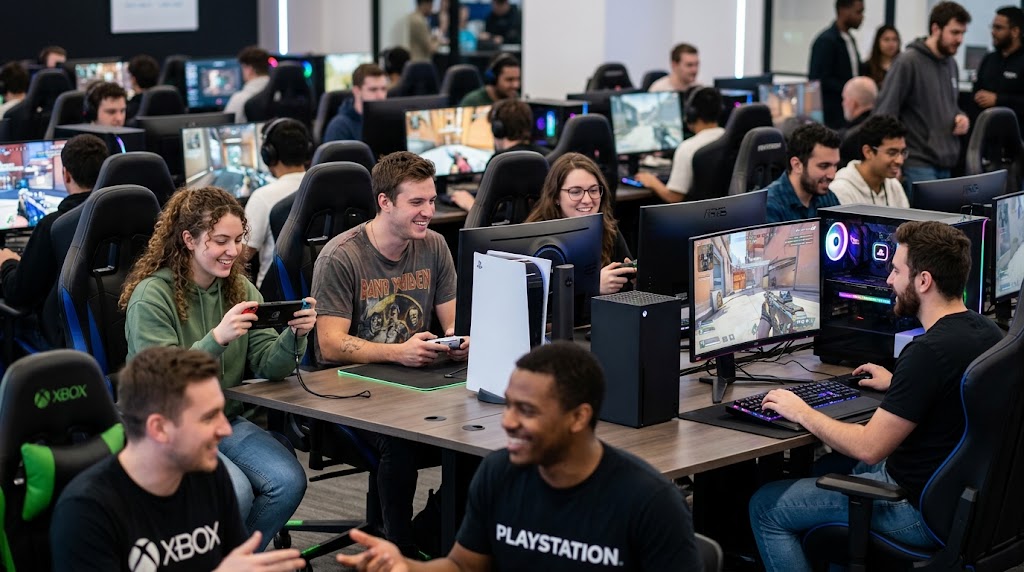
For nearly four decades, the video game industry was defined by an aggressive, zero-sum conflict: the console war. From the playground arguments of the 1990s pitting Sega against Nintendo to the bitter social media rivalries between Sony PlayStation and Microsoft Xbox fans throughout the 2000s and 2010s, consumer identity was explicitly tied to hardware ownership. Platform holders intentionally built walled gardens, using exclusive software titles and isolated online networks to trap players within their specific ecosystems. Buying a console meant accepting a hard social barrier—if your friends owned a competing system, you simply could not play together.
Today, that tribal paradigm has decisively collapsed.
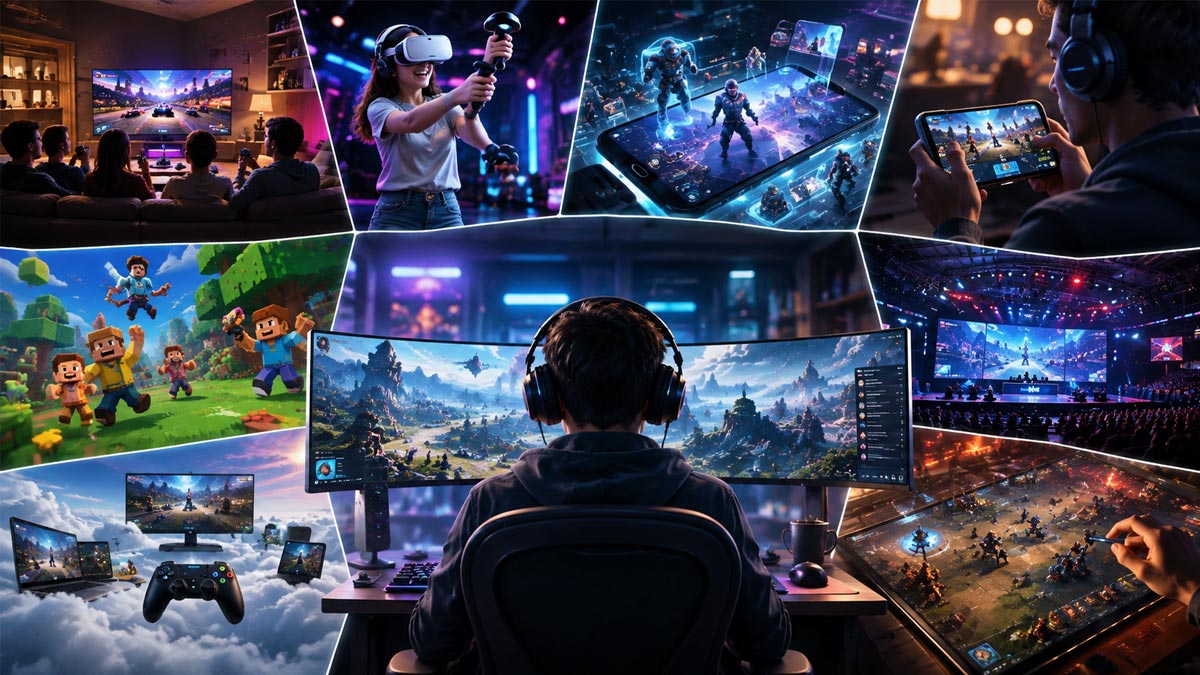
What was once dismissed by platform gatekeepers as a technical impossibility or a security risk has become an mandatory industry standard: cross-platform play, or cross-play.Across the world’s most popular multiplayer titles—from Fortnite and Call of Duty to Minecraft, Apex Legends, and Helldivers—players on PlayStation, Xbox, PC, Nintendo hardware, and mobile devices routinely inhabit the same virtual lobbies, share unified friends lists, and sync their progress seamlessly across screens.
This shift is not merely a technical triumph or a concession to consumer convenience. It represents a fundamental realignment of the global gaming economy. Driven by skyrocketing AAA development budgets, the dominance of live-service business models, and a demographic shift among younger players who reject hardware barriers, the era of platform exclusivity is giving way to an era of device-agnostic ecosystem competition.
The console wars are finally coming to an end, not because one hardware manufacturer conquered the market, but because the business of locking games to plastic boxes no longer makes financial sense.
The Collapse of the Walled Garden
To understand the magnitude of today’s unified multiplayer landscape, one must recall how fiercely platform holders guarded their proprietary networks. During the seventh and eighth console generations, online gaming infrastructure—PlayStation Network (PSN) and Xbox Live—operated as strict digital silos.
Microsoft, holding a dominant position during the Xbox 360 era, routinely rejected cross-network proposals from independent developers and competitors. Years later, when Microsoft championed cross-play to rebuild market momentum with the Xbox One, Sony—then holding a commanding lead with the PlayStation 4—adamantly refused to allow its network to communicate with rival systems, publicly claiming that isolated servers offered the safest environment for its users.
Legacy Silo Model (2000s–2010s):
PlayStation Network ──[BLOCKED]── Xbox Live ──[BLOCKED]── Nintendo Switch / PC

Modern Cross-Play Standard (2020s–Present):
Unified Backend (Epic / Activision / Microsoft Account)
   ├── PlayStation 5
   ├── Xbox Series X|S
   ├── PC (Steam / Epic Games Store)
   └── Mobile / Cloud Clients
The tipping point arrived in September 2018. The global phenomenon of Epic Games’ Fortnite created unprecedented consumer leverage. When a technical “glitch” briefly enabled cross-play between PlayStation 4 and Xbox One players, proving the feature was trivial to implement, public outcry reached a fever pitch. Faced with severe backlash from players, creators, and third-party publishers who threatened to bypass single-platform launches, Sony finally dismantled its walled garden.
Within months, the dominoes fell. Major publishers began demanding cross-play clauses in their distribution contracts. What began as an experimental feature quickly turned into a baseline requirement for any multiplayer title seeking a global audience.
The Ballooning Economics of AAA Development
The single most powerful force dismantling hardware exclusivity is the explosive cost of game production.
During the 1990s and early 2000s, a flagship console game could be developed by a team of 30 people in two years for under $10 million. At that scale, hardware manufacturers could easily subsidize third-party studios or fund first-party exclusives, relying on software sales and platform licensing fees to offset costs and drive console adoption.
In the contemporary era, developing a blockbuster AAA game demands five to seven years, teams of hundreds of specialized engineers and artists, and production and marketing budgets that routinely exceed $200 million to $300 million.
At this level of financial risk, selling a game exclusively on a single console platform severely restricts the title’s Total Addressable Market (TAM). A publisher cannot afford to ignore tens of millions of potential buyers on competing hardware or personal computers simply to help a hardware manufacturer sell more plastic consoles.
| Operational Metric | Legacy Console Silo Model | Modern Cross-Platform Ecosystem Model |
| Primary Revenue Driver | Upfront hardware sales & physical software purchases | Ongoing microtransactions, battle passes & subscriptions |
| Target Audience | Restricted to owners of a specific hardware brand | Global player base across PC, console, mobile & cloud |
| Matchmaking Pool | Fragmented regional server queues by console brand | Unified global player pool with instantaneous queue times |
| Monetization Window | Launch week retail volume spike | Extended multi-year engagement & lifetime value (LTV) |
| Platform Strategy | Hardware exclusivity as a defensive moat | Software availability everywhere to maximize player retention |
Furthermore, the industry’s economic center of gravity has migrated from static box sales to live-service operations. Games like Call of Duty: Warzone, Apex Legends, and EA Sports FC depend on perpetual player liquidity. If multiplayer lobbies take several minutes to fill due to fragmented player pools, engagement drops, queue times drag, and microtransaction revenue collapses. Cross-play solves this retention crisis by pooling millions of daily active users into a single, highly liquid matchmaking infrastructure.
Backend Infrastructure and the Rise of Unified Identity
The transition to cross-play required a fundamental technological overhaul of how game networks manage identity and matchmaking.
Historically, user identity was anchored strictly to platform-level accounts—a PlayStation Network Online ID, an Xbox Gamertag, or a Steam ID. To enable cross-play, developers had to build platform-agnostic identity layers that operate above the native console operating systems.
Today, services like Epic Online Services, Activision ID, EA Accounts, and Microsoft Accounts provide a unified architectural foundation. When a player logs into a cross-play title, their progress, inventory, and social friend network are stored on an external cloud database rather than tied to local hardware.
Unified Account Protocol:
[User Identity Layer] ──► Activision ID / Epic Account / EA Account
                              │
          ┌───────────────────┼───────────────────┐
          ▼                   ▼                   ▼
   [PSN Profile]       [Xbox Profile]      [Steam / PC]
This structural shift enabled two critical features that accompany modern cross-play:
- Cross-Progression (Cross-Save): Players can unlock a cosmetic skin or complete a battle pass level on their PC during the day, and immediately access those assets when logging into their console in the living room at night.
- Cross-Monetization: Purchases made on one platform follow the user across the entire ecosystem, increasing consumer confidence that their digital investments will not be locked to a fading hardware generation.
By decoupling a player’s digital identity from their physical hardware, the industry rendered platform loyalty obsolete. The account belongs to the player, not to the company that manufactured the box under the television.
The Strategic Pivot: From Hardware Moats to Ecosystems
As cross-play dismantled software barriers, platform holders were forced to fundamentally rewrite their long-term corporate strategies.
Microsoft recognized this shift first, pivoting away from traditional console unit sales figures as a primary metric of success. Through its Xbox Game Pass subscription service, “Play Anywhere” initiative, and aggressive acquisition of multiplatform publishers like Bethesda and Activision Blizzard, Microsoft transitioned into an ecosystem provider. Their strategic mandate became clear: make Xbox software and subscription services accessible across PC, smart TVs, handheld devices, mobile platforms, and even competing console hardware.
Sony, while maintaining a strong reliance on high-end PlayStation console sales, rapidly adapted to the multiplatform reality. Recognizing the lucrative returns of the personal computer market, Sony established a dedicated PC publishing initiative, bringing flagship first-party blockbusters—including God of War, The Last of Us, Spider-Man, and Horizon—to PC storefronts like Steam and Epic Games Store. Furthermore, live-service breakout hits like Helldivers 2 were launched simultaneously on PS5 and PC with full cross-play enabled, setting historical sales records for the publisher.
“The total addressable audience of traditional console buyers has reached a saturation plateau. Growing a gaming business today requires taking your software to where the players already are, rather than expecting three billion global gamers to buy a dedicated $500 box.”
Hardware has not disappeared, but its strategic role has changed. Consoles are no longer isolated walled gardens meant to exclude competitors; they are optimized, low-friction access portals designed to funnel users into a broader, multi-device software ecosystem.
Competitive Balancing and Technical Mitigation
While cross-play resolved social fragmentation, it introduced complex technical and competitive challenges that developers continue to refine.
The primary obstacle in cross-platform competitive play is the inherent imbalance between input devices: mouse-and-keyboard precision versus dual-analog gamepad controls. In fast-paced first-person shooters, PC players using high-DPI mice hold a natural structural advantage in flick-aiming and target tracking over console players using thumbsticks.
To preserve competitive integrity and prevent player frustration, studios deploy sophisticated balancing frameworks:
- Algorithmic Aim Assist: Console gamepad users are granted tailored software aim-assist subroutines to compensate for analog stick imprecision, dynamically leveling the playing field against PC mouse users.
- Input-Based Matchmaking (IBMM): Games like Call of Duty and Fortnite allow players to queue based on controller type rather than hardware brand, pairing PC gamepad users with console gamepad users.
- Opt-Out Toggles: Developers provide granular settings allowing console players to restrict matchmaking exclusively to controller-only or console-only lobbies if they wish to avoid PC environments entirely.
Another major hurdle is platform security and anti-cheat enforcement. Because PC architecture is open, it is far more susceptible to malicious memory injection, aimbots, and wallhacks than locked console operating systems. To protect cross-play environments, publishers deploy kernel-level anti-cheat software—such as EA AntiCheat, Ricochet, and Vanguard—that monitors memory processes in real time across connected clients.
The Demise of Tribalism and the Future of Social Play
Beyond metrics, balance sheets, and technical protocols, the definitive impact of cross-play is cultural.
For younger generations of gamers—specifically Gen Z and Gen Alpha—the concept of a “console war” feels absurd and archaic. Raised on ubiquitous platforms like Roblox, Minecraft, and Fortnite, younger players view games as digital social spaces equivalent to physical parks or community centers.Expecting a teenager to break their social circle because one friend plays on a laptop, another on a console, and a third on an iPad runs counter to the fundamental nature of modern social media.
The death of tribalism has transformed how communities form around interactive media. Player groups are built around shared narrative passions, competitive skill tiers, and subcultural aesthetics, rather than corporate brand loyalty.
The console wars dominated the video game industry for decades, serving as an effective marketing engine during an era when hardware specs and exclusive disc libraries defined the market. But as the medium matured into a $260-billion global entertainment dominant force spanning billions of connected screens, those artificial borders became unsustainable.
Cross-play proved that when you tear down the walls between platforms, the entire medium prospers. The future of gaming is no longer about fighting over which plastic box sits under the television; it is about building a world where everyone can play together, anywhere, anytime, on whatever screen they choose.

 admin
admin