 Roland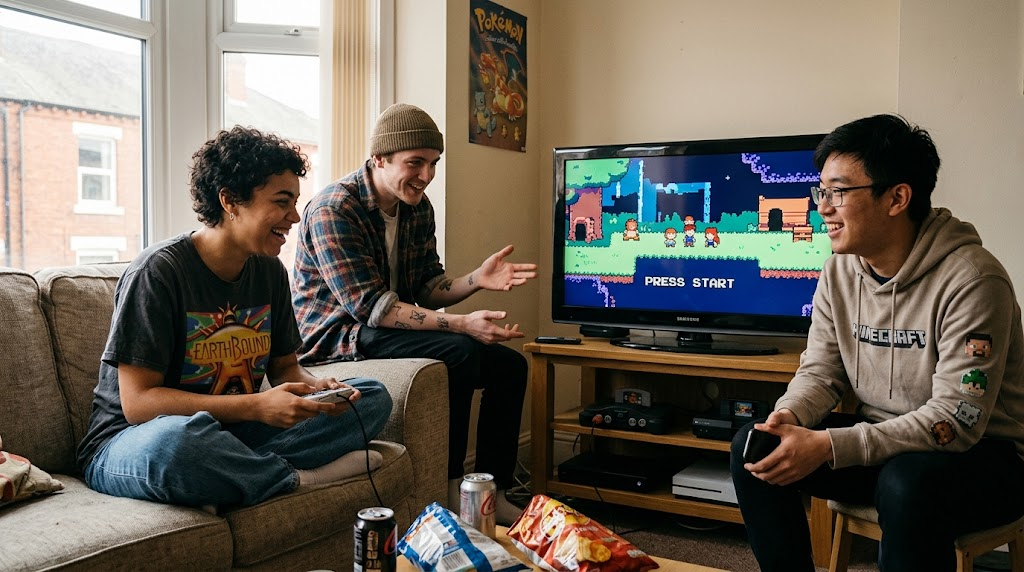
In an era where major video game publishers spend hundreds of millions of dollars pushing the boundaries of graphics—deploying ray tracing, photogrammetry, and hyper-realistic facial rendering—some of the most commercially successful and culturally influential games look like they were built four decades ago.
Titles built around pixelated sprites, 8-bit color palettes, and grid-based environments are capturing millions of active players. Games like Stardew Valley, Celeste, Sea of Stars, Terraria, Dave the Diver, and Animal Well consistently outshine hyper-realistic, high-budget blockbusters in both critical acclaim and long-term player engagement.
The most surprising element of this retro revival is its primary audience. The surge in pixel art appreciation is not being driven solely by older Millennials or Generation X reliving their childhood memories of the Nintendo Entertainment System or Sega Genesis. Instead, it is Generation Z—a cohort born into an era of high-definition displays, smartphones, and sophisticated 3D graphics—that is fueling the market for pixelated video games.
For younger players, pixel art is not a nostalgic compromise or an outdated technical limitation. It is a deliberate, highly valued artistic medium that offers visual clarity, emotional resonance, and a welcome refuge from the bloated mechanics of modern corporate gaming.
Anemoia and the Appeal of Digital Impressionism
To understand Gen Z’s fascination with pixel art, sociologists and media researchers often point to a psychological phenomenon known as anemoia—nostalgia for a time one has never personally experienced.
Younger gamers who grew up with seamless 3D renders and high-definition mobile screens look back at the early eras of home computing and console gaming with a sense of romantic fascination. For Gen Z, the low-resolution aesthetic carries an aura of authenticity, recalling a period when video games were creative experiments crafted by small teams rather than commodified, live-service products produced by global corporations.
However, anemoia only explains part of the attraction. Beyond romanticizing the past, Gen Z treats pixel art as a distinct visual language, functioning much like impressionism in fine art.
Photorealism: Renders every detail explicitly, leaving no space for player interpretation.
Pixel Art: Offers stylized visual cues, encouraging the player's imagination to complete the picture.
In a photorealistic game, every pore, blade of grass, and fabric weave is explicitly rendered, leaving zero room for interpretation. Pixel art operates on abstraction. A character’s face might consist of only a dozen square blocks, yet a subtle shift in color or arrangement communicates joy, grief, or determination. By forcing the player’s imagination to fill in the visual gaps, pixel art creates a deeper emotional connection between the player and the digital world.
The Antidote to Photorealistic Fatigue and Visual Noise
The rise of pixel art is also a direct reaction against the current state of mainstream AAA game design. Over the past decade, the pursuit of photorealism has introduced significant friction into the gaming experience.
Modern blockbusters frequently require massive file installations—often exceeding 150 gigabytes—alongside frequent multi-gigabyte seasonal patches that clog storage drives and demand expensive hardware upgrades. Furthermore, hyper-realistic graphics often suffer from “visual noise.” When environments are packed with millions of realistic textures, dynamic lighting reflections, and complex particle effects, identifying interactive objects, enemies, or navigation paths becomes frustratingly difficult.
Pixel art solves this problem through functional simplicity:
- Visual Readability: Clean grid structures and high-contrast sprite designs allow players to assess screen state, enemy positioning, and environmental hazards instantly.
- Elimination of the Uncanny Valley: While hyper-realistic 3D character models frequently stumble into awkward, unnatural facial animations, pixelated sprites are inherently abstract, bypassing unnatural visual distractions entirely.
- Low System Overhead: Pixel art games load almost instantly, demand minimal storage space, and run smoothly on modest hardware without causing thermal throttling or severe battery drain.
For a generation raised on high-speed internet and instant accessibility, the ability to download a 500-megabyte pixel art title and jump straight into fluid, 60-frame-per-second gameplay is far more appealing than waiting hours to install a bloated, photorealistic title.
The “HD-2D” Renaissance: Retro Visuals Powered by Modern Tech
Modern pixel art games are rarely direct copies of 1980s software. Instead, contemporary developers are pioneering a visual hybrid frequently referred to as “HD-2D” or “Hi-Bit” design.
popularized by titles like Square Enix’s Octopath Traveler and independent hits like REPLACED and SacriFire, this approach marries classic 16-bit pixel sprites with modern rendering technology. Developers place hand-crafted pixel characters into three-dimensional environments enhanced by dynamic volumetric lighting, real-time depth-of-field shaders, water reflection physics, and smooth camera shifts.
| Visual Dimension | Classic 16-Bit Era | Modern HD-2D / Hi-Bit Era |
| Display Format | 4:3 aspect ratio, low-resolution CRT monitors | 16:9 / 21:9 widescreen, 4K high-refresh displays |
| Lighting Engine | Flat, static color palettes | Real-time dynamic shadows, ray-traced bloom, volumetric fog |
| Camera Perspective | Fixed two-dimensional side-scrolling or top-down | Dynamic 2.5D camera angles with parallax depth layers |
| Animation Fidelity | Severe frame memory limits (3–6 frames per action) | High-frame-rate fluid animations (60+ FPS interpolation) |
This technical evolution creates a visual experience that feels both comfortably familiar and strikingly modern. It allows pixel art to compete on equal terms with high-budget 3D releases, proving that low-resolution art styles are not a compromise, but a rich canvas for cinematic storytelling.
Auteur Game Development vs. Corporate Live Services
The boom in pixel art is inextricably linked to the rise of independent, creator-led game development.
Building competitive 3D games requires massive budgets, specialized technical departments, and hundreds of developers—a structure that often forces studios to play it safe, relying on established franchises, aggressive microtransactions, and committee-driven game design. Conversely, pixel art drastically lowers the barrier to entry for solo developers and small indie teams.
Landmark pixel art titles are frequently the product of tiny teams or individual auteurs:
- Stardew Valley: Developed entirely by a single individual, Eric Barone (ConcernedApe), who created the art, code, music, and story over four years. The game has sold tens of millions of copies worldwide, proving that personal vision can outperform corporate development budgets.
- Celeste: Created by a small team at Extremely OK Games, utilizing precise pixel platforming to deliver a deeply personal narrative about mental health, anxiety, and self-acceptance.
- Animal Well: Designed by solo developer Billy Basso, blending claustrophobic pixel art aesthetics with intricate environmental puzzle design to achieve massive critical acclaim.
Gen Z consumers express a strong preference for authenticity. They actively seek out titles that reflect a singular artistic voice rather than products designed around corporate monetization strategies. In the gaming market, pixel art has become a signifier of indie autonomy—a visual signal that a game prioritizes gameplay depth, narrative heart, and player respect over predatory financial mechanics.
Hardware Portability and Mobile Gaming Habits
The physical hardware habits of Gen Z have also accelerated the popularity of pixel art. Unlike older generations who primarily played games anchored to a living room television or a desktop computer rig, younger gamers prioritize mobility and flexibility.
The massive popularity of handheld gaming devices—such as the Nintendo Switch, the Steam Deck, mobile phones, and dedicated retro handheld devices—aligns perfectly with pixel art design.
Pixel art games draw minimal power, allowing handheld devices to run for hours longer on a single battery charge compared to graphics-heavy 3D games. Furthermore, the compact screens of mobile and handheld consoles naturally complement high-density pixel graphics, making the art style look crisp, vibrant, and visually appealing on the go.
A Permanent Fixture in Digital Culture
Pixel art has officially transcended its origins as a technical necessity. It is no longer an interim step on the path toward hyper-realism, nor is it a passing trend driven solely by nostalgia.
Much like vinyl records in the music industry or film photography in visual arts, pixel art has established itself as a permanent, respected aesthetic medium. It offers a unique combination of visual elegance, creative freedom, and operational efficiency that photorealistic graphics simply cannot replicate.
As Generation Z continues to shape the economic and cultural priorities of the gaming landscape, their passion for pixel art sends a clear message to the broader entertainment industry: compelling game design, artistic soul, and player agency will always matter more than the number of pixels packed onto a screen.

 admin
admin