 Roland
On a packed evening commuter train slicing through Tokyo, London, or Jakarta, a silent, ubiquitous ritual takes place. A retired schoolteacher taps rhythmically on her screen to line up rows of brightly colored digital candies. Two seats away, a construction worker in hi-vis gear leans over his phone, navigating a high-stakes tactical shootout in a shrinking digital arena. Near the doors, a university student manages the complex supply chains of a virtual medieval city.
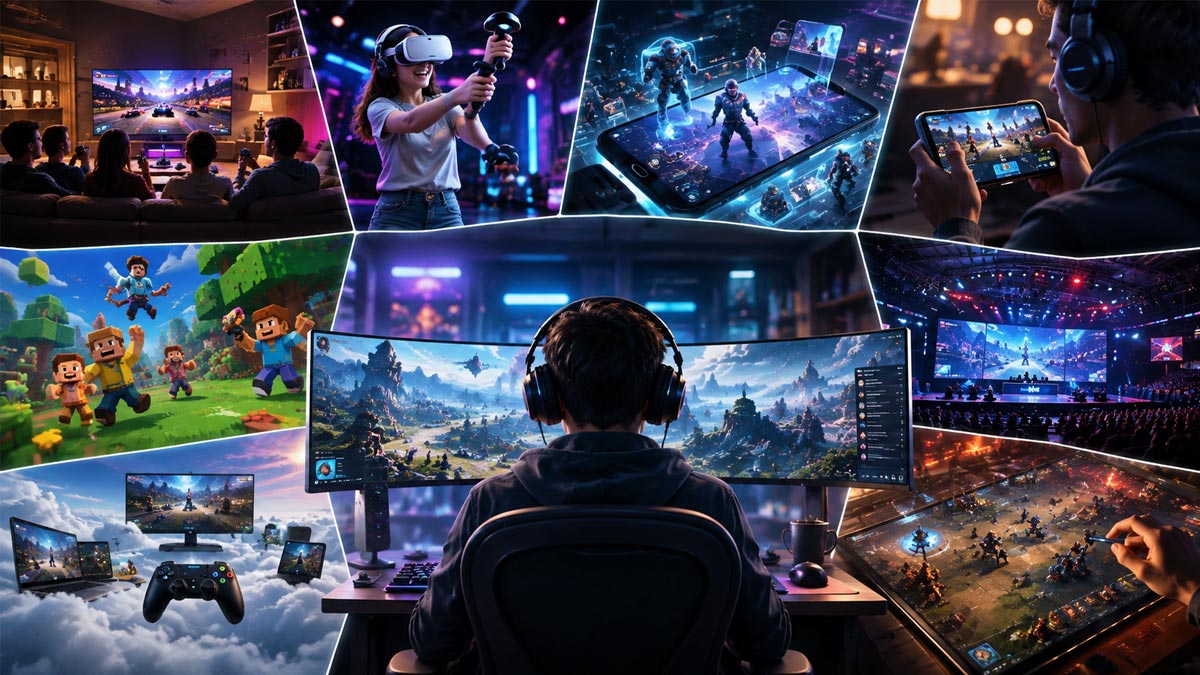
If you asked any of these individuals whether they identify as a “gamer,” the overwhelming majority would answer with a clear, immediate no. In their minds, “gamers” are a distinct subcultural group—enthusiasts who purchase expensive dedicated hardware, sit in front of high-powered monitors for four-hour sessions, and wear heavy headsets to talk to team members across the globe.
Yet, despite their self-perceptions, all three are actively participating in the largest, most lucrative, and most culturally pervasive segment of the global entertainment economy.
Over the past fifteen years, the smartphone has executed a quiet revolution. By embedding powerful multi-core microprocessors, high-density touchscreens, and persistent high-speed internet connections into a device that every human being carries for work and survival, the tech industry pulled off a historic trick: it transformed a global population of billions into daily video game players without most of them ever realizing it happened.
Mobile gaming is no longer a peripheral subset of the video game industry. Generating over $140 billion annually—accounting for roughly half of all interactive entertainment revenue worldwide—the mobile market systematically dwarf the combined financial output of legacy home consoles and personal computers.
The secret to mobile gaming’s total cultural victory lies not in superior graphical horsepower, but in the radical destruction of physical, economic, and social friction.
The Eradication of Hardware Friction
For the first four decades of interactive media history, video games were defined by rigid physical and financial barriers to entry.
To play a video game in 1995 or 2005, a consumer was required to make a series of deliberate, expensive choices. They had to buy a dedicated home console or construct a high-performance desktop PC, acquire a television or specialized monitor, purchase individual software titles at $50 to $70 each, and clear out dedicated blocks of leisure time in a specific physical room.
This friction created a natural demographic filter. Gaming became the domain of those who had the disposable income to buy single-purpose hardware, the spatial autonomy to dominate a living room screen, and the uninterrupted free time required to master complex control schemes.
The smartphone permanently shattered that paradigm.
Legacy Console/PC Model: Dedicated Hardware → High Upfront Cost → Fixed Spatial Location → High Skill Floor
Mobile Gaming Model: Multi-Purpose Device → Zero Upfront Barrier → Total Spatial Mobility → Frictionless Touch Controls
When Apple introduced the App Store in 2008 and Google followed with Android’s digital ecosystem, the smartphone was already well on its way to becoming a non-negotiable tool for modern daily life. Consumers did not purchase a smartphone to play games; they bought it to check email, navigate cities, communicate with family, and manage bank accounts.
Because the expensive compute hardware was already subsidized by daily utility, the incremental cost of acquiring a video game dropped to zero. For the first time in human history, billions of people were walking around with a high-resolution, internet-connected gaming terminal sitting silently in their pockets.
In emerging markets across the Global South—specifically throughout Southeast Asia, Latin America, the Middle East, and Africa—this hardware ubiquity skipped an entire technological generation. Millions of households that could never justify spending two months of average salary on a static home console or gaming rig gained access to budget-friendly Android smartphones. For vast swathes of the global population, the smartphone was not a secondary gaming screen; it was their first and only gateway to digital play.
The Psychology of Micro-Engagements and Interstitial Time
The hardware transformation was matched by a parallel revolution in game design. Traditional PC and console games were built for deep, continuous immersion—demanding 60-minute narrative quests, complex button combinations, and long learning curves.
Mobile game developers realized early on that attempting to copy-paste two-hour console experiences onto a four-inch touchscreen was a recipe for failure. Instead, they invented a completely new design vocabulary engineered around “interstitial time”—the micro-moments of friction, waiting, and boredom that fill daily human life.
- The 90-Second Loop: Mobile titles were structured around self-contained sessions that could be initiated, enjoyed, and completed while waiting for a bus, standing in a coffee shop line, or riding an elevator.
- Tactile Intuition: Complex dual-analog gamepads were replaced by gestures humans perform instinctively: tapping, swiping, dragging, and flicking. If a game required a instruction manual, it failed on mobile.
- Instant Gratification: Micro-rewards—bright visual bursts, satisfying sound design, haptic vibrations, and immediate level completions—were engineered to deliver rapid neurochemical feedback within seconds of launching the application.
Interstitial Moments: Waiting for Transport → Standing in Line → Elevator Rides → Coffee Breaks
Mobile Solution: 90-Second Sessions + Touch Input + Instant Micro-Rewards = Universal Engagement
By colonizing these empty pockets of daily time, mobile games transformed play from a planned recreational event into an ambient background habit. People who would never sit down in front of a television for a three-hour gaming session began logging forty-five minutes of cumulative play every day, broken into dozens of two-minute micro-sessions scattered between work tasks.
The Business Engine: Free-to-Play and the Science of Microtransactions
If frictionless hardware provided the entry point and micro-engagement provided the hook, it was the Free-to-Play (F2P) business model that built mobile gaming into an economic behemoth.
In the traditional gaming market, charging an upfront price creates a massive psychological barrier. A consumer must decide whether an unplayed experience is worth $60 before they ever touch the controller. Mobile developers eliminated this friction entirely by making the download free.
Instead of asking for money at the door, F2P games open their digital spaces to everyone, monetizing a small percentage of the player base through microtransactions, battle passes, optional ad views, and cosmetic upgrades.
| Attribute | Legacy Boxed Software Model | Mobile Free-to-Play (F2P) Model |
| Upfront Cost | High ($60–$70 per title) | Zero ($0.00 initial download) |
| Monetization Mechanics | One-time retail purchase | Micro-purchases, seasonal passes, gacha, optional ads |
| Player Base Reach | Restricted to paying hardware owners | Universal across any smartphone owner |
| Product Lifespan | Static software release | Continuous live-service operational updates |
| Design Priority | Mechanical mastery, narrative closure | Retention loops, social connection, habitual return |
This economic engine draws directly from behavioral economics. By pricing in-game items or lives at $0.99 or $1.99, developers lower the cognitive pain of paying. A player who would balk at spending $30 on a software title will comfortably spend $2 a week over two years to speed up building timers, unlock extra lives, or acquire character outfits.
While critics frequently target aggressive monetization mechanics—such as randomized “gacha” pulls or energy timers—the financial reality is undeniable. F2P monetization democratized access: millions of non-paying casual players enjoy high-quality interactive entertainment entirely for free, subsidized by a small percentage of highly engaged, paying users.
Demolishing the Demographic Wall
The structural democratization of mobile gaming completely upended the historical demographics of interactive media.
For decades, traditional console marketing was directed squarely at a narrow audience slice: young males aged 12 to 30. This corporate focus created a self-fulfilling cycle, producing games tailored to that specific group’s tastes, which in turn reinforced the cultural narrative that gaming was an exclusive boys’ club.
Mobile games shattered that demographic wall overnight.
Legacy Demographic Target: Male (80%+ Focus) → Ages 12-30 → Western/East Asian Concentration
Mobile Demographic Reality: Gender Parity (50/50) → Ages 8-80 → Truly Global (Dominant in Global South)
Market analytics across global app stores paint a radically different picture of the modern player base:
- Gender Parity: Women account for over 50 percent of the total mobile gaming population globally, dominating genres like puzzle mechanics, match-three titles, resource simulators, and narrative adventures.
- Cross-Generational Reach: Older adults and seniors—demographics historically ignored by legacy console publishers—represent one of the fastest-growing mobile gaming segments. Games offering cognitive stimulation, word puzzles, and spatial matching serve as daily mental routines for tens of millions of retirees.
- Subcultural Diversity:Because smartphones are universal, mobile gaming reflects the full spectrum of global socioeconomic, racial, and cultural backgrounds, removing the elitism historically associated with owning high-end gaming hardware.
By removing the subcultural baggage of the term “gamer,” mobile titles created an environment where anyone could play without needing to adopt a specific social identity.
The Mid-Core Migration and the Rise of Mobile Esports
While casual puzzle games established mobile’s mass-market foundation, the modern mobile landscape is defined by an equally significant trend: the migration of high-fidelity, highly competitive core gaming to mobile screens.
Driven by advancements in mobile silicon, high-refresh-rate displays, advanced thermal cooling, and low-latency 5G connectivity, contemporary smartphones perform calculations that rival last-generation home consoles.
This technical leap enabled developers to port or build complex, high-stakes multiplayer titles directly for mobile devices. Titles like PUBG Mobile, Free Fire, Honor of Kings, and Mobile Legends: Bang Bang are not casual time-killers; they are mechanically intense, team-based competitive experiences requiring high reflex speeds, spatial strategy, and complex communication.
“In regions like Southeast Asia, South Asia, and Latin America, mobile esports is not an alternative to traditional esports; it is the primary sports culture of the digital generation.”
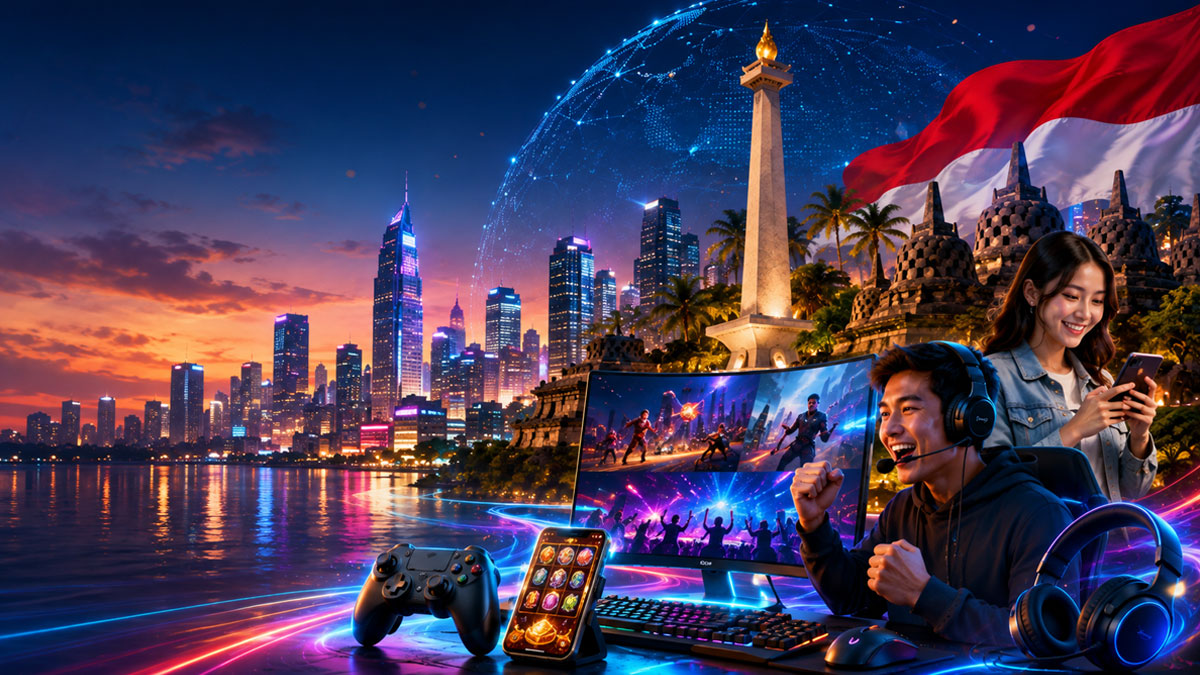
In countries like Indonesia, India, Brazil, and the Philippines, mobile esports tournaments fill physical arenas with tens of thousands of cheering spectators while generating millions of concurrent live-stream viewers online. Top mobile esports athletes sign professional contracts, secure corporate sponsorships, and achieve household fame—competing entirely on handheld smartphones.
The success of mobile competitive gaming forced legacy console giants to take notice. Publishers like Activision Blizzard, Electronic Arts, and Nintendo restructured their corporate strategies to bring major intellectual properties—such as Call of Duty, Apex Legends, and Pokémon—to mobile platforms, generating billions in fresh revenue from mobile-first players.
Market Realities: Privacy, Saturation, and User Acquisition
Despite its immense financial dominance, the mobile gaming ecosystem faces severe operational friction as it enters a mature market phase.
The primary operational challenge facing mobile developers today is user acquisition cost. With over 10,000 new apps and games launching across digital storefronts every month, organic discoverability has plummeted. Small indie developers can no longer rely on simply placing a great game on an app store; they must spend heavily on digital marketing campaigns, social media ads, and influencer sponsorships just to capture initial downloads.
Furthermore, major platform privacy updates—most notably Apple’s App Tracking Transparency (ATT) framework—disrupted the targeted advertising models that mobile publishers relied on for a decade to identify high-spending users (“whales”).
Increased Privacy Controls → Obfuscated Targeting Data → Surging User Acquisition Costs → Market Consolidation
These shifts have driven rapid market consolidation. Independent studios struggle to survive the high cost of acquiring players, while giant media conglomerates acquire mid-sized developers to build massive, cross-promotional app portfolios capable of routing user traffic internally.
Simultaneously, ongoing legal disputes over app store commission rates—specifically the traditional 30 percent cut taken by Apple and Google—are slowly reshaping digital platform rules, pushing publishers to launch direct-to-consumer web storefronts to preserve their operating margins.
The Ambient Future of Play
The transformation of mobile gaming over the past two decades is far more than a business story or a technological achievement. It marks a permanent shift in human culture’s relationship with interactive media.
By stripping away expensive hardware requirements, eliminating mechanical control friction, and designing software for the natural rhythms of daily life, smartphones did not simply expand the video game industry. They integrated play into the ambient baseline of modern human existence.
Video games are no longer a specialized activity reserved for a dedicated subculture sitting in front of living room screens. They are what humanity does while waiting for a train, relaxing after dinner, or taking a five-minute break from work. The smartphone’s greatest secret is that it did not need to convince the world to love video games; it simply put a screen in everyone’s hand, erased the friction, and let human nature do the rest.

 admin
admin