
 Roland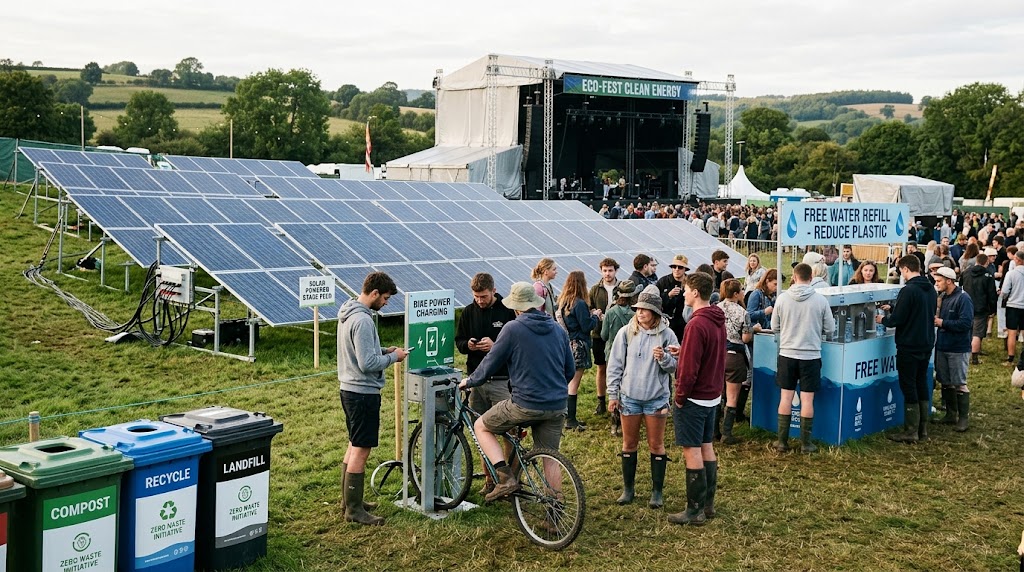
On a sun-bleached field, tens of thousands of fans cheer as the headlining act steps onto a stage bathed in blinding light and multi-kilowatt sound. For generations, this iconic summer ritual came with a steep, unadvertised environmental cost: idling diesel generators belching exhaust into the night air, mountains of single-use plastic cups trampled into the mud, and thousands of idling cars snaking along rural highways.
Today, that scene is being systematically re-engineered.
Across North America, Europe, Australia, and beyond, the live music industry is undergoing its most profound operational shift since the advent of amplified sound. Driven by climate-conscious artists, evolving fan expectations, and stark environmental realities, a new generation of “eco-festivals” is proving that high-energy entertainment does not have to come at the expense of the planet.From solar-charged battery microgrids and mandatory vegan catering to public transit mandates and circular waste systems, live music is transforming itself from a major environmental polluter into a real-world testing ground for sustainable innovation.
The Environmental Cost of the Live Music Boom
To understand the rise of sustainable festivals, one must look at the sheer scale of the live entertainment footprint. In the United Kingdom alone, the live music sector generates roughly 540,000 tonnes of carbon dioxide equivalent (CO2e) annually, with the vast majority stemming from outdoor festivals and multi-city arena tours. Globally, as live performances have become the primary economic driver for recording artists following the decline of physical record sales, the frequency and scale of music events have expanded dramatically.
Historically, outdoor events relied on temporary, highly polluting infrastructure. A typical four-day summer festival hosting 50,000 attendees consumes tens of thousands of gallons of diesel fuel simply to power stages, lighting rigs, food vendors, and campsite amenities. When combined with long-distance audience travel, air freight for equipment, and tons of uncollected landfill waste, a single weekend event can match the carbon output of a small municipality.
Recent academic research has brought much-needed clarity to this ecological impact. A comprehensive study conducted by the Massachusetts Institute of Technology’s (MIT) Climate Machine—backed by Coldplay, Warner Music Group, Live Nation, and sustainability consultancy Hope Solutions—evaluated emissions data across tens of thousands of live shows.The study confirmed what industry insiders long suspected: the environmental impact of live music is heavily concentrated in a few specific operational areas.
- Audience and Crew Travel: Accounting for 65% to nearly 80% of total event emissions, the physical movement of fans to and from festival sites represents the single largest climate challenge facing the sector.
- Temporary Power Generation: Reliance on legacy diesel generators for lighting, audio, and vendor infrastructure produces significant localized air pollution and greenhouse gas emissions.
- Food and Beverage Operations: The agricultural supply chains required to feed tens of thousands of attendees—particularly meat-heavy menus—generate substantial land-use and methane footprints.
- Waste and Freight Logistics:Single-use plastics, discarded camping gear, and heavy equipment transported via air cargo compound the industry’s environmental footprint.
Equipped with this data, festival promoters and artists are moving away from symbolic gestures and targeting the core mechanics of live event production.
Cutting the Cord: Replacing Diesel with Battery Microgrids
The most immediate physical transformation taking place on festival grounds is occurring behind the main stages, where traditional diesel generators are being replaced by high-capacity battery energy storage systems (BESS) powered by clean energy.
For decades, event engineers relied on continuous diesel generation because it offered absolute reliability; a power drop mid-set for a headlining artist could ruin a performance and compromise crowd safety. However, advancements in intelligent battery technology and grid-boosting software have proven that renewable microgrids can handle the intense, fluctuating electrical loads of modern concert production.
At Lollapalooza in Chicago, event organizers partnered with non-profit sustainability organization REVERB and its Music Decarbonization Project to power the main stage using a hybrid intelligent battery system.Over the four-day event, the setup eliminated thousands of gallons of diesel fuel, reducing fuel consumption on the main stage by over 50 percent and cutting tens of metric tons of greenhouse gas pollution.
Even more radical shifts are taking place across Europe and North America. Events such as San Francisco’s Portola Festival and electronic music showcases like Ultra’s RESISTANCE stage have successfully operated stages entirely on 100 percent battery power charged via existing grid connections or hydrogen-treated vegetable oil (HVO) generators, eliminating onsite fossil fuel emissions during show hours.
On the artist side, British band Coldplay pioneered the deployment of mobile, rechargeable show batteries—developed in collaboration with BMW using recycled electric vehicle batteries—to power 100 percent of their stadium production.The band supplemented their battery banks with kinetic dance floors and stationary energy-capturing bicycles, allowing fans to physically generate electricity to help power the show.
Solving the Audience Travel Puzzle
While clean stage power marks significant progress, festival directors acknowledge that an event cannot truly be deemed sustainable without addressing fan transportation. Because audience travel represents up to four-fifths of an outdoor event’s total carbon footprint, organizers are deploying aggressive logistics strategies to disincentivize single-occupancy vehicle travel.
One of the most notable historical precedents was set by electronic music pioneers Massive Attack during their “Act 1.5” climate-action concert in Bristol, UK.Designed in collaboration with the Tyndall Centre for Climate Change Research, the event achieved a historic 32 percent reduction in audience travel emissions through strict geographic and structural planning:
- Localized Ticketing Windows:The initial 48-hour ticket presale was restricted exclusively to residents living within local postal codes, ensuring that a vast majority of attendees resided within walking, cycling, or short transit distances.
- Dedicated Public Transit Integration:The event operated zero public car parking facilities on-site, instead funding free fleet electric shuttle buses to local train hubs and partnering with national rail operators to add extra late-night service capacity.
- Incentivized Low-Carbon Travel:Attendees who arrived via public transport or bicycle were rewarded with expedited entry lanes and access to dedicated venue amenities.
Other major international gatherings are following suit. Festivals across France, Germany, and the Netherlands routinely bundle regional train passes directly into the price of admission, transforming the event ticket into a universal transit pass. In North America and the UK, specialized coach networks—such as Big Green Coach—operate carbon-neutral long-distance shuttles that deliver fans directly to venue gates, removing thousands of passenger cars from regional highways.
The Food Shift: Low-Carbon Menus and Circular Waste
The ecological footprint of a music festival extends far beyond energy and fuel; it is also served on a plate. Research from the MIT Climate Machine indicates that food and beverage operations account for up to 8 percent of a concert’s total emissions—frequently eclipsing the carbon footprint of equipment shipping and production freight combined.
As a result, menu engineering has become one of the most cost-effective levers for emissions reduction available to event promoters. Transitioning vendor menus toward plant-based, locally sourced options can reduce food-related emissions by 40 to 90 percent.
Events like Paris’s We Love Green and Australia’s Renew Fest have led the charge by mandating 100 percent vegetarian or vegan menus across all vendor stalls, eliminating high-emission beef and dairy products entirely. Beyond lowering emissions, these festivals prioritize ingredients sourced within a 50-mile radius, supporting local agricultural economies while minimizing refrigeration and freight transportation emissions.
Simultaneously, the battle against solid waste is shifting from passive recycling toward complete circular economy design:
- Eliminating Single-Use Plastics:Festivals worldwide are enforcing absolute bans on single-use plastic water bottles, disposable cups, and plastic cutlery.California’s CaliRoots festival, for example, avoided over 1.5 million single-use plastic items by deploying high-capacity, free water-refill stations and tracking saved plastic counts on live digital scoreboards throughout the venue.
- Reusable Cup Systems: Promoters are replacing disposable paper and plastic cups with rigid, deposit-based reusable cups. Attendees pay a small initial deposit, swap their cup at vendors throughout the weekend, and return it at the end of the event for a refund or a sanitized collectible takeaway.
- Campground Preservation:Abandoned cheap tents represent one of the largest post-festival waste disasters, with thousands destined for landfills every summer.To combat this, festivals are partnering with outdoors retailers on “No Tent Left Behind” buy-back pledges, while expanding pre-pitched rental options where equipment is reused season after season.
The Economics of Green Logistics: Expense vs. Resilience
For decades, the primary defense against adopting sustainable festival infrastructure was financial. Fossil-fuel generators were cheap, single-use plastic was inexpensive, and unconstrained parking generated substantial revenue for operators.
Today, the financial calculus is rapidly changing. While cutting-edge technology—such as mobile battery banks, bio-fuel logistics, and specialized waste sorting—requires higher upfront capital investments, long-term operational costs are increasingly favoring green models.
Rising global fuel prices have made diesel generation an unpredictable operating expense. By contrast, hybrid battery systems reduce fuel consumption by up to 90 percent, delivering substantial savings on raw fuel purchasing, transportation, and engine maintenance over a multi-day event. Furthermore, municipal authorities in major global cities are increasingly tying land-use permits and environmental licenses directly to robust sustainability compliance, making environmental planning a mandatory cost of doing business.
Corporate sponsorship models have adapted accordingly. Major global brands seeking to fulfill their own corporate Environmental, Social, and Governance (ESG) commitments are actively redirecting marketing budgets toward events with verified sustainability credentials. A festival that can demonstrate verified carbon reductions, low waste-to-landfill rates, and community investment becomes a significantly more attractive commercial partner than a traditional high-polluting event.
Critical Scrutiny: Offsets, Greenwashing, and Structural Limits
Despite remarkable progress, the live music industry’s green transition faces legitimate criticism from environmental scientists and advocacy groups.
The primary concern centers on the industry’s historical reliance on carbon offsetting—the practice of paying external third parties to plant trees or fund renewable projects to “balance out” an event’s emissions. Independent audits have repeatedly shown that many cheap carbon offset schemes fail to deliver long-term, permanent carbon sequestration.
Leading sustainability consultants now urge promoters to prioritize direct carbon elimination—reducing actual energy use, travel, and waste on-site—before utilizing highly vetted, localized nature restoration projects as a secondary measure.
Furthermore, global touring logistics remain a fundamental structural obstacle. While a festival can green its local footprint, headlining artists who fly across oceans on private jets with hundreds of tons of air-freighted stage gear create an environmental deficit that local recycling programs and solar panels cannot erase. True sustainability will require global booking agencies, stadium promoters, and international freight companies to align their schedules, regionalizing tours to minimize long-haul transit.
A New Baseline for Live Culture
The rise of the eco-festival signals a permanent shift in how society views massive cultural gatherings. The notion that a music festival must leave behind scorched earth, mountains of plastic trash, and tons of carbon pollution is rapidly fading into history.
What is emerging in its place is a model of live entertainment that recognizes its profound connection to the physical world. By combining technological innovation with community collaboration, the live music sector is demonstrating that the shared joy of human gathering can exist in harmony with environmental stewardship.
As green power grids replace roaring generators and sustainable travel becomes the industry standard, eco-festivals are offering more than just great music. They are providing a working blueprint for how complex, resource-intensive human systems can adapt, innovate, and thrive in a low-carbon future.


 admin
admin