Standing atop a wind-swept cliff in a digital wilderness, a player looks out across dozens of square kilometers of rendered terrain. In the distance, a spiral of smoke rises from an unknown campsite, a ruined fortress sits half-buried in a valley, and a lightning storm brews over a distant mountain peak. There are no linear corridors forcing the player forward, no immediate ticking clocks, and no singular path to take. The game engine simply asks a single, quiet question: Where do you want to go next?
For tens of millions of players worldwide, that single question is responsible for hundreds of hours of lost sleep. Games like The Legend of Zelda: Tears of the Kingdom, Elden Ring, Red Dead Redemption 2, and The Witcher 3: Wild Hunt regularly command engagement numbers that dwarf traditional linear media. Players who struggle to maintain focus on daily tasks or complete a two-hour film will voluntarily spend months exploring every corner of a virtual continent.
This phenomenon is not an accident of software engineering, nor is it merely a byproduct of impressive visual fidelity. Modern open-world games represent some of the most sophisticated applied psychology on Earth. By pairing complex neuroscience with structural game design, developers have built interactive environments that systematically tap into core human motivational systems, spatial memory circuits, and neurochemical reward pathways.
The Self-Determination Framework: Agency Beyond Real-World Constraints
To understand why open-world games hold such extraordinary psychological power, behavioral scientists frequently point to Self-Determination Theory (SDT).Developed by psychologists Edward Deci and Richard Ryan, SDT posits that human motivation and psychological well-being rely on the satisfaction of three basic, innate needs: autonomy, competence, and relatedness.
In daily physical life, autonomy is frequently constrained by workplace obligations, financial limits, and social structures. Open-world games invert this dynamic entirely. From the moment a player steps out of a tutorial area into an expanse of open terrain, they are granted near-absolute agency. They decide whether to pursue a main narrative quest, gather crafting materials, experiment with physics engines, or simply walk toward an intriguing horizon.
This autonomy is tightly coupled with immediate feedback loops that satisfy the need for competence. In the real world, mastering a skill or receiving recognition for labor often requires months or years of ambiguous effort. In an open-world game, competence is quantified and continuously validated: climbing a difficult mountain grants a spectacular view or rare resource; defeating a hidden boss yields upgraded equipment; clearing a regional map reveals tangible progress. By satisfying these basic psychological needs more cleanly and reliably than many real-world environments, open-world games offer a potent form of cognitive escapism and stress relief.
The Neuroscience of Anticipation: Dopamine and Variable Rewards
Popular culture often mischaracterizes dopamine as a “pleasure chemical” released when a goal is achieved. In neurobiology, however, dopamine operates primarily as a chemical of anticipation, motivation, and search behavior.The mesolimbic dopamine pathway fires most intensely not when a reward is received, but when a reward is expected or when the outcome of a search is uncertain.
Open-world design is engineered specifically to exploit this neurochemical seeking system through variable-ratio reinforcement schedules.
Exploration Phase
Environmental Trigger
Neurochemical Mechanism
Behavioral Outcome
Distant Observation
Silhouette of an uncharted landmark or smoke plume
Dopamine surge triggered by anticipation and curiosity
Player alters path to investigate
Approach & Search
Navigating terrain, encountering minor obstacles
Sustained dopamine elevation during active search
Increased focus, resistance to distraction
The Reveal
Discovering a chest, hidden lore, or a rare enemy encounter
Variable reward delivery (high-value loot vs. basic resource)
Reinforcement of seeking behavior; craving for next landmark
When a player crests a hill in an open-world title, the environment guarantees that something is over the next ridge, but it rarely reveals what that something will be. The outcome might be a major narrative questline, a high-level combat encounter, an ambient puzzle, or a simple cosmetic item. Because the reward is variable and continuous, the brain’s dopamine circuits remain in a state of elevated, active engagement, compelling the player to investigate “just one more landmark” before logging off.
The Zeigarnik Effect and the Infinite Quest Log
In the 1920s, Soviet psychologist Bluma Zeigarnik observed that waiters retained complex, unfulfilled meal orders in their memory with remarkable clarity, but completely forgot the orders the moment the bills were paid. This psychological phenomenon—the Zeigarnik effect—demonstrates that the human brain experiences persistent cognitive tension regarding incomplete or interrupted tasks.
Modern open-world games are built upon digital architectures that systematically trigger and maintain the Zeigarnik effect:
The Fog of War: Shrouded map regions visually broadcast uncompleted exploration, creating an implicit psychological urge to clear greyed-out zones.
Cluttered Question Marks and POIs: Points of Interest (POIs) dotted across a map act as open cognitive loops that demand resolution.
Nested Quest Architecture: Completing one objective frequently unlocks three secondary tasks, ensuring that a player’s quest log is never entirely empty.
When a player attempts to finish a play session, their working memory is anchored to multiple unresolved loops. Resolving a current side quest typically brings the player into visual contact with two new unexplored ruins or unfinished objectives. The brain’s natural resistance to leaving tasks incomplete makes closing the software feel like leaving a book open mid-sentence.
Spatial Navigation, Cognitive Mapping, and the Hippocampus
Unlike linear games or passive film media, open-world environments demand active spatial navigation. Players must orient themselves relative to distant landmarks, memorize regional geography, and construct internal mental models of complex three-dimensional spaces.
Neuroscientific research indicates that spatial navigation in 3D gaming environments heavily engages the hippocampus—the brain region responsible for spatial memory, consolidation of information, and long-term navigation.
When players use landmark-based spatial learning strategies (orienting themselves by observing natural topography, mountain ranges, and architectural structures rather than blindly following a 2D minimap indicator), they experience measurable activation in hippocampal grey matter. This deep spatial engagement generates a psychological sense of presence—the subjective feeling of physically occupying a digital place rather than merely observing a screen.
This spatial attachment explains why players often form deep emotional bonds with specific game locations. The memory of navigating through a virtual mountain pass or returning to a central hub town is stored in the brain using the exact same spatial mapping systems that record real-world travel memories.
The Design Engine of Immersion: Balancing Friction and Freedom
While psychological drivers explain the desire to play, game design mechanics determine whether an open world remains engaging or devolves into overwhelming boredom. Early open-world titles often suffered from “open-world fatigue”—a state where maps littered with thousands of repetitive icons began to feel like tedious checklists.
The modern generation of open-world masterpieces has solved this problem by carefully calibrating environmental friction and emergent gameplay systems.
High Map Guidance + Low System Physics = Checklist Fatigue (Mechanical Repetition)
Low Map Guidance + High Systemic Interaction = Emergent Discovery (High Immersion)
Leading titles achieve sustained immersion by utilizing specific design pillars:
Systemic Emergence: Designing overlapping game systems (weather, fire physics, enemy AI interactions, gravity mechanics) that react dynamically to player experimentation. When a player realizes they can ignite dry grass to create an updraft that lifts their glider, the world ceases to feel like a static set and becomes a reactive sandbox.
Environmental Sightlines: Structuring geography using the “triangle method”—placing large landmarks (mountains, towers) that block direct vision, hiding mid-sized points of interest behind them. This forces the player to constantly move around physical obstacles to satisfy their curiosity.
Friction and Movement Feel: Making the physical act of traversal inherently satisfying. Whether it is the momentum-based swinging of Spider-Man, the horse-handling physics of Red Dead Redemption 2, or the climbing and gliding mechanics of Breath of the Wild, the mechanical effort required to cross space becomes a source of engagement rather than an administrative chore.
Cognitive Escapism and the Fine Line of Engagement
The profound immersive capacity of open-world games highlights their complex role in modern mental health. For millions of users living through high-stress urban environments, demanding economic realities, or social isolation, open worlds function as vital digital sanctuaries. They provide safe spaces for cognitive escapism, stress reduction, and low-stakes problem solving.
However, the very mechanisms that make these virtual spaces restorative—frictionless achievement, constant variable rewards, absolute agency, and infinite task loops—also create risks for compulsive overuse. When a virtual world offers a more reliable, manageable, and neurochemically rewarding environment than physical reality, pulling away from the controller requires significant executive function and self-regulation.
The science of open-world games reveals that our susceptibility to their pull is not a weakness of willpower; it is proof of how precisely these virtual spaces align with the architecture of the human brain. By offering worlds that satisfy our fundamental psychological needs for agency, mastery, and exploration, game developers have created the most captivating storytelling medium in human history—one horizon at a time.
Indonesia’s Online Entertainment Industry Continues to Attract Attention
The digital landscape in Southeast Asia is evolving at a breakneck pace, and Indonesia is leading the charge. With a rapidly growing digitally native population and expanding mobile connectivity, the…
The New Gaming Trends Changing How Players Spend Their Time
The days of sitting down for an uninterrupted, four-hour story campaign are starting to feel like a throwback. While epic blockbusters still hold a special place, the way players spend…

 Roland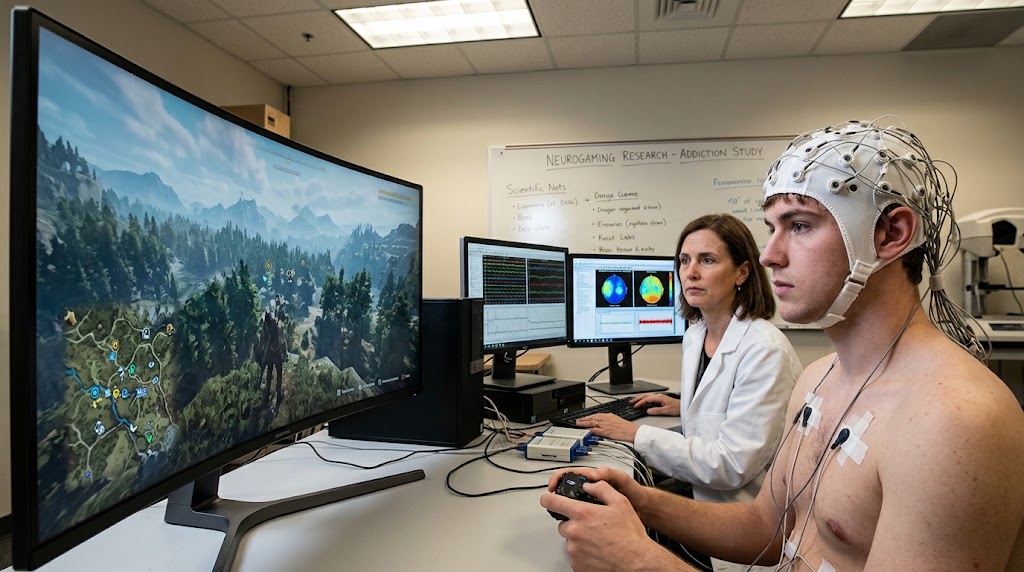


 admin
admin