 Roland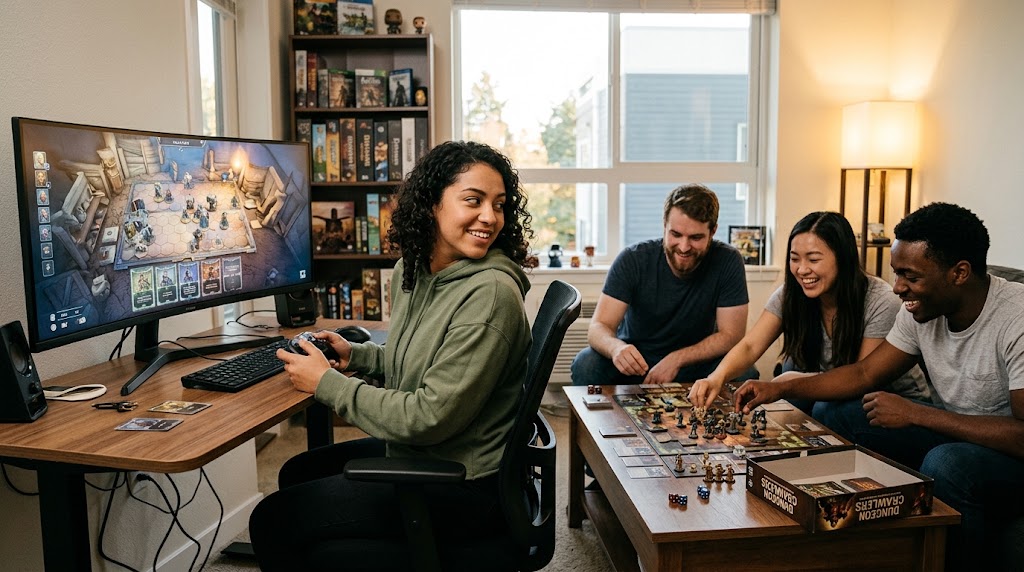
In executive suites across Los Angeles, London, and Tokyo, the search for Hollywood’s next massive entertainment franchise has shifted away from dusty comic book back-catalogs and linear video games. Instead, producers are looking at dining room tables.
Major film studios and global streaming platforms are committing unprecedented capital to adapt tabletop board games into feature films, prestige television series, and high-stakes reality shows. Netflix announced an extensive slate of scripted and unscripted projects based on Catan—the seminal resource-trading game that has sold tens of millions of copies worldwide—alongside competition formats inspired by Clue and Monopoly. Concurrently, Lionsgate teamed with Margot Robbie’s production banner, LuckyChap, to bring Monopoly to the big screen, while Amazon Prime Video continues building its multi-media universe around Games Workshop’s expansive Warhammer 40,000 narrative world.
This surge is not an isolated trend or a momentary marketing gimmick. It represents a fundamental realignment of how the global media ecosystem discovers, values, and monetizes intellectual property. Following the box-office dominance of Mattel’s Barbie and the critical success of game-to-screen hits like The Last of Us and Fallout, Hollywood has realized that physical, tactile, and social media brands hold immense untapped cultural capital.
As entertainment platforms race to capture fragmented consumer attention, tabletop adaptations have emerged as the premier frontier for transmedia storytelling.
The Post-Comic Book IP Landscape
To understand why board games are suddenly commanding seven-figure option deals, one must look at the structural exhaustion of traditional studio intellectual property. For nearly two decades, superhero franchises dominated global box office returns. However, audience fatigue, bloated production budgets, and overly complicated cinematic universes have left major studios seeking fresh narrative frameworks.
For a period, video game adaptations appeared to fill the vacuum. Hits like The Super Mario Bros. Movie, Sonic the Hedgehog, and Arcane proved that digital gaming properties could achieve critical and commercial triumphs. Yet video games carry inherent adaptation challenges: they possess fixed, highly detailed linear plotlines and pre-established protagonist designs that fans fiercely guard. Altering a beloved video game character’s backstory risks immediate fan backlash, while copying it step-for-step can make the screen adaptation feel redundant.
Tabletop board games offer an ideal middle ground for film and television writers:
- High Brand Recognition: Titles like Monopoly, Catan, Risk, and Clue boast near-universal global recognition across multiple generations of consumers.
- Narrative Flexibility: Unlike novels or story-driven video games, traditional board games do not dictate a single rigid plotline. They offer a high-concept premise, an aesthetic universe, and a set of operational rules, granting screenwriters the freedom to construct original stories within an established brand framework.
- Low Aesthetic Baggage: Directors are not restricted by specific voice actors or rigid cinematic cutscenes, allowing creative teams to interpret visual worlds with greater artistic autonomy.
By acquiring board game rights, studios secure the instant marketing reach of a legacy global brand without the narrative straightjacket of adapting a pre-scripted story.
Game Mechanics as Storytelling Engines
The traditional skepticism surrounding board game movies—often stemming from 2012’s action-blockbuster Battleship—assumed that cardboard grids and plastic tokens lacked sufficient depth to support compelling human drama. Modern screenwriters and producers are proving the opposite: the core mechanics of board games are inherently cinematic because game mechanics are dramatic structures.
At their core, classic and modern tabletop games are engines of psychological tension, strategic negotiation, and conflict. The fundamental activities that make board games engaging on the table translate directly into classic narrative arcs:
Tabletop Game Mechanic → Narrative Equivalent
Resource Scarcity (Catan) → Economic Survival & Territorial Friction
Social Deduction (Mafia/Werewolf) → Psychological Thriller & Paranoia
Territorial Expansion (Risk) → Geopolitical Strategy & Military Drama
Dungeon Crawling (Warhammer/D&D) → Mythic Quest & Ensemble Adventure
When screenwriters adapt a game like Catan, they are not making a film about placing wooden roads on a cardboard hexagon. They are stepping into a high-stakes narrative world defined by resource scarcity, diplomatic isolation, trade embargoes, and the desperation of expanding settlements on an unmapped island.
Similarly, games built on social deduction—such as Secret Hitler, Resistance, or Betrayal at House on the Hill—contain built-in narrative engines centered on trust, betrayal, hidden motives, and sudden reveals. Rather than forcing a narrative onto a board game, modern adaptations extract the emotional experience of playing the game and project it onto screen characters.
The Modern Tabletop Renaissance and “Superfan” Demographics
Hollywood’s aggressive expansion into board game adaptations is also a direct response to a broader cultural phenomenon: the modern tabletop board game renaissance.
Over the past decade, board gaming transformed from a nostalgic family pastime into a multi-billion-dollar global entertainment sector. Powered by crowdfunding platforms like Kickstarter and BackerKit—where tabletop projects routinely raise millions of dollars in direct consumer backing—the industry has expanded into sophisticated Euro-style strategy games, immersive legacy games, and heavy thematic miniatures.
This renaissance has cultivated a highly engaged, global demographic of “tabletop superfans”:
- High-Value Consumer Profiles: Tabletop enthusiasts represent a demographic with high disposable income, frequently spending hundreds of dollars annually on core boxes, expansions, custom miniatures, and convention passes.
- Community Ecosystems: The explosion of actual-play streams, board game cafes, and dedicated conventions such as Gen Con in North America and Essen Spiel in Germany has built vibrant, self-sustaining international fan communities.
- Cross-Generational Reach: Modern board gaming spans age brackets, bringing together Gen Z gamers seeking screen-free social activities, Millennials raising families, and older hobbyists with deep institutional memory of classic titles.
Streaming platforms like Netflix, Amazon, and Apple TV+ recognize that these superfans represent built-in subscriber bases. When a platform options an acclaimed board game title—whether an indie darling like Scrye or Frosthaven, or an international classic like Ticket to Ride—it taps into an active, highly communicative community capable of driving organic organic social buzz.
The Unscripted TV Explosion: Board Games as Reality Formats
While scripted feature films and drama series command major headlines, unscripted television represents one of the fastest-growing sectors of tabletop adaptations.
The global success of television formats like The Traitors—which drew direct inspiration from classic social deduction party games like Mafia and Werewolf—demonstrated that board game rulesets can revitalize competitive reality TV. Audiences responded enthusiastically to watching contestants navigate clear mechanical rules, formal voting rounds, hidden identities, and psychological backstabbing.
Following this success, networks have moved swiftly to adapt formal board game IPs into reality competition shows:
- Netflix’s Clue Competition Series: A unscripted murder-mystery format where contestants must use deductive reasoning, spatial exploration, and forensic elimination to solve real-time mysteries for cash prizes.
- Streamed Monopoly Arenas: Formats that translate the real-estate accumulation, negotiation tactics, and bankrupting mechanics of Monopoly into physical, high-stakes psychological challenges for human participants.
- App-Driven Party Game Formats: Adapting chaotic party titles like Exploding Kittens and Taskmaster into interactive, viewer-participatory television broadcasts.
Unscripted board game adaptations offer networks significant operational advantages. They are considerably less expensive to produce than scripted science-fiction or fantasy series, carry low production risk, and provide clear, easily understood rulesets that international audiences can follow without complex localization.
Navigating the Pitfalls of Cardboard-to-Screen Adaptations
Despite the massive commercial momentum, converting a tabletop brand into a successful film or television project remains fraught with creative and economic risks. The graveyard of corporate IP adaptations is filled with projects that treated established brands as superficial badges rather than organic storytelling foundations.
Industry analysts highlight three primary hurdles that creative teams must navigate:
1. The Literalism Trap
The most frequent mistake in early game adaptations was taking abstract game components too literally. A film that focuses excessively on game tokens, dice rolls, or rigid board layouts risks alienating general audiences who are seeking compelling character arcs. Successful adaptations prioritize tone, thematic conflict, and emotional resonance over precise mechanical recreation.
2. Over-Reliance on Brand Recognition
Relying solely on a famous title to sell tickets or generate streams is no longer sufficient. Modern audiences have become adept at identifying lazy corporate synergy. If a Monopoly or Risk movie lacks a strong artistic vision, witty writing, or meaningful thematic commentary on capitalism or warfare, visual brand awareness will not prevent audience indifference or critical rejection.
3. Preserving the Collaborative Experience
The unique magic of board gaming lies in human agency: the collective storytelling that happens between real people sitting around a shared table. Translating an interactive, participatory social experience into a passive viewing medium requires filmmakers to inject that sense of unpredictability, strategic surprise, and player agency into the script itself.
The Future of Transmedia Tabletop Architecture
The relationship between tabletop gaming and screen media is no longer a one-way street. Historically, entertainment companies licensed popular movies to create uninspired board game tie-ins. Today, the pipeline is fully bi-directional and integrated.
Leading board game publishers like Asmodee, Hasbro’s Wizards of the Coast, and Ravensburger are establishing dedicated entertainment divisions to manage their intellectual property rights. Concurrently, film studios are designing new cinematic projects with simultaneous tabletop game releases in mind, ensuring that when an original film or series launches, a high-quality, companion board game hits store shelves on the same day.
This transmedia loop creates a self-reinforcing economic cycle: the television series drives viewers to purchase the board game, while weekly game nights with friends keep consumers anchored to the franchise long after a season finale has aired.
The Lasting Power of the Tabletop Narrative
The explosion of board game adaptations signals a mature evolution in global entertainment marketing. It demonstrates that the most compelling narrative foundations are not always found in expensive digital visual effects or decades of comic book continuity, but in the elemental human dynamics of strategy, chance, negotiation, and play.
By taking the rules, tensions, and social magic of the dining room table and elevating them to the global screen, Hollywood is tapping into a timeless truth: human beings love games. Whether played with plastic pieces on a cardboard map or watched on an ultra-high-definition display, the thrill of outsmarting an opponent, forging a desperate alliance, or rolling the dice against impossible odds remains one of the most universal stories we can tell.


 admin
admin