 Roland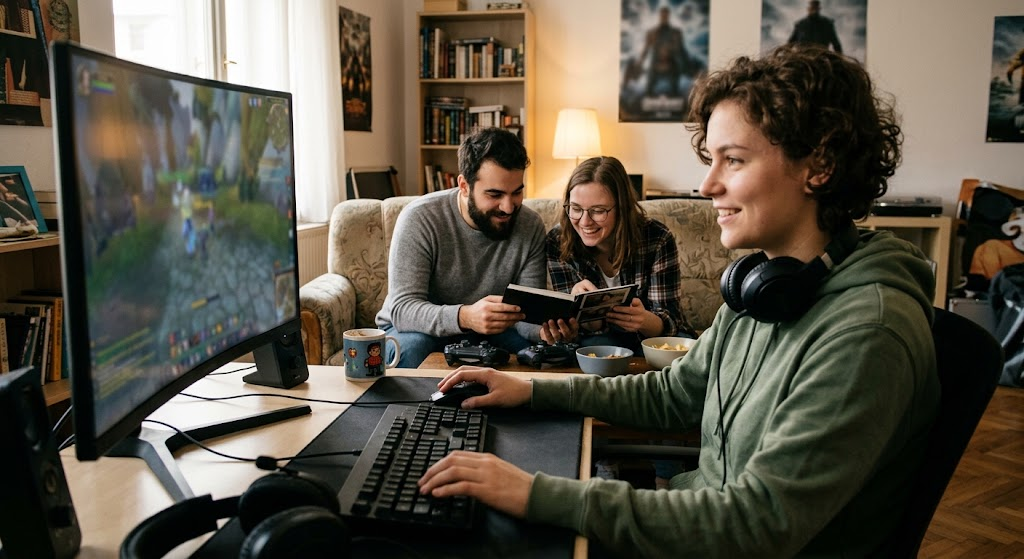
When two people stood before an altar in Chicago to exchange wedding vows, the minister asked how their journey began. The groom did not mention a mutual friend at university, a local coffee shop, or a dating algorithm. Instead, he described a late-night battle against a virtual dragon, where a stranger halfway across the continent coordinated a retreat, saved his character from digital death, and stayed on voice chat until dawn talking about life, career anxieties, and family expectations.
Stories like this were once framed by mainstream media as rare eccentricities. Today, they represent a widespread cultural shift. Across the globe, multiplayer video games and their associated digital ecosystems have evolved from isolated entertainment products into some of the most dynamic social engines of the twenty-first century.
Far from the persistent stereotype of the solitary player isolated in a dark basement, hundreds of millions of people are using virtual environments as primary spaces for human connection.In these interactive domains, casual teammates regularly transform into trusted confidants, business partners, roommates, and lifelong friends. As physical spaces for community gathering diminish and traditional social structures adapt to modern mobility, gaming communities are quietly constructing durable real-world relationships.
From Screen Isolation to the Modern “Third Place”
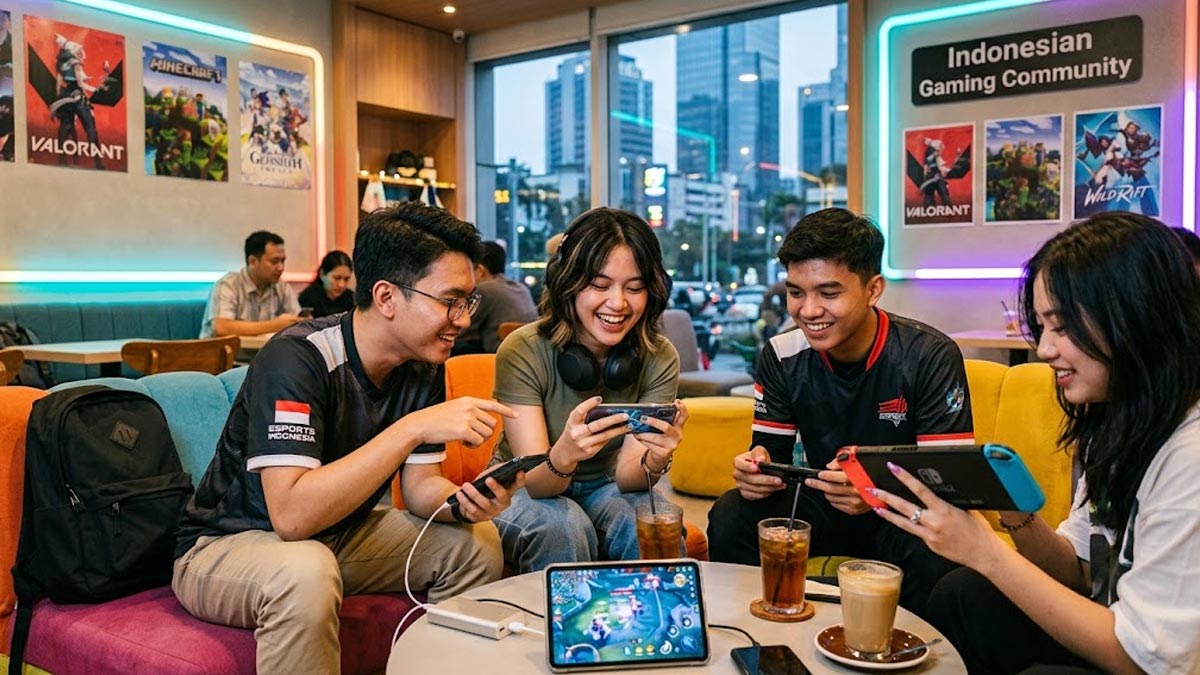
To understand how virtual spaces cultivate real-world bonds, sociologists increasingly point to the decline of what urban sociologist Ray Oldenburg termed the “third place.” In his foundational work, Oldenburg identified third places as the anchor spaces of community life—locations distinct from the two primary environments of home (the first place) and work or school (the second place). Traditionally fulfilled by civic halls, neighborhood cafes, churches, barbershops, and local parks, these spaces offered low-cost, accessible environments where people could gather, converse, and build social capital.
Over the past three decades, economic pressures, urban sprawl, changing work habits, and the privatization of public space have eroded traditional third places across many industrialized nations. Into this void stepped interactive digital environments.
First Place: Home (Private life)
Second Place: Work or School (Professional life)
Third Place: Community Anchors (Cafes, clubs, and now digital gaming hubs)
Where early social media platforms like Facebook, Instagram, and X focused on asynchronous broadcasting, performance, and curated image projection, online gaming environments demanded real-time presence and active participation.
Global research underscores the scale of this migration. According to the 2025 Global Power of Play report—which surveyed more than 24,000 players across 21 countries—nearly two-thirds of players globally report that video games help them connect positively with others.More strikingly, among players aged 16 to 35, 73 percent stated that gaming helps them feel less isolated, while 67 percent reported that they have met a close friend, long-term partner, or spouse through a gaming community.
The shift signals a fundamental reassessment of public health assumptions. While public health authorities have declared a global epidemic of loneliness—equating social isolation to the physical hazards of chronic smoking—academic studies are discovering that moderate, social gaming acts as a protective buffer. Longitudinal research published in journals such as ScienceDirect and Frontiers in Psychology demonstrates that playing online games does not displace offline social interactions; rather, it often generates new social capital and strengthens intimacy across geographical boundaries.
The Psychology of Shared Goals and Unfiltered Interaction
Why do gaming environments excel at fostering deep personal connections compared to other forms of digital communication? The answer lies in the psychological mechanisms of cooperative play and shared experience.
In traditional social settings, making a new friend often requires navigating immediate physical judgments, social awkwardness, and the pressure of small talk. Gaming bypasses these initial friction points through a concept known as “low-stakes co-presence.” When two players enter a cooperative game—whether building a settlement in Minecraft, executing tactical maneuvers in Helldivers, or navigating complex raid mechanics in Final Fantasy XIV—their immediate focus is directed toward a shared objective.
This task-oriented environment creates what social scientists call “bridging social capital”. Matchmaking algorithms regularly pair individuals who might never cross paths in the physical world due to differences in age, socioeconomic background, political affiliation, or geography.
Shared Challenge → Coordinated Communication → Mutual Reliance → Personal Disclosure → Lasting Trust
As players spend hours collaborating, the nature of their communication naturally evolves:
- Task-Based Coordination: Initial interactions center purely on game mechanics, strategies, and immediate operational needs.
- Ambient Down-Time Conversation: During repetitive gameplay loops, map navigation, or lobby waiting periods, players engage in casual, unscripted conversation.
- Shared Vulnerability: Because eye contact is absent and attention is shared with the screen, players often feel safer disclosing personal struggles, workplace stress, or relationship difficulties.
- Mutual Reliance and Trust:Overcoming difficult virtual challenges together fosters genuine mutual respect and emotional commitment.
Researchers from the University of Essex and various European institutions have observed that the absence of physical appearance in early interactions allows relationships to form based on character, reliability, humor, and emotional intelligence. In many instances, players report feeling more comfortable discussing personal vulnerabilities with their online gaming peers than with casual acquaintances in their physical lives.
The Infrastructure of Connection: Lobbies, Voice Channels, and Discord
The evolution of gaming friendships has been dramatically accelerated by changes in consumer technology and software design.
In the late 1990s and early 2000s, online gaming social structures were fragmented. Players met in transient text lobbies, relied on rudimentary in-game voice chat, or organized through text-heavy web forums. Transitioning an online gaming acquaintance into a real-world friend required exchanging phone numbers or personal email addresses—a boundary many were hesitant to cross.
The modern gaming ecosystem operates through persistent, multi-layered communication platforms, most notably Discord.Boasting over 200 million monthly active users, Discord serves as the connective tissue for contemporary gaming culture. Instead of existing merely as a voice tool during active matches, these platforms function as permanent, digital living rooms.
In these custom servers, groups of players maintain text channels for sharing memes, discussing news, posting food photos, and offering career advice. Voice channels remain open throughout the day, allowing community members to pop in and out freely.
It is now routine for members of a gaming squad to sit in a shared voice channel while doing university homework, working remotely, or playing entirely different single-player titles. This ambient co-presence replicates the experience of living in a shared university dormitory or communal apartment, providing an antidote to the isolation of modern remote work and living alone.
Furthermore, cross-platform play—which enables users on PlayStation, Xbox, PC, and mobile devices to join the same virtual worlds seamlessly—has dismantled traditional hardware barriers. A student in London using a console can easily form an enduring daily routine with an engineer in Tokyo playing on a custom PC.
Crossing the Digital Threshold: Real-World Impacts and Mutual Aid
While these connections originate in virtual landscapes, their real-world consequences are increasingly tangible. The progression from avatar-based camaraderie to physical support manifests across numerous facets of life.
1. Milestone Events and Travel
It has become common for gaming guilds and squads to organize annual physical gatherings, often traveling across international borders to attend events like TwitchCon, PAX, or private regional meetups. Weddings where groomsmen and bridesmaids met entirely through guild raids are no longer novelties but regular occurrences in the modern hospitality industry.
2. Crisis Response and Mutual Aid
Because gaming communities foster strong “bonding social capital,” members frequently mobilize during real-world emergencies. When a player faces sudden job loss, medical crises, or natural disasters, it is common for their virtual community to launch emergency crowdfunding campaigns, assist with housing relocations, or offer professional networking connections.
During regional conflicts and public safety emergencies over the past decade, online gaming groups have repeatedly acted as informal emergency communication channels, coordinating check-ins, local supplies, and temporary shelter for squadmates in impacted zones.
3. Professional and Academic Collaboration
The collaborative skills refined in high-level competitive gaming—resource management, strategic planning, cross-cultural communication, and conflict resolution—translate directly into professional domains. Numerous technology startups, creative agencies, and academic research collaborations trace their origin stories back to members who first tested their teamwork in competitive gaming leagues.
The Limits of Virtual Camaraderie: Fragility and Toxicity
Despite the overwhelming evidence of positive social bond formation, online gaming communities are not without structural vulnerabilities and ethical challenges.
The phenomenon of “transient camaraderie” remains a defining characteristic of digital social spaces. Criminologists and media researchers note that many online friendships are bonded tightly to a specific title.When a developer stops supporting a game, or when a player’s real-life schedule forces them to abandon a routine, these friendships can dissolve quickly if efforts were not made to transition the connection beyond the specific software environment.
High Shared Activity + Low Platform Diversity = High Risk of Relationship Dissolution
High Shared Activity + Multi-Platform Contact = High Relationship Resilience
Moreover, unmoderated online gaming spaces can be hostile environments. Toxic behavior, harassment, misogyny, and racial bigotry remain persistent problems in open, competitive matchmaking queues. Women, LGBTQ+ players, and racial minorities frequently face targeted abuse in public voice lobbies, forcing many to retreat into private, heavily moderated invite-only servers.
Psychologists also caution against relying exclusively on digital interactions for emotional well-being. While online friendships offer meaningful emotional support, they cannot entirely replace the physiological and psychological benefits of physical human contact, shared local geography, and in-person community participation.
Redefining the Future of Human Connection
As virtual reality, spatial computing, and artificial intelligence continue to reshape the digital landscape, the boundaries between online social spaces and physical reality will become even more permeable.
The historical distinction between “online friends” and “real friends” is rapidly fading, particularly among younger generations who have grown up in a fully networked world. To those who coordinate logistics, navigate crisis, and celebrate personal milestones within these digital spaces, the distinction was always artificial. A friend who listens during a night of grief, offers career guidance, or celebrates a personal triumph is a real friend, regardless of whether the conversation took place across a coffee shop table or through a headset over a virtual campfire.
In an era marked by geographic mobility, social fragmentation, and pervasive urban loneliness, gaming communities have quietly demonstrated that human beings will adapt technology to fulfill their most fundamental social needs. By offering shared purpose, structured cooperation, and accessible spaces for authentic interaction, these digital realms are proving that when people assemble to play, they often stay to build community.


 admin
admin