 Roland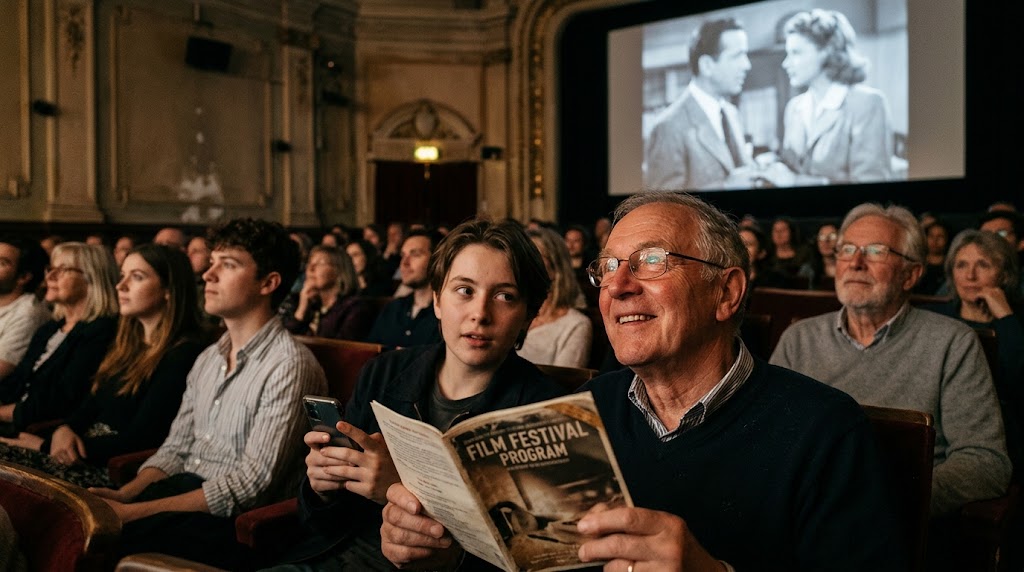
Walking into a modern multiplex often feels like an exercise in cinematic déjà vu. On any given weekend, marquee marquees display titles that dominated box offices twenty, forty, or even sixty years ago. From polished live-action reinterpretations of animated milestones to slick, high-budget reboots of gritty 1970s thrillers, the film industry has increasingly embraced a strategy of recycling its past. Yet, despite astronomical production budgets, state-of-the-art visual effects, and star-studded modern casts, the overwhelming critical and cultural consensus remains remarkably stubborn: the original classics are almost impossible to beat.
This phenomenon is not merely a byproduct of viewer nostalgia or resistance to change. The enduring superiority of original films over their modern remakes is rooted in the fundamental mechanics of storytelling, the unique historical conditions under which classics are forged, and the stark divergence between artistic risk-taking and corporate risk-management. Understanding why remakes so frequently fall short requires looking beyond surface-level comparisons and examining the deeper creative chemistry that makes a classic unrepeatable.
The Alchemy of Time and Zeitgeist
A classic film is rarely just a collection of good performances and a strong script; it is a snapshot of the cultural, political, and technological moment in which it was created. When Alfred Hitchcock released Psycho in 1960, it shattered prevailing cinematic censorship codes, disrupted traditional narrative structures by killing off its leading lady in the first act, and tapped directly into the post-war anxieties of suburban America.
When Gus Van Sant attempted a shot-for-shot remake of Psycho in 1998, replicating Hitchcock’s camera angles, dialogue, and blocking in full color, the result was widely panned as a hollow exercise. The technical execution was faithful, but the cultural context was entirely missing. In 1998, the subversion that made the 1960 original revolutionary had become standard visual language.
Original films often capture lightning in a bottle because they respond organically to their era. The paranoia of 1970s American cinema—reflected in classics like The Conversation or All the President’s Men—arose from real-world political disillusionment. When modern studios attempt to package that same tension into contemporary remakes, the atmosphere frequently feels manufactured rather than felt. The original work possessed a vital relationship with its contemporary audience; the remake exists primarily in relationship to the original work.
The Business of Corporate Risk Aversion
To understand the flood of remakes, one must look to the balance sheets of major entertainment conglomerates. In an era where blockbuster budgets routinely exceed $200 million—excluding global marketing costs—studios are under immense pressure to minimize financial exposure.
Investing in an untested, original screenplay represents a high-risk proposition. By contrast, a recognized brand or classic title carries built-in awareness. Marketing departments do not need to explain what The Lion King or Ghostbusters is; the title itself does the heavy lifting across international territories.
However, the very economic logic that makes remakes attractive to studio executives is precisely what sabotages their artistic potential. Original classics were almost always born from creative conviction—a director, writer, or producer fighting to bring an unproven vision to the screen. Remakes, conversely, are often greenlit from a position of corporate defense.
This fundamental difference in motivation dictates every creative choice that follows:
- Sanitized Narratives: Remakes frequently smooth away the moral ambiguities and abrasive edges that made the original compelling, aiming instead for broad, uncontroversial appeal.
- Focus-Grouped Pacing: Structural choices in remakes often prioritize rapid visual gratification over patient character development.
- Over-Reliance on Brand Recognition: Narratives are routinely stuffed with callbacks, Easter eggs, and nostalgic cues that pull the viewer out of the story to remind them of the previous film.
When safety is prioritized over daring, the resulting work may be technically competent, but it rarely possesses the fiery urgency of a project created out of pure artistic passion.
The CGI Trap: Replacing Soul with Pixels
One of the central arguments used to justify remakes is technological advancement. Studios promise that modern visual effects can finally realize scenes that past filmmakers could only approximate with practical effects, miniature models, or traditional animation. Yet, this reliance on digital perfection often backfires, stripping films of the visceral texture that defined their predecessors.
Consider Disney’s 2019 photorealistic computer-animated remake of The Lion King. While the rendering of fur, light, and African landscapes represented a technical miracle of computer science, it highlights a fatal flaw in the remake rationale. The original 1994 animated feature relied on exaggerated hand-drawn expressions to convey grief, joy, and betrayal. By replacing those stylized characters with photorealistic animals bound by the physical laws of real-world biology, the characters lost their ability to express human emotion. The film gained visual fidelity but surrendered its emotional heart.
A similar dynamic exists in live-action cinema. The practical creature effects in John Carpenter’s The Thing (1982) or Steven Spielberg’s mechanical shark in Jaws (1975) worked precisely because of their physical reality and practical limitations. The tension in Jaws was famously heightened because the mechanical shark repeatedly broke down, forcing Spielberg to suggest the monster’s presence through music, camera angles, and editing. Modern remakes, unburdened by such physical constraints, frequently flood the screen with digital CGI creations, replacing suspense with visual clutter.
The Over-Explanation Epidemic
Modern screenwriting culture is increasingly preoccupied with internal logic, lore expansion, and resolving perceived “plot holes.” When studios reboot or remake classic stories, there is a pervasive impulse to explain details that the original left intriguingly ambiguous.
Classics understand the power of mystery. In the original 1977 Star Wars or the original 1979 Alien, audiences were dropped into fully realized worlds without exhaustive expositions explaining every mechanism of the universe. The imagination of the viewer filled in the gaps, creating an immersive, personal experience.
Remakes and modern reboots, however, tend to over-explain:
- Unnecessary Backstories: Villains and mysterious figures are routinely given lengthy origin sequences that demystify their terror and humanize what was once compellingly enigmatic.
- Lore Over Load: Subtext is converted into literal text, leaving little room for audience interpretation or thematic nuance.
- Corrective Storytelling: Scriptwriters often dedicate significant screen time to explaining minor narrative inconsistencies from the original, slowing the story down to satisfy internet trivia debates rather than serving dramatic momentum.
By stripping away subtext and mystery, remakes present a fully digested narrative that demands very little active engagement from the audience.
The Rare Exceptions: Reimagining Over Replication
While the path of the film remake is littered with forgotten or criticized misfires, cinema history does contain notable exceptions where a second version equaled or surpassed the original. Examining these rare successes reinforces why most remakes fail.
John Carpenter’s The Thing (1982) was a remake of Howard Hawks’ 1951 production The Thing from Another World. David Cronenberg’s The Fly (1986) remade a 1958 sci-fi horror film. Martin Scorsese’s The Departed (2006) was adapted from Hong Kong’s Infernal Affairs (2002). Denis Villeneuve’s Dune (2021) tackled the same dense novel previously adapted by David Lynch in 1984.
These films succeeded because they did not attempt to replicate the originals. Instead, they extracted a core premise and completely reinterpreted it through a distinct directorial voice and fresh thematic lens:
- Drastic Genre Shifts: Carpenter shifted the 1951 monster movie into a paranoid, claustrophobic body-horror nightmare reflective of 1980s anxieties.
- Authorial Voice: Cronenberg used The Fly not to recreate 1950s B-movie schlock, but to explore tragic themes of aging, disease, and physical decay.
- Cultural Translation: Scorsese took the narrative engine of Infernal Affairs and transplanted it into the specific socio-political milieu of Irish-American organized crime in Boston.
The lesson from these successful outliers is clear: a remake only justifies its existence when it brings a radically new perspective to the material. When a remake merely attempts to update the visual effects while copying the original plot beats, it inevitably invites unfavorable comparisons.
The Long-Term Cost to Cinema’s Future
The entertainment industry’s reliance on remakes carries broader implications for the future of film culture. When production capital, marketing resources, and theatrical screen space are monopolized by recycled intellectual property, fewer opportunities exist for original screenplays to find funding and audiences.
Many of the very films that studios now look back on as untouchable classics—Casablanca, Taxi Driver, Alien, Pulp Fiction, The Matrix—were considered risky, idiosyncratic gambles when they were produced. Had the studios of those eras maintained the risk-averse, remake-heavy philosophy of today’s media environment, those original masterpieces might never have been made.
By prioritizing guaranteed short-term brand recognition over creative risk, the industry risks creating a generational deficit. If the present era produces primarily readaptations of the past, future generations of filmgoers will have remarkably few original classics of their own to look back on.
The Verdict on the Classic
The classic original remains almost impossible to beat because it is a complete, unrepeatable package. It represents the alignment of a specific historical moment, an uninhibited artistic vision, physical craftsmanship, and the serendipitous chemistry of cast and crew working without a pre-existing blueprint.
Remakes can offer slick visual upgrades, updated cultural references, and pleasant doses of nostalgia. But as long as they are produced primarily as financial safety nets rather than artistic imperatives, they will continue to play second fiddle to the originals. You can recreate the shot, rebuild the set, and render the creature in high definition—but you cannot remanufacture the spark that made the story legendary in the first place.