Reading time: 5 minutes
Some of the most useful decisions in a kitchen happen before anyone starts cooking. A jar of beans on a shelf, a bag of rice in a container or a bottle of vinegar within reach can turn an uncertain evening into a manageable meal. The pantry is often treated as a storage area, but it is also a quiet planning tool. It holds the ingredients, habits and small bits of knowledge that make everyday cooking more flexible.
Build around the meals you actually make
A useful pantry reflects real routines rather than an idealised list of ingredients. Someone who cooks quick breakfasts may rely on oats, nuts and dried fruit. Another household may use rice, lentils, noodles or tinned tomatoes several times a week. The best starting point is to notice what is already being used, what repeatedly runs out and what tends to sit untouched.
This simple inventory prevents the common mistake of buying ingredients for imagined meals that never happen. A smaller selection of familiar staples can be more useful than a crowded shelf of specialist products. Variety can be added gradually as curiosity and cooking confidence grow.
Think in roles, not recipes
Pantry ingredients become more versatile when they are understood by function. A grain or starch can provide structure. Beans, lentils and tinned fish can contribute substance. Nuts and seeds add texture. Vinegar, citrus, chilli, spices and fermented condiments can bring acidity, heat or depth. With a few ingredients from different roles, a cook can adapt a meal without following a fixed recipe.
For example, a bowl built from rice and vegetables can take different directions depending on the dressing and seasoning. A tin of beans can become a soup, a salad or a filling for flatbread. This is not a demand for constant improvisation. It is a way to make the same dependable ingredients feel less repetitive.
Storage is about visibility and care
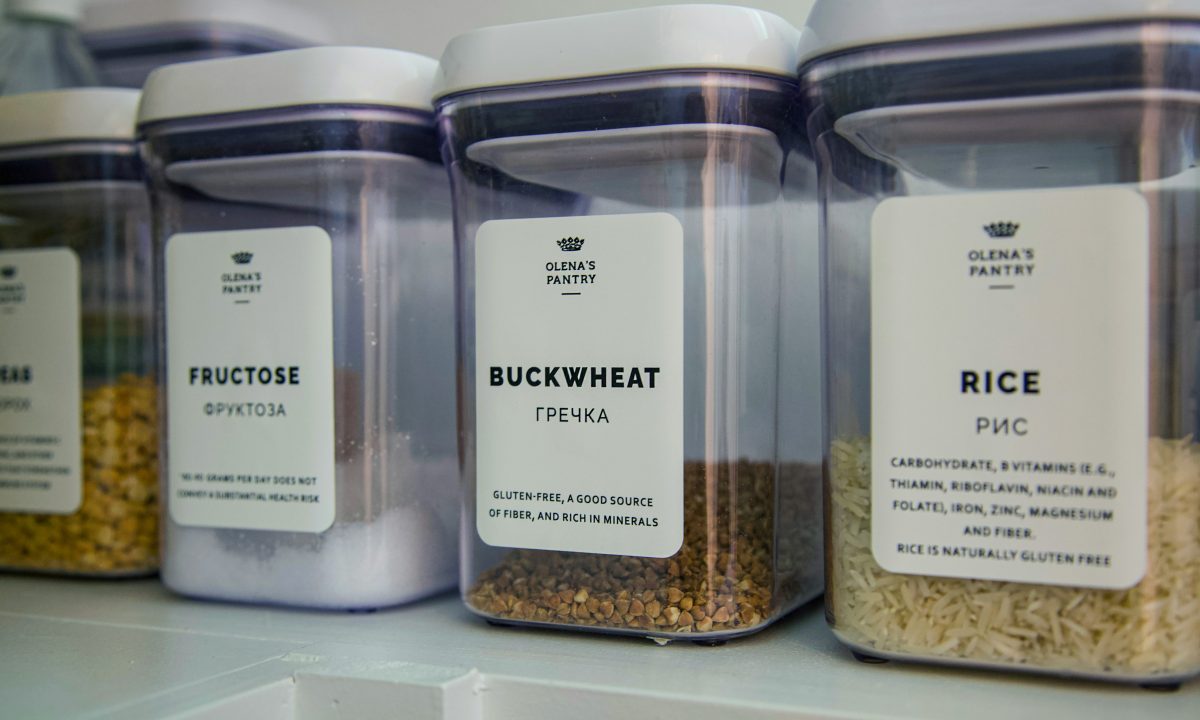
Good storage protects ingredients and makes them easy to find. Dry goods should be kept in clean, dry containers away from heat and moisture. Labels can help identify similar grains or flours, especially when packaging has been removed. Clear containers are useful only if they are easy to clean and suitable for the food being stored; keeping original packaging or noting cooking instructions can sometimes be more practical.
Rotation matters. Placing newer purchases behind older ones makes it easier to use what is already open. A small shelf check every few weeks can reveal ingredients that need attention and reduce unnecessary waste. The goal is not a perfectly arranged pantry for photographs. It is a system that makes food visible before it is forgotten.
Flavour begins with a few reliable additions
Staples provide a foundation, but a kitchen becomes more expressive through the ingredients that bring contrast. A good vinegar, a spice blend used regularly, dried herbs, toasted seeds or a condiment with a strong regional character can change the direction of a simple dish. These additions do not need to be expensive or numerous. They should reflect the flavours people enjoy and the food they actually cook.
It can be useful to buy unfamiliar ingredients in small quantities first. A spice that is central to one cuisine may be used differently in another, and learning how it behaves takes time. A short note about a successful combination can be more useful than collecting recipes without returning to them.
Make room for different food traditions
There is no universal pantry. Household staples are shaped by geography, family histories, religion, migration, budget and taste. What counts as an essential ingredient in one kitchen may be unfamiliar in another. A flexible pantry respects those differences rather than presenting a single set of products as the correct way to cook.
Sharing ingredients and techniques can be a generous way to learn. A neighbour’s method for seasoning beans, a family approach to preserving vegetables or a regional use for a grain can expand a cook’s repertoire. The important thing is to credit the knowledge and understand the context from which it comes.
Plan for use, not abundance
Buying in bulk can be economical when an ingredient is used often and stored safely. It is less helpful when large quantities remain untouched. Before restocking, consider how quickly a household uses an item, whether there is room to store it and how much time is available for cooking. A pantry should support daily life, not create another task to manage.
A kitchen that makes everyday life easier
The most successful pantry is neither sparse nor overflowing. It is familiar enough to make routine meals straightforward and varied enough to invite experimentation. When staples are chosen with care, stored visibly and used in flexible combinations, cooking becomes less dependent on perfect planning.
That is the quiet craft of the pantry: a set of practical choices that gives a home kitchen more options, less waste and a stronger connection to the food people enjoy making.
Image: Tamara Malaniy / Unsplash.