In July 2026, Sony Interactive Entertainment issued a landmark announcement that sent shockwaves through the video game industry: starting in January 2028, the company will permanently cease physical disc production for all new PlayStation games.Weeks later, Microsoft countered with its own “Disc-to-Digital” initiative, granting players digital entitlements for physical titles while quietly declining to confirm whether its next-generation hardware will feature an optical drive at all.
These pivotal corporate decisions marked the definitive end of an era. For over four decades, the video game industry revolved around a simple consumer ritual: purchasing a physical plastic box, inserting a cartridge or disc, and running software on a local machine sitting beneath the living room television.
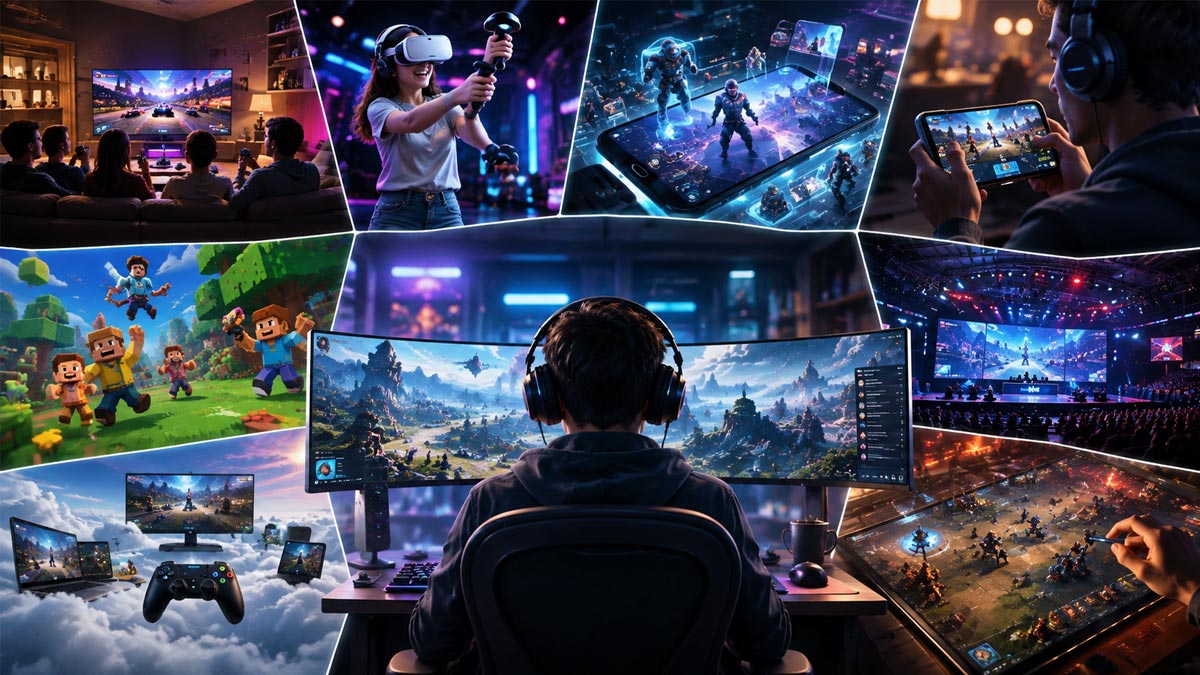
Today, that hardware-tethered model is dissolving under the rapid rise of cloud streaming and server-side compute. Fueled by high-speed fiber rollout, 5G networks, and massive investments in edge-node GPU infrastructure, cloud gaming has transitioned from a volatile tech demo into a multi-billion-dollar commercial force.
Yet, as platform holders race toward a server-rendered future, a critical question divides engineers, economists, and players: Is the physical gaming console facing imminent extinction, or will local hardware adapt and survive alongside the cloud?
The Death of the Disc: How Physical Media Lost Its Hold
The decline of physical console media has been accelerating for over a decade, but recent market metrics confirm that the transition to digital-first distribution is nearly complete. Digital downloads, game subscriptions, and cloud passes now account for over 85 percent of software transactions across major console platforms.
The economic drivers behind this shift are clear. For publishers, physical disc manufacturing, global freight logistics, retail shelf placement, and secondary market resales represent friction and lost revenue. Digital storefronts eliminate physical overhead, grant platform holders absolute control over software pricing, and capture 100 percent of first-party transactions.
Feature / Metric
Physical Disc Media
Digital Download
Cloud Streaming
Hardware Dependency
Local Optical Drive Required
Local Storage (SSD) Required
Screen + Low-Spec Client
Initial Play Time
Instant / Fast Disc Install
Long Download Times
Instant Launch (Zero Install)
Consumer Ownership
Resellable Physical Asset
Revocable Digital License
Temporary Service Access
Bandwidth Demand
Zero (Post-Patch)
High (Single Download)
Continuous High Bitrate
Storage Footprint
50–150 GB Local Storage
50–150 GB Local Storage
0 GB Local Storage
While digital downloads freed players from swapping discs, they created a new hardware bottleneck: internal solid-state drive (SSD) storage capacity. Modern blockbusters routinely exceed 100 gigabytes per title, forcing consumers to purchase expensive expansion drives or constantly delete and reinstall games. Cloud gaming bypasses both physical discs and local storage management entirely, delivering instant play without installation.
The Cloud Engine: Infrastructure, Edge Nodes, and Data Economics
The commercial surge of cloud streaming—projected to grow at a compound annual growth rate exceeding 30 percent over the coming decade—is anchored by massive infrastructure buildouts.
Historically, cloud gaming suffered from unplayable latency. Sending controller inputs to a distant data center, rendering the frame, encoding the video stream, and transmitting it back to a user’s screen often took hundreds of milliseconds—a delay that ruined twitch-reflex titles like first-person shooters and fighting games.
Controller Input → Local Device → ISP Routing → Edge GPU Server (Render) → Video Encoding → ISP Routing → Screen Display
To eliminate this input lag, tech giants have abandoned centralized hyperscale data centers in favor of localized edge computing. By co-locating rendering nodes within 25 to 40 milliseconds of dense population centers, services like NVIDIA GeForce NOW, Xbox Cloud Gaming, and AWS GameLift Streams have reduced glass-to-glass latency to levels virtually indistinguishable from local console play for casual and mid-tier gamers.
Furthermore, the ubiquity of smart TVs, mobile devices, and low-cost streaming sticks has removed the $500 upfront hardware barrier to entry. Televisions from major manufacturers now ship with native cloud gaming hubs pre-installed, allowing users to pair a Bluetooth controller directly to the display and access AAA titles instantly.
Physical Barriers to a 100% Cloud Future
Despite rapid technological progress, severe infrastructural hurdles prevent cloud streaming from completely replacing physical hardware in the immediate future:
Bandwidth Caps and ISP Throttling: Uncompressed or low-latency 4K cloud streaming consumes between 15 and 35 gigabytes of data per hour. For millions of households subject to strict internet service provider (ISP) data caps, cloud-only gaming carries severe financial penalties.
Rural and Emerging Market Deficits: While urban centers in North America, Western Europe, and East Asia enjoy gigabit fiber and 5G density, rural regions and developing markets lack the high-speed infrastructure required to sustain stable cloud streams.
Peak Network Congestion: During high-traffic evening hours, regional internet nodes experience bandwidth throttling, leading to screen tearing, artifacting, and sudden latency spikes that compromise competitive play.
Data Center Energy Overhead: The continuous rendering of high-end graphics across millions of remote server racks requires immense energy consumption, creating environmental and operational cost challenges for cloud providers.
The Ownership Crisis: Licensing Rights, Preservation, and Corporate Control
The shift toward a cloud-exclusive future has ignited a fierce cultural and legal battle over digital consumer rights and historical preservation.
When a consumer purchases a physical disc, they own a tangible physical asset protected by first-sale doctrine rights. They can lend the game to a friend, trade it at a local store, or play it decades later long after publisher servers have gone dark.
Under digital downloads and cloud streaming platforms, the consumer owns nothing more than a revocable license. If a publisher loses music licensing rights, faces corporate restructuring, or decides to shut down an online service, games can be permanently deleted from user libraries without recourse or compensation.
“You will own nothing and be happy seems to be transitioning from a hyperbole into modern corporate strategy. When physical media vanishes, the historical archive of interactive entertainment is placed entirely at the mercy of remote server maintenance and quarterly corporate financial reviews.”
This preservation crisis has triggered growing public backlash. Consumer advocacy groups and game preservation archivists are pushing for legislative guardrails that mandate offline access rights or long-term digital preservation protocols before physical formats are completely phased out.
Why Local Compute Hardware Isn’t Dead Yet
While the demise of the optical disc drive appears inevitable, the extinction of the physical console box itself is far less certain. Local compute hardware possesses distinct technological advantages that cloud streaming cannot replicate.
First, enthusiasts and competitive esports players demand absolute fidelity: uncompressed 4K and 8K resolutions, high-refresh rates exceeding 120 frames per second, and zero-latency input responsiveness. Video compression artifacts—inherent to even the most advanced cloud video streams—remain unacceptable to high-end gaming demographics.
Second, the explosive popularity of hybrid handheld gaming devices (such as the Nintendo Switch family, Steam Deck, and Windows-based handhelds) proves that localized compute power paired with physical portability commands massive market demand. Players value the ability to game on airplanes, during commutes, or in areas with spotty internet connectivity without depending on a continuous network link.
Dedicated Local Hardware: Local GPU Processing → Uncompressed Video Output → Zero Network Latency → Offline Playability
Cloud-Only Model: Remote GPU Processing → Heavy Video Compression → Network Latency Risk → Continuous Online Requirement
Instead of disappearing, future console hardware is evolving into a hybrid anchor. Next-generation devices are expected to function as localized compute hubs that leverage local chips for latency-sensitive processing while offloading complex ray-tracing, AI world generation, and massive environmental simulation to background cloud nodes.
Strategic Realignment: How Platform Holders Are Positioning for 2030
The transition away from physical discs and toward cloud integration is playing out differently across the industry’s primary platform holders:
Sony Interactive Entertainment:Pivoting aggressively toward digital storefront control. By phasing out physical disc production by 2028, Sony aims to maximize digital software margins on its PlayStation ecosystem while building out its cloud streaming tiers as a premium value add.
Microsoft Xbox: Pursuing a platform-agnostic, cloud-first strategy. Through Xbox Game Pass and edge server expansions, Microsoft views cloud streaming as its primary tool to reach billions of players across mobile, smart TVs, and PC without requiring a dedicated hardware purchase. Its “Disc-to-Digital” program serves as a bridge to migrate legacy physical owners into its digital ecosystem.
Nintendo: Maintaining a balanced, physical-adjacent model. Recognizing the high collectible value of its first-party franchises and the mobile nature of its hardware, Nintendo continues to utilize proprietary physical flash cartridges alongside digital distribution, preserving offline access for family demographics.
Cloud-Native Competitors (NVIDIA, Amazon): Expanding cloud infrastructure to capture non-console owners. By turning smart TVs and browser windows into high-end gaming rigs, cloud-native providers bypass traditional console ecosystem gatekeepers entirely.
The Verdict: Transition, Not Immediate Extinction
Physical discs are rapidly approaching the end of their commercial lifecycle. By the end of the current decade, optical drives will largely vanish from mainstream home consoles, joining floppy disks and optical CD-ROMs as legacy relics of interactive media history.
However, the complete disappearance of physical console hardware is far off.
While cloud streaming will continue to capture casual market share and dominate low-friction entry points like mobile and smart TVs, dedicated local compute boxes will endure. The ultimate future of gaming is not an absolute takeover by the cloud, but a multi-tier hybrid ecosystem—where server farms handle mass distribution, while powerful local boxes remain anchored beneath the TV for those who demand uncompromising performance, ownership, and fidelity.
Indonesia’s Online Entertainment Industry Continues to Attract Attention
The digital landscape in Southeast Asia is evolving at a breakneck pace, and Indonesia is leading the charge. With a rapidly growing digitally native population and expanding mobile connectivity, the…
The New Gaming Trends Changing How Players Spend Their Time
The days of sitting down for an uninterrupted, four-hour story campaign are starting to feel like a throwback. While epic blockbusters still hold a special place, the way players spend…

 Roland

 admin
admin