 Roland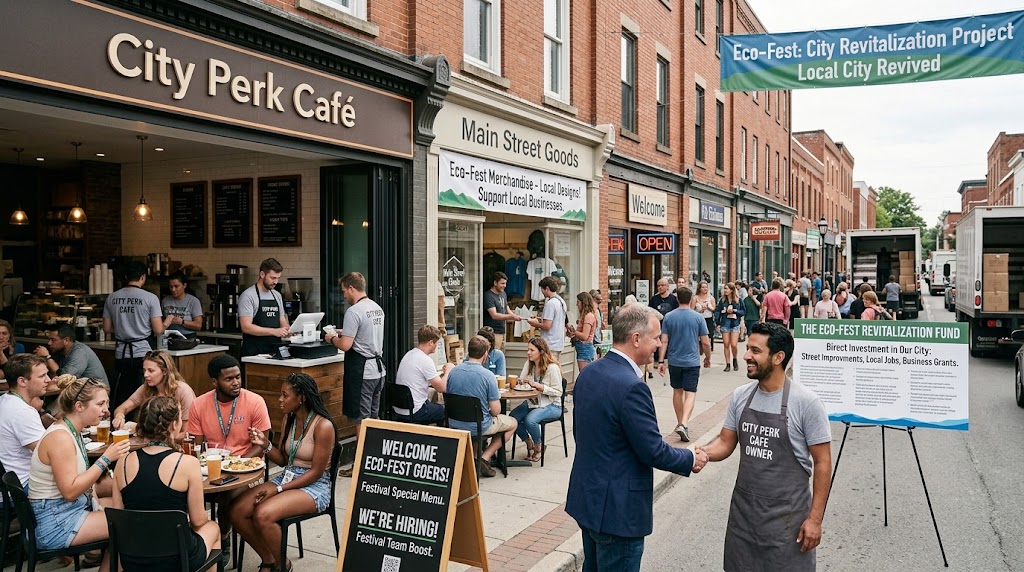
When the final headliner leaves the stage and the main lights illuminate a festival ground, tens of thousands of music fans begin their slow exodus. Behind them lies a field littered with plastic cups, discarded camping gear, and crushed grass. To an outside observer, the scene suggests an environmental and logistical headache.
Yet, for municipal finance directors, local chamber of commerce executives, and small business owners, those temporary ruins mark the tail end of an economic lifeline.
Over the past two decades, the global live music and festival market has expanded into a multi-billion-dollar economic engine.While public attention remains fixed on celebrity line-ups and rising ticket prices, a far less visible phenomenon is taking place off-stage: large-scale music festivals are actively reviving regional economies, bolstering municipal budgets, and reshaping urban planning strategies across the globe.
From small rural townships in the American South to sprawling European coastal hubs, host cities are leveraging temporary music gatherings to drive long-term civic prosperity.
The Multiplier Effect: Beyond Ticket Sales
To grasp the full scale of a music festival’s financial footprint, economists look far beyond the primary gate receipts collected by event promoters. The true value of a festival lies in its economic multiplier—a metric that measures how external visitor dollars circulate through a local economy before dissipating.
When a festival-goer purchases a ticket, they trigger a chain of consumer spending that benefits a wide network of local businesses.Microeconomic analysis shows that once an attendee commits to traveling to an event, their price sensitivity for basic necessities drops significantly.Lodging, food, fuel, rideshares, and retail goods become inelastic expenses.
Direct Visitor Spending → Local Merchant Revenue → Employee Wages & Taxes → Secondary Regional Investments
This influx of external capital moves through three distinct layers of economic activity:
- Direct Impact:Immediate expenditure on hotel rooms, short-term rentals, restaurants, grocery stores, gas stations, and local transportation.
- Indirect Impact: Business-to-business transactions generated when local merchants order additional inventory, hire extra security, or contract regional logistics companies to meet festival demand.
- Induced Impact:Increased household spending by local workers whose wages or overtime hours were funded by the temporary spike in economic activity.
In major metropolitan areas, the resulting figures are substantial.The Austin City Limits Music Festival in Texas generates nearly $500 million in direct and indirect economic activity for the city annually, supporting thousands of full-time equivalent jobs in the hospitality and service sectors. Similarly, Chicago’s Lollapalooza injects hundreds of millions of dollars into the local economy each summer, filling hotel rooms across the downtown core during periods that were historically considered slow travel windows.
Transformed Townships: The Rural Festival Phenomenon
While large metropolitan cities can easily absorb an influx of visitors, the economic impact of a music festival is most visible in rural communities and mid-sized municipalities.
Consider Manchester, Tennessee—a quiet town with a resident population of roughly 12,000.Every June, the annual Bonnaroo Music and Arts Festival transforms a 700-acre farm in Manchester into the seventh-largest temporary city in the state, accommodating over 80,000 attendees.Independent economic studies indicate that Bonnaroo injects more than $330 million into the broader Tennessee economy, with tens of millions circulating directly within the surrounding Coffee County region.
A similar pattern plays out in the desert terrain of Indio, California, host of the Coachella Valley Music and Arts Festival and its country music counterpart, Stagecoach. Spanning two consecutive weekends, Coachella draws over 250,000 total visitors to the Greater Palm Springs area.During these event windows, average hotel room rates across the region spike by more than 60 percent compared to standard spring weekends. Direct visitor spending on dining, bars, and local retail consistently exceeds tens of millions of dollars over a six-day period.
For small municipal governments, this compressed burst of commercial activity translates directly into tax revenue. Municipalities leverage ticket surcharges, transient occupancy taxes on hotels, and local sales taxes to fund public services that would otherwise require higher tax rates for permanent residents.
In Coffee County, local authorities implemented a dedicated ticket tax on festival admissions, directly funding county emergency services, road repairs, and school system infrastructure. In Indio, festival revenue helps underwrite police departments, fire services, and public works projects year-round.
Job Creation and the Short-Term Labor Surge
Music festivals are labor-intensive operations that require extensive physical and organizational support. Building a temporary city capable of supporting tens of thousands of people for three to four days requires a massive, coordinated labor force.
Months before the first sound check, festival organizers begin recruiting local and regional workers across dozens of trades:
- Site Preparation and Construction: Heavy equipment operators, carpenters, electricians, sound engineers, and staging crews.
- Safety and Logistics: Licensed security personnel, traffic control officers, emergency medical technicians, and sanitation teams.
- Hospitality and Retail: Bartenders, food service staff, site managers, merchandise vendors, and customer service representatives.
For local residents, particularly students, gig workers, and seasonal laborers, the temporary labor surge provides critical financial support.The Glastonbury Festival in Somerset, England, employs approximately 25,000 people annually across its event lifecycle, including thousands of local staff and charitable volunteers who earn operational funds for community organizations.
Furthermore, festivals offer a prominent platform for local micro-enterprises. Independent food trucks, regional craft breweries, artisans, and pop-up retailers gain direct access to a concentrated, highly engaged customer base that would take years to reach through traditional storefront operations.
Urban Branding and Infrastructure Upgrades
Beyond immediate financial injections, hosting a globally recognized music festival provides long-term strategic advantages in urban branding and physical infrastructure development.
In the modern global economy, cities compete fiercely for tourist dollars, corporate investments, and skilled labor. A successful, internationally renowned music festival serves as a multi-million-dollar marketing campaign, establishing a city as a dynamic cultural destination.
Barcelona’s alignment with Primavera Sound and Sónar has played a pivotal role in solidifying the Spanish city’s reputation as a European hub for international youth culture, technology, and creative industries. In the United States, South by Southwest (SXSW) transformed Austin from a regional university town into a global nexus for music, film, and technology investment, generating over $350 million in annual economic impact during its peak pre-pandemic editions.
This elevated cultural profile frequently drives physical urban improvements. To host large-scale events safely, municipalities and promoters are often forced to collaborate on infrastructure upgrades that yield long-term benefits for permanent residents:
- Park and Public Space Restoration: Promoters routinely pay millions in site usage fees and restoration funds. In Austin, the operators of ACL Fest have donated over $50 million to the Austin Parks Foundation over the life of their partnership, directly funding park upgrades, greenbelt maintenance, and accessible playground installations across the city’s council districts.
- Transport and Mobility Links: Hosting high-density events prompts cities to optimize public transit networks, widen pedestrian walkways, expand municipal bike lanes, and upgrade regional airport facilities to handle peak passenger volumes.
- Telecommunications Infrastructure: To ensure high-density crowds maintain mobile connectivity, telecommunications providers deploy permanent fiber-optic lines and cellular tower upgrades in host areas, improving digital connectivity for local residents long after the festival concludes.
Friction Points: Disruption, Inflation, and Leakage
While the economic benefits of music festivals are substantial, the model is not without tension. For local municipalities, managing the negative externalities of a sudden, high-density population surge requires constant policy adjustment.
1. Neighborhood Disruption and Quality of Life
For residents living near festival venues, multi-day events often bring severe road closures, sound pollution, traffic congestion, gridlocked public transit, and higher rates of littering and public disruption. In historic urban parks, heavy foot traffic and large staging equipment can damage sensitive ecological grounds, closing public spaces to local families for weeks during site construction and teardown.
2. Inflation and Rent Spikes
The influx of high-spending tourists can drive short-term price inflation across local service sectors.During festival dates, local residents often face surging prices at neighborhood restaurants, inflated rideshare fares, and severe housing pressure as long-term rental properties are converted into lucrative short-term vacation rentals for visiting fans.
3. Economic Leakage
A primary critique raised by urban economists centers on economic leakage—the percentage of festival revenue that leaves the host community. When major festivals are owned and operated by multinational entertainment conglomerates, a significant portion of ticket sales, corporate sponsorships, and alcohol concessions flows directly to corporate headquarters in distant capitals rather than remaining within the local economy.
If a municipality fails to negotiate strong local hiring mandates, vendor quotas, and direct municipal usage fees, the local economic gain can be skewed heavily toward out-of-town corporate promoters and major hotel chains, leaving small local vendors with minimal benefit.
Corporate Promoters (Global Capital Capture) vs. Local Business Owners (Community Wealth Retention)
The Post-Pandemic Landscape: Inflation and Industry Fragility
The economic mechanics of the festival industry have faced severe pressure in recent years. Following post-pandemic global inflation, event production costs—ranging from stage freight and diesel generators to artist performance fees and insurance—have surged by 30 to 50 percent.
This cost explosion has created a bifurcated festival market. While mega-festivals backed by major corporate entertainment groups continue to command high pricing power and draw massive global crowds, hundreds of independent regional festivals have been forced to cancel or shut down permanently due to unmanageable operating overheads.
For local cities reliant on regional events, this volatility highlights the importance of strategic public-private partnerships. Municipalities are increasingly offering tax incentives, streamlined permitting processes, and public marketing support to keep independent festivals solvent, recognizing that the loss of an annual cultural gathering represents a direct hit to the regional economic ecosystem.
Sustainable Futures: Building Equitably Shared Prosperity
To ensure that the financial windfall of music festivals translates into sustainable community growth, forward-thinking cities are enacting clearer governance frameworks.
Modern host agreements increasingly mandate strict operational standards:
- Local Vendor Protection: Requiring festival operators to allocate a minimum percentage of vendor stalls to locally owned businesses at subsidized rates.
- Environmental Restoration Bonds: Forcing promoters to post financial bonds before construction begins, guaranteeing immediate, complete park restoration and environmental cleanup post-event.
- Public Transit Integration: Bundling regional transit passes directly into festival admission tickets, reducing road congestion while funding municipal transportation budgets.
- Targeted Community Reinvestment: Directing municipal ticket tax proceeds toward local affordable housing funds, public arts grants, and small business support initiatives in host neighborhoods.
When managed with strategic oversight and clear local priorities, music festivals offer far more than temporary weekend entertainment. They serve as powerful engines of economic development—transforming temporary cultural gathering spots into long-term catalysts for local business growth, civic pride, and urban revitalization.


 admin
admin