Reading time: 5 minutes
Before a character speaks, a film has already begun communicating. The shape of a room, the objects placed within it, the distance between pieces of furniture and the quality of light all suggest how a person lives. Production design is sometimes treated as background decoration, but it is one of the ways a film makes emotion visible. It gives a story a physical environment that can reveal history, tension and possibility.
Space tells us who has power
A large room can make a character appear isolated; a narrow corridor can create pressure; a carefully ordered desk can suggest control or anxiety. These meanings do not need to be explained in dialogue. They are carried through the relationship between bodies and space. Production designers work with directors, cinematographers and other departments to make sure that the environment supports the story rather than competing with it.
Even a familiar setting can be made specific. A kitchen is not simply a kitchen. Its surfaces, appliances, photographs and signs of wear can suggest who uses it and what has happened there. The same location can feel welcoming, neglected or oppressive depending on the choices made around it.
Objects carry character histories
Props often have a narrative function beyond their practical use. A repaired chair, a crowded bookshelf or a coat kept on a hook can imply a character’s habits and priorities. When an object returns across a film, its meaning may change as the story develops. These details reward attention because they connect the world of the film to the lives of its characters.
Good design is not necessarily expensive or elaborate. A carefully selected object can do more than a room filled with visual information. The goal is coherence: each detail should feel as though it belongs to the world being created.
Colour and texture shape atmosphere
Colour palettes can establish emotional relationships between scenes or characters. A shift in temperature may signal a change in mood, while repeated textures can make separate locations feel connected. These decisions are often subtle. Viewers may not consciously identify them, but they influence how a film is experienced.
Texture matters too. Worn surfaces, reflective glass, rough concrete and soft fabrics create different relationships with light and movement. The camera records these materials, and the audience reads them as part of the story’s emotional register.
Design is collaborative storytelling
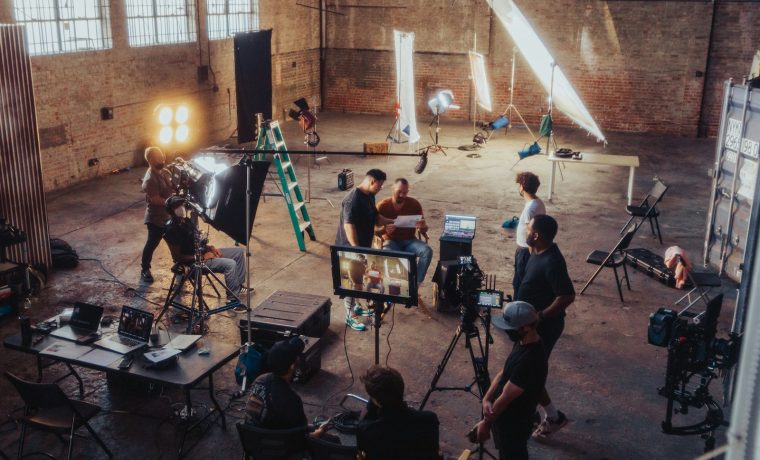
Production design is a conversation between creative departments. A set must work for camera movement, lighting, sound, performance and practical production needs. Collaboration is therefore not an extra step; it is the method through which a believable world is built.
When production design is successful, audiences may remember the world without remembering every decision that created it. That is not a failure of visibility. It is evidence that the environment has become part of the story itself. Film worlds feel convincing because their spaces, objects and textures carry meaning long before anyone explains them.
Image: Brands&People / Unsplash.