Reading time: 5 minutes
Creative work is often described as an exercise in freedom: the artist begins with an open field of possibilities and follows an idea wherever it leads. In practice, making art usually involves limits. A studio has a finite amount of space. A commission comes with a budget and a deadline. A material behaves in ways its maker cannot fully control. Even a decision to work with one colour, one tool or one scale narrows the field. Rather than simply obstructing creativity, these boundaries can give an idea the shape it needs to become visible.
A limit can make a decision clearer
When every material and method is available, choosing where to begin can become its own problem. A constraint reduces the number of immediate decisions. An artist working with found paper, for example, has to respond to its existing folds, marks, thickness and history. Those qualities become part of the work rather than details to be erased. The material offers resistance, but it also offers a starting point.
This is different from treating limitation as a romantic virtue. A lack of money, safe workspace or access to equipment can make artistic life harder in very real ways. The creative value lies not in deprivation itself, but in the thoughtful decisions that can emerge when a maker chooses a workable boundary or adapts to a condition they cannot change.
Materials bring their own language
Every material has a vocabulary. Clay records pressure and time. Fabric can stretch, fray, fold and carry traces of use. Wood has grain and weight. Digital tools offer speed and repeatability, but also make certain choices feel effortless and others difficult. Learning a material means understanding what it permits, what it resists and what happens when it is pushed beyond its familiar use.
That knowledge changes the relationship between intention and outcome. Instead of imposing a fully formed image on a material, an artist can allow its behaviour to influence the direction of the work. An unexpected crack, uneven edge or shift in colour may become a meaningful part of the composition if the maker knows when to respond and when to intervene.
Rules can create a productive rhythm
Self-imposed rules are another way to make a practice more focused. A photographer might work from one fixed position for a series. A painter might limit a palette. A designer might prototype with only materials that can be reused. Such rules give a project continuity: each decision can be compared with the same conditions, making subtle changes easier to notice.
The rule should remain a tool, not a test of obedience. If it stops producing insight, it can be revised. A useful constraint creates a question that can be explored over time. An arbitrary restriction simply adds friction without helping the work develop.
Working small does not mean thinking small
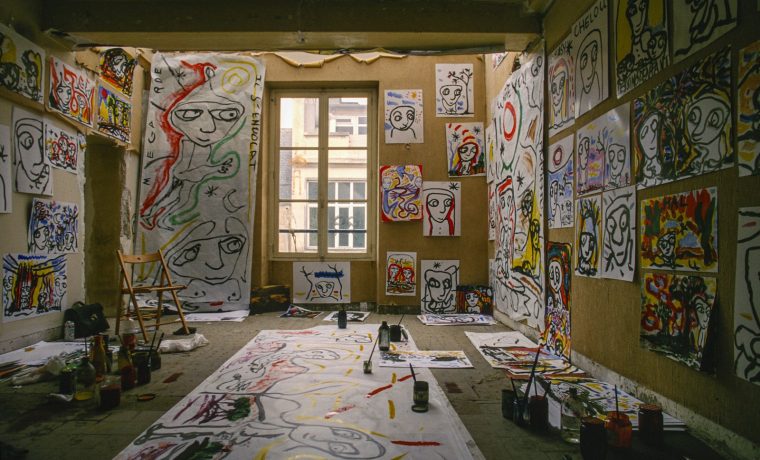
Limited space can encourage a different scale of attention. A modest studio may require careful storage, portable equipment and a process that can be paused and resumed. A small format can invite close looking. A temporary installation may make the relationship between an artwork and its location more important than its permanence.
These conditions can also influence how artists collaborate. Shared workshops, tool libraries and community studios allow people to access equipment that would be difficult to own individually. They turn a private limitation into an opportunity to exchange skills and knowledge. The quality of a working environment depends not only on its size, but on how much agency it gives the people using it.
When to protect the boundary—and when to break it
A strong creative process needs both commitment and flexibility. Staying with a limitation long enough can reveal possibilities that a quick change of direction would miss. Yet some boundaries deserve to be challenged, especially when they come from inaccessible institutions, narrow expectations or unequal access to resources.
The distinction is practical: does this limit help the work become more precise, or does it prevent the maker from doing work they have a reason to pursue? Artists need room to tell the difference. They also need the freedom to change methods as a project grows.
Making room for invention
Constraints do not guarantee originality, and freedom does not automatically produce it. What matters is the quality of attention brought to the conditions of making. A boundary can help an artist notice the properties of a material, develop a consistent visual language and make decisions with greater intention.
The most productive limits are not walls around imagination. They are working edges: clear enough to give a project direction, flexible enough to let discovery happen. Within them, an artist can find not fewer possibilities, but more meaningful ones.
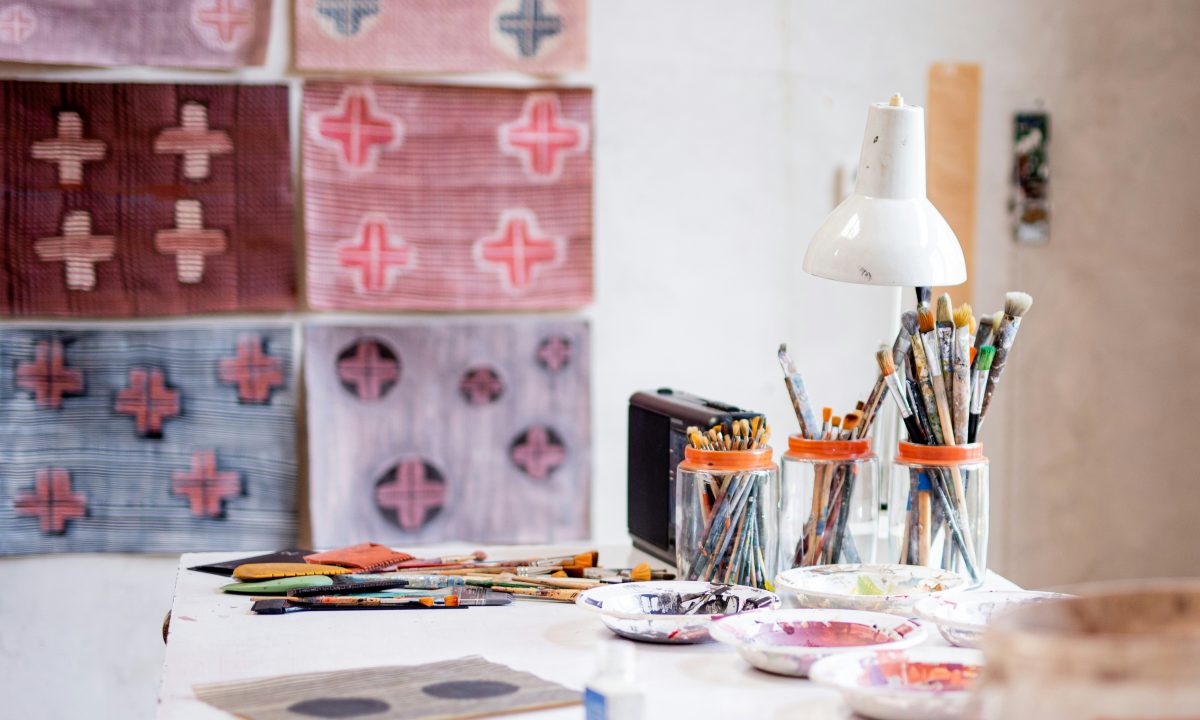
Image: Laura Adai / Unsplash.